

33.5 Million on the Edge: Nigeria’s looming hunger crisis and the imperative of structural reckoning, by Abubakar M. Kareto
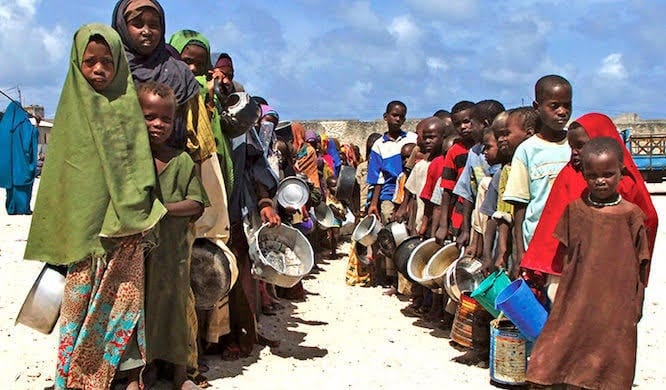
The October 2026 Cadre Harmonisé report has delivered a sobering verdict. 33.5 million Nigerians, including nearly 900,000 internally displaced persons, are projected to face Crisis-level (Phase 3) or worse food insecurity during the June to August 2027 lean season across 26 states and the FCT. This figure rises sharply from the current estimate of 26.8 million people already in crisis between October and December 2026. In a nation of roughly 242 to 244 million people, this means nearly one in seven citizens will struggle to access adequate food at the height of the next hunger season. These numbers are not abstract. They represent families skipping meals, children sliding into acute malnutrition, and communities already battered by conflict now confronting empty granaries.
READ ALSO:
Can Arewa ever know peace? The assassination of Sheikh Masussuka, by Abubakar M. Kareto
What makes this projection particularly alarming is its predictability. Conflict and insecurity in the Northeast and Northwest continue to keep farmers off their land and markets disrupted. Climate shocks, floods and dry spells, have repeatedly damaged harvests. High food inflation, which stood at 19.59 percent year-on-year in September 2026 even as headline inflation eased to 14.63 percent, has eroded purchasing power. Fuel costs and transport expenses further inflate the price of staples. These drivers are not new. They have featured in successive Cadre Harmonisé cycles. The persistence of the same diagnosis year after year reveals a deeper failure of coordination and political will.
Borno, Yobe, Adamawa, Katsina, Zamfara and Sokoto remain the epicentres. Borno alone is projected to have about 2.5 million people in need during the 2027 lean season. Nutrition outcomes already range from Minimal to Emergency in several northern states, with children under five and pregnant women most at risk. When households cope by reducing meal frequency, borrowing, or selling productive assets, the long-term damage to human capital becomes irreversible. A generation raised on chronic hunger cannot power the demographic dividend Nigeria so often celebrates.
The Cadre Harmonisé itself is a valuable early-warning tool, jointly produced by the Ministry of Agriculture and Food Security with FAO support. Yet its repeated warnings have not triggered commensurate response at scale. Full national coverage remains incomplete. Ten states are still outside the regular analysis. Humanitarian assistance is chronically underfunded relative to need. Domestic production incentives, mechanisation, irrigation, and post-harvest loss reduction have been announced many times, but delivery on the ground lags. Food imports may temporarily ease shortages, but they simultaneously discourage local farmers already struggling with insecurity and high input costs.
This is not merely a humanitarian emergency. It is a national security and economic threat. Food insecurity fuels migration, social tension and political instability. It undermines education and health outcomes, locking households into intergenerational poverty. With Nigeria’s youthful population continuing to grow rapidly, the cost of inaction will compound. The 2027 lean season projection should serve as a final alarm before the crisis hardens into structural famine risk in the worst-affected areas.
The path forward is clear, if difficult. Security must be restored in farming communities so that production can resume. Targeted social protection and nutrition interventions must reach the most vulnerable before the lean season peaks. Structural reforms, reliable access to affordable fertiliser and finance, better rural infrastructure, climate-smart agriculture, and genuine national ownership of the early-warning system, are non-negotiable. Rhetoric about food security is abundant. Measurable reduction in the number of people in Phase 3 and above is what matters.
Nigeria has the agricultural potential, the demographic energy and the analytical tools to reverse this trajectory. What is missing is the sustained, coordinated resolve to treat hunger as the existential priority it has become. The 33.5 million figure is not fate. It is a choice, still reversible if the nation acts with the urgency the data demands.
Abubakar M. Kareto is a Public Affairs Analyst and Communications Strategist focusing on governance, public policy, and institutional reform across Nigeria and Africa. He can be reached on X @amkareto and via email at amkareto@gmail.com.
Follow the Neptune Prime channel on WhatsApp:
Do you have breaking news, interview request, opinion, suggestion, or want your event covered? Email us at neptuneprime2233@gmail.com