


“Perspectives on the US–Nigeria Airstrike Aftermath: The North-West experience,” by Love Obiani Arugu
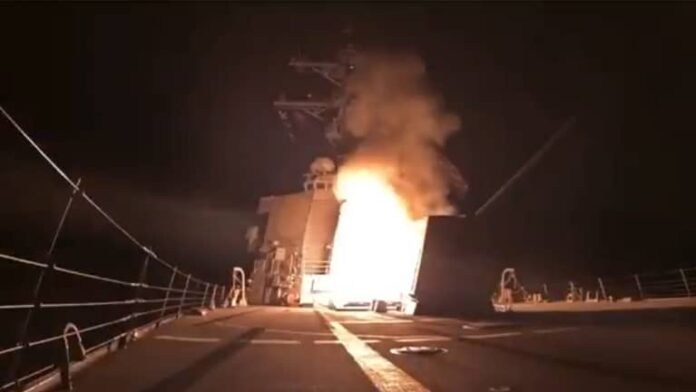
My perspective on the recent US–Nigeria airstrike cooperation in North-West Nigeria is a decisive and historically significant intervention in the long struggle against insecurity that has tormented the region for decades. Beyond its immediate military outcome, the airstrike represents a strategic shift in the narrative of Nigeria’s internal security management—one that signals resolve, coordination, and the reassertion of state authority over spaces long dominated by fear, lawlessness, and non-state violent actors.
From my perspective, the airstrike has the capacity to reshape and stabilise the trajectory of insecurity in the North-West if it is sustained and embedded within a broader framework of security cooperation and governance. For years, banditry and terrorist activities have thrived not merely because of weapons, but because of weak deterrence, porous terrains, and the psychological dominance of armed groups over vulnerable communities. This operation disrupts that dominance. It sends a clear message that criminal sanctuaries and terror hideouts are no longer inviolable.
The strategic nature of the airstrike is particularly significant. By targeting identified hideouts, movement corridors, and logistical bases, the operation goes beyond symbolic force. It dismantles the operational capacity of terrorist and bandit networks, restricts their freedom of movement, and weakens their ability to recruit, regroup, and terrorise civilian populations. In doing so, it reduces the spatial advantage these groups have exploited across Nigeria’s vast and difficult terrain.
The Importantly, the psychological impact of this cooperation cannot be overstated. Fear has been one of the most destructive consequences of insecurity in Northern Nigeria—fear that empties farmlands, disrupts markets, displaces families, and erodes trust in government. The airstrike restores confidence, not only among affected communities but also within the broader national psyche. It reassures citizens that the Nigerian state, in collaboration with credible international partners, is willing and able to confront insecurity with clarity and strength.
If this cooperation is continuous and complemented by ground operations, intelligence sharing, and community-based stabilisation efforts, it holds strong prospects for socio-economic recovery. Security is the foundation of development. As fear recedes, farming can resume, trade routes can reopen, investment can return, and internally displaced persons can begin to reclaim their livelihoods. In this sense, the airstrike is not merely a military action; it is a catalyst for economic revitalisation and social stability.
For the Nigerian government, this development brings renewed hope and strategic leverage. It reinforces the legitimacy of the state, strengthens counter-terrorism capacity, and demonstrates that insecurity is neither permanent nor insurmountable. While airstrikes alone cannot resolve the complex roots of violence, they are a bold and necessary step in reclaiming control, restoring order, and rebuilding trust between the state and its citizens.
In conclusion, I assert that the US–Nigeria airstrike cooperation marks a turning point in Nigeria’s security narrative. If sustained, strategic, and integrated into long-term governance reforms, it can significantly weaken terrorist activities, stabilise affected regions, and lay the groundwork for enduring peace and socio-economic development in North-West Nigeria.
Follow the Neptune Prime channel on WhatsApp:
Do you have breaking news, interview request, opinion, suggestion, or want your event covered? Email us at neptuneprime2233@gmail.com