


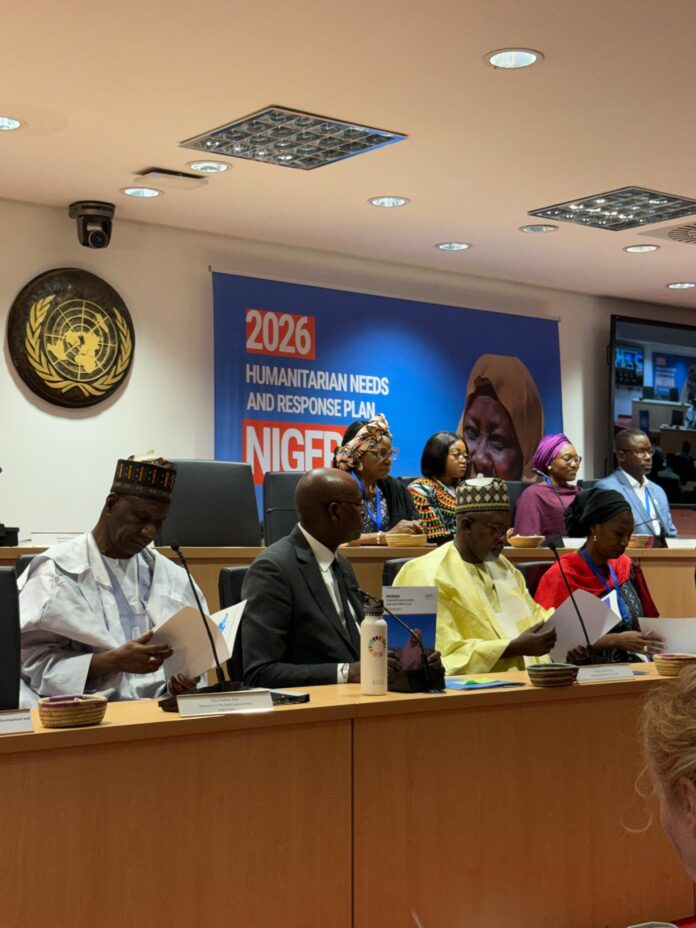
UN launches 2026 humanitarian needs, response plan, calls for stronger local leadership to reduce poverty in Nigeria
TheNations has reaffirmed its commitment to addressing Nigeria’s growing humanitarian challenges and reducing poverty, as it launched the 2026 Humanitarian Needs and Response Plan (HNRP) at a high-level forum in Abuja.
The event brought together federal and state government representatives, development partners, donors, and humanitarian agencies.
Speaking at the forum, Mr Mohamed Malick Fall, United Nations Resident and Humanitarian Coordinator in Nigeria, emphasised that the UN will continue to support life-saving interventions, protect vulnerable populations, and ensure continuity of essential services, particularly in conflict-affected areas.
He noted that women-led organisations and community groups are increasingly shaping humanitarian priorities and delivering solutions at the local level.
“Our role is clear,” Mr Fall said. “We will defend humanity, place protection at the centre of our actions, strengthen partnerships, mobilise resources, and uphold the promise of leaving no one behind.”
He stressed that sustainable impact requires close collaboration with the Government of Nigeria at federal, state, and local levels, calling on government institutions to strengthen domestic financing, improve coordination, and empower national organisations to lead with courage.
He also urged donors to continue supporting the Nigeria Humanitarian Fund, describing it as a critical mechanism for funding national partners more directly and reducing operational costs.
Representing sub-national governments, the Secretary to the Government of Yobe State, Malam Baba Wali, delivered a keynote address, highlighting the importance of localisation, humanitarian transition, and poverty reduction, particularly for fragile and conflict-affected states.
“Today’s discussion on localisation and humanitarian transition speaks directly to our shared responsibility to protect lives, reduce poverty, and build resilient communities,” Malam Baba Wali said.
He emphasised that sustainable progress can only be achieved through strong partnerships, effective coordination, and empowered local leadership.
According to him, Yobe State is committed to a government-led, people-centred humanitarian response, anchored on inclusive leadership, strong institutions, and supportive systems.
He stressed that aligning humanitarian action with development programming and peacebuilding remains critical for states affected by insecurity and vulnerability.
“We must continue to invest in innovation, future-focused actions, and locally driven solutions that protect lives, promote human dignity, and safeguard public health,” he stated, adding that humanitarian interventions must remain ethical, transparent, and accountable, with zero tolerance for fraud or misuse of resources.
As Nigeria prepares for the 2026 humanitarian priorities, Malam Baba Wali called on partners to deepen collaboration and strengthen coordination, noting that locally anchored solutions are essential to addressing both immediate humanitarian needs and long-term development goals.
Presenting an overview of the humanitarian situation, Mr David Stevenson of the World Food Programme (WFP) revealed that approximately 34.7 million people across Nigeria are affected by humanitarian challenges, with the most severe needs concentrated in the northern regions. He disclosed that around six million people face food insecurity in the Northeast, another six million in the Northwest, while millions of children remain in need of urgent support.
Mr Stevenson identified insecurity, insurgency, banditry, displacement, climate-related shocks, and funding cuts as major drivers of poverty and food insecurity.
He explained that although many affected areas are agriculturally viable, farmers are unable to return to their land due to persistent insecurity.
“There are huge economic opportunities in the North,” he noted, adding that restoring agricultural production and rebuilding local economies through partnerships with the private sector and development institutions is key to sustainable recovery. Despite funding constraints, WFP has prioritised the most vulnerable, reducing its humanitarian caseload to 635,000 people from 1.1 million during the lean season, while continuing to work closely with state governments and humanitarian partners.
Concluding the forum, Malam Baba Wali, on behalf of the Yobe State Government and its people, expressed appreciation to the United Nations, donors, and partners for their continued solidarity and support.
“Together, let us act decisively to reduce poverty, strengthen resilience, and build a sustainable and peaceful future for all,” he said.
Follow the Neptune Prime channel on WhatsApp:
Do you have breaking news, interview request, opinion, suggestion, or want your event covered? Email us at neptuneprime2233@gmail.com