


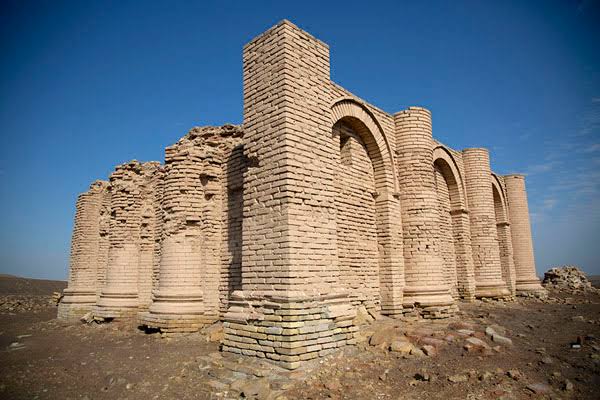
Uruk, Iraq: The world’s first true city of human civilisation, by Gift Luckson
Uruk, located in modern-day Warka, Iraq, is widely considered the world’s first true city and a cornerstone of human civilisation. It reached its zenith during the Uruk Period (c. 4000–3100 BCE), setting the blueprint for urban life, writing, and centralised
governance.
The Birthplace of Writing and Administration
One of Uruk’s most significant contributions was the invention of the Cuneiform writing system.
Writing evolved from a need to track trade and temple resources. Early “proto-cuneiform” was found on thousands of clay tablets, 80% of which were financial and administrative records, such as tallies for barley and livestock.
Scribes created lists of professions and objects to standardised language, which provides a glimpse into their hierarchical social structure. The city utilised a sexagesimal (base-60) numbering system, which is the direct ancestor of how we measure time (60 minutes in an hour) today.
READ ALSO: The Woman Who Sued for Freedom: The legend of Marguerite Scypion, by Gift Luckson
Architecture and Urban Planning
At its peak, Uruk covered approximately 250 hectares and housed between 25,000 to 50,000 people—an unprecedented scale for the time.
The Two Districts: The city was divided into two main areas: the Anu District, featuring the “White Temple” dedicated to the sky god Anu, and the Eanna District, dedicated to Inanna, the goddess of love and war.
Technological Innovation: Uruk’s architects used intricate mosaics made of coloured clay cones to decorate massive columns and walls, a technique unique to this era.
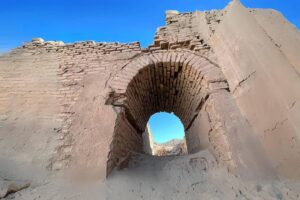
The Ziggurat: The city is famous for its early monumental architecture, including the foundations of what would become the Mesopotamian Ziggurat.
The Legend of Gilgamesh
Uruk is the setting of the Epic of Gilgamesh, the world’s oldest known piece of literature. The historical King Gilgamesh is credited with building the massive defensive walls of the city. The epic follows his quest for immortality and highlights the city’s cultural importance in the ancient world.
Economic Power and Trade
Because Southern Mesopotamia lacked raw materials like metal, stone, and timber, Uruk became the hub of a vast international trade network.
Imports: They traded for lapis lazuli from Afghanistan, silver from Anatolia, and timber from the Levant. To manage this trade, they used cylinder seals, small stone rollers with intricate designs that acted as official signatures on clay documents or jars.
The Bevel-Rim Bowl: This mass-produced, standardised pottery is found all over the Middle East, indicating Uruk’s widespread cultural and economic influence.
READ ALSO: Where Tradition Meets the Mountains: The untold story of the Cham people, by Gift Luckson
Decline and Legacy
By the end of the 4th millennium BCE, Uruk’s dominance began to wane as other city-states like Ur and Lagash rose to power.
However, it remained inhabited for thousands of years until it was finally abandoned around the 7th century CE.
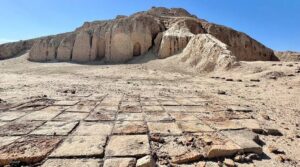
Today, it is a UNESCO World Heritage site, offering vital clues into how humans first transitioned from small villages to complex urban societies.
Follow the Neptune Prime channel on WhatsApp:
Do you have breaking news, interview request, opinion, suggestion, or want your event covered? Email us at neptuneprime2233@gmail.com