
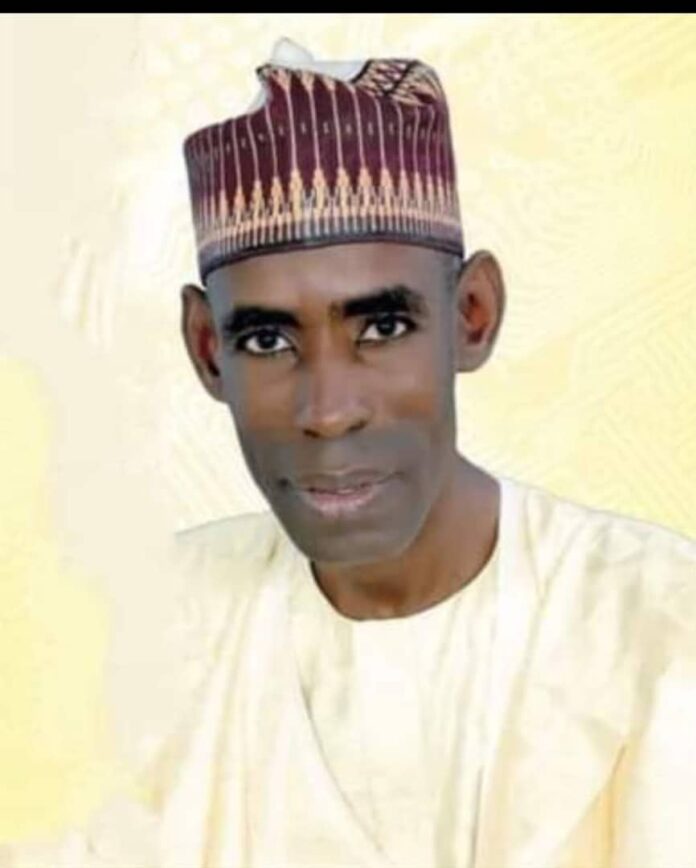
In Solidarity: Why the “Enemy of the South-West” label exposes a deep failure of national unity, by Engr. Bello Gwarzo Abdullahi, FNSE
Politicians never fail to surprise or confuse us with the endless games they play to hold onto power. In Nigeria, the board is almost always set up along the same predictable lines: North against South, Muslim against Christian, or majority tribes against minorities. This is exactly why Mohammed Bello Doka’s recent piece hits such a raw, uncomfortable nerve in our current political climate. It forces us to look squarely at a hypocritical truth that those in power would much rather hide behind beautiful speeches about national unity. Doka asks a deeply unsettling but simple question: If regional loyalty means that any South-Westerner who opposes President Bola Ahmed Tinubu is labeled a traitor, what does that say about the Northern politicians and surrogates who keep selling this administration to their own starving, terrorised communities? The answer hurts, but it is impossible to ignore. Doka is absolutely right. The heavy regional rhetoric coming from the ruling class exposes a double standard that threatens the very core of our country.
When prominent people like Chief Olusegun Osoba and presidential aide Tunde Rahman look at the democratic ambitions of leaders like Governor Seyi Makinde, Peter Obi, or even a quiet Goodluck Jonathan and call it a “gang-up” or “treason” against the South-West, they completely destroy the idea of a national mandate. They are essentially telling the country that holding the presidency is an ethnic trophy to be protected at all costs, and that disagreeing with the leader within his home region is no longer a democratic right, but a cultural crime. This is where the logic completely falls apart. If political support is supposed to be dictated by geography and ethnicity, why should Northern elites be expected to deliver their people’s votes like mindless commodities? When Northern politicians demand total loyalty to this administration from a population dealing with historic economic hardship and insecurity, they aren’t acting as statesmen or nationalists. They are behaving exactly like sales agents. They are respecting an ethnic solidarity rule in the South while denying their own people the right to vote for their own survival.
While Doka does an excellent job showing how much the North has bled over the last three years, we have to take the point a step further. This is no longer just a Northern crisis; the breakdown of basic governance and economic stability has become a harsh equalizer for all of us. The “Renewed Hope” agenda has turned into a shared struggle across every single region. The Food and Agriculture Organisation’s warning that 34.7 million Nigerians will face acute food insecurity by mid-2026 does not stop at the banks of the Niger River. It is true that conflict in the North-West and North-East has turned massive farming hubs into dangerous zones, keeping farmers away from their land. But the resulting food inflation hits families in Ibadan and Enugu just as hard as it hits those in the North. When Northern surrogates demand uncritical loyalty to these economic policies, they are asking citizens to stay quiet and smile through hunger while their children go to bed empty-handed.
As an engineer, I always look at the concrete reality of our national infrastructure. The original article rightly points out the massive imbalance between the pace of legacy projects like the N3.244 trillion Lagos-Calabar Coastal Highway and the stalled Northern sections of the Sokoto-Badagry Superhighway. But let’s look at the practical reality: what good is a multi-trillion-naira coastal highway if ordinary citizens can no longer afford the fuel to drive on it because of volatile economic policies? What is the real value of massive infrastructure projects when interstate roads across the country have been left at the mercy of bandits, terrorists, and kidnappers? Building infrastructure without providing security is just creating expensive monuments to the wrong priorities. If goods and produce cannot move safely from Northern farms to Southern markets, the entire economic engine of the country shuts down. Allocating trillions to southern coastal corridors while northern transport routes remain broken deathtraps simply means physical goods and hard-earned harvests are left to rot behind security blockades.
Furthermore, the recent abductions of school children, teachers, and a principal in Oyo State’s Oriire Local Government Area this May offer the most undeniable proof of this failure. For years, some commentators in the South claimed that the terror plaguing the North was a distant, localised problem born of regional failures. The fact that criminals are now pulling children from classrooms in the South-West proves that insecurity is a cancer: if you ignore it in the lungs, it will eventually stop the heart. The failure to secure the North has directly compromised the safety of the South-West.
The political math Doka lays out is impossible to argue with. By 2027, the South will have held the executive presidency for far longer than the North since the return to democracy. But this is about much more than just numbers on a calendar; it is about what the people actually got during that time. We are caught in a frustrating paradox where southern elites claim that opposing the president makes you an enemy of his region, while northern marketers insist that supporting him is an absolute duty, no matter how much your people are hurting. The result is a political machine driven entirely by regional defence, leaving ordinary citizens across Nigeria to pay the price. If the best defence for a sitting president is simply “he is our son,” then good governance stops mattering and competence is thrown out the window. If the political elite of the South-West treats the presidency as an exclusive regional possession, they lose the right to demand that the North—or any other part of Nigeria—treats it as a national obligation.
Mohammed Bello Doka has done our country a massive service by cutting through the polite, politically correct language we usually hear. A democracy simply cannot work when one region treats federal power as an ethnic birthright while expecting other regions to make blind, silent sacrifices. If the defenders of the status quo in Lagos and Abuja are allowed to label normal political competition as a “war against the South-West,” then Northern leaders who help them harvest votes are actively helping to marginalise and neglect their own people. It is time for political powerbrokers in the North—and regular citizens across every geopolitical zone—to reject this one-way relationship. Power must be transactional, and the only currency that matters is the safety, prosperity, and dignity of the human beings who stand in line to vote. If an administration cannot deliver those basic things, then standing up and opposing it isn’t regional treason. It is a fundamental democratic duty.
Written by Engr. Bello Gwarzo Abdullahi, FNSE.
Email: bgabdullahi@gmail.com
Follow the Neptune Prime channel on WhatsApp:
Do you have breaking news, interview request, opinion, suggestion, or want your event covered? Email us at neptuneprime2233@gmail.com