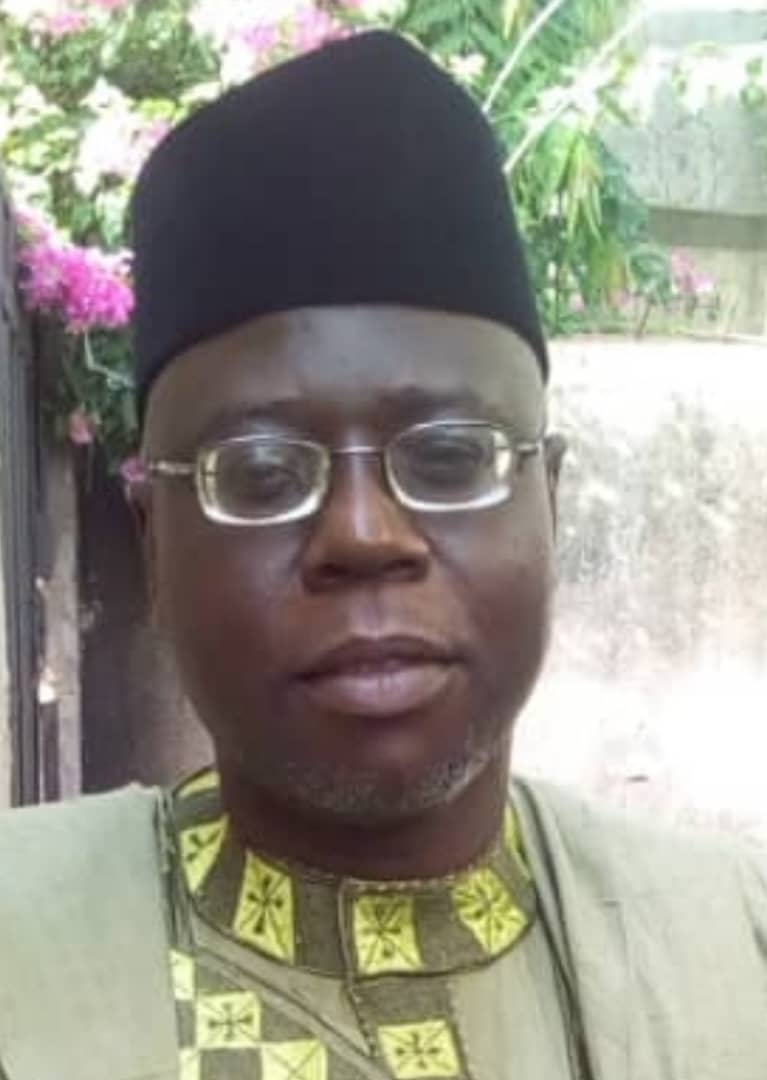
A SAN Should Know Better: Why Prof. Amupitan’s INEC appointment betrays the principles of justice and national unity, by Tijjani Sarki
The recent SaharaReporters publication of November 6, 2025, titled “EXCLUSIVE: Tinubu’s Newly Appointed INEC Chairman Prof Amupitan Wrote Legal Brief In 2020 Report Confirming Genocidal Killings In Nigeria,” has continued to generate grave concern among Nigerians. Even more troubling is that, to date, Prof. Joash Ojo Amupitan (SAN) the newly appointed Chairman of the Independent National Electoral Commission (INEC) has not publicly denied, clarified, or retracted the controversial claims attributed to him.
As revealed in the report, Prof. Amupitan authored a legal brief in 2020 under his private law firm, Prof. Joash Ojo Amupitan (SAN) & Co., in which he described the insecurity in Nigeria as “genocide” and made the dangerous assertion that the Boko Haram insurgency and Fulani herders’ crisis were direct continuations of the 1804 Jihad of Sheikh Usman Dan Fodio, alleging an ongoing “Islamisation agenda.”
For a man of his legal and academic standing a Senior Advocate of Nigeria (SAN) to make such unfounded and divisive claims is both unethical and unbecoming of the high calling of the Bar. The SAN rank is not a license for prejudice or propaganda, it is a sacred trust that demands intellectual depth, moral restraint, and professional objectivity.
READ ALSO: Elderly Falls: Dangerous but preventable, by Sani Tijjani Ibrahim
A GRAVE PROFESSIONAL AND ETHICAL FAILURE
By presenting such a one-sided and unverified narrative, Prof. Amupitan violated the very code that defines the noble profession of law. Rule 1 of the Rules of Professional Conduct for Legal Practitioners (RPC) 2007 mandates that:
“A lawyer shall uphold and observe the rule of law, promote and foster the course of justice, maintain a high standard of professional conduct, and not engage in any conduct which is unbecoming of a legal practitioner.”
Moreover, Rule 55(1) empowers the Nigerian Bar Association (NBA) and its Disciplinary Committee to investigate and punish any lawyer whose conduct brings disrepute upon the profession.
By using his law firm to issue a politically charged document under the guise of legal opinion, Prof. Amupitan crossed an ethical line. His words were not acts of advocacy they were acts of provocation, capable of inflaming religious and ethnic divisions.
Therefore, the NBA must take disciplinary action. Silence, in this case, amounts to complicity. If a SAN can recklessly employ his professional title to amplify unverified allegations of genocide and religious persecution, then the integrity of the Bar itself is endangered.
READ ALSO: When River Becomes a Coffin: Nigeria’s shameful tolerance for preventable deaths, by Tijjani Sarki
DISTORTING HISTORY FOR POLITICAL GAIN
The reference to the Jihad of Sheikh Usman Dan Fodio (1804) as an alleged root of modern terrorism is both historically false and intellectually irresponsible. The Jihad was a reform movement rooted in learning, justice, and moral order not a campaign of terror or domination.
By drawing such a false link, Prof. Amupitan not only displayed historical ignorance but also promoted a narrative of hatred against Islam and the Fulani people. Such distortion should never come from a scholar, let alone a Senior Advocate of Nigeria.
READ ALSO: CNG or Chaos: The high stakes of Nigeria’s energy future, by Tijjani Sarki
A FAILURE OF OVERSIGHT AND DUE DILIGENCE
The authorities in 2020 failed to question or caution Prof. Amupitan. No investigation was ordered, no clarification demanded. That failure has now resurfaced in a more dangerous form his appointment as INEC Chairman by President Bola Ahmed Tinubu.
This development raises serious questions:
Did the State Security Service (SSS) conduct a proper background check?
Did the Senate uphold the constitutional requirement of screening nominees based on integrity and impartiality?
Or was this another case of “the ayes have it” approval without scrutiny?
The 1999 Constitution (as amended) under Section 153(1)(f) establishes INEC as an independent body. Paragraph 14(1) of Part I of the Third Schedule states that the INEC Chairman must be “a person of unquestionable integrity.” Section 156(1)(a) further disqualifies anyone who demonstrates partisanship or bias from holding such office.
Can a person who once authored a document laden with sectarian bias and unverified allegations be truly said to possess “unquestionable integrity”?
READ ALSO: Nigeria must learn from Iran’s strategic use of resources and power projection, by Tijjani Sarki
A CALL FOR RESPONSIBILITY AND FAIRNESS
In light of these facts, I urge President Bola Ahmed Tinubu to, as a matter of fairness, reconsider and withdraw the appointment of Prof. Amupitan as INEC Chairman. The position demands a leader who is neutral, detribalized, and immune to religious or ethnic prejudice.
Equally, the Nigerian Bar Association (NBA) must take immediate steps to investigate this matter in accordance with its disciplinary powers. The legal profession cannot afford to look away while one of its highest-ranked members uses the instrument of law to divide the nation.
CONCLUSION
Prof. Amupitan’s 2020 publication was not a legal brief, it was a political and sectarian statement masquerading as scholarship. For a Senior Advocate of Nigeria to lend his voice and professional weight to such divisive rhetoric is a tragedy to both the legal profession and the unity of Nigeria.
Our democracy deserves better.
Our institutions deserve better.
Nigeria deserves better.
A SAN should know better and when he does not, the law and conscience of the nation must correct him.
Tijjani Sarki, a Good Governance Advocate and Public Policy Analyst, writes from Kano, Nigeria.
Follow the Neptune Prime channel on WhatsApp:
Do you have breaking news, interview request, opinion, suggestion, or want your event covered? Email us at neptuneprime2233@gmail.com