Angkor Wat: Where ancient monuments tell the story of Cambodia’s past, by Falmata Ma’aji Muhammad
Story by Falmata Ma’aji MUHAMMAD (Student at Helwan University, Cairo, Egypt)
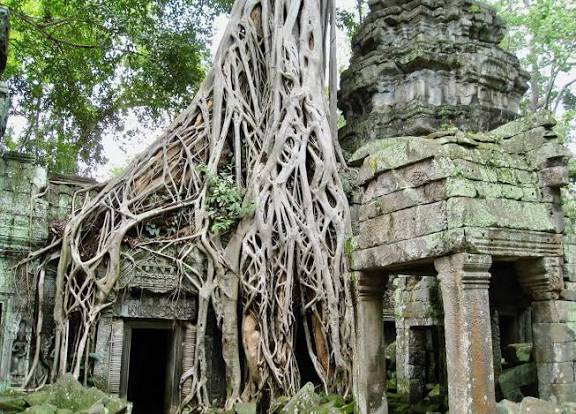
Angkor Wat is considered the largest religious monument in the world. It is more than a temple and is Cambodia’s national symbol, proudly displayed on the country’s flag. Built in the 12th century under King Suryavarman II, the temple complex embodies the Khmer Empire’s grandeur and continues to shape global understanding of civilisation, religion, education, and architectural innovation.
Civilisation and Urban Scale
Centuries ago, Angkor was the beating heart of the Khmer Empire, sustaining nearly one million people. Its vast reservoirs and canals turned Cambodia into an agricultural powerhouse, proving how urban planning and water management could shape the destiny of a civilisation.
Architectural Innovation
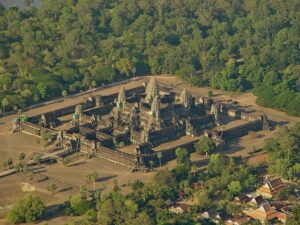
Constructed between 1113 and 1150 CE, Angkor Wat remains the largest religious monument in the world. Its towers mirror Mount Meru, the cosmic axis of Hindu and Buddhist belief, while its bas‑reliefs narrate epic tales.
READ ALSO: Breakfast beneath the pyramids, by Fatima Ma’aji Muhammad
The temple’s alignment with celestial movements shows the Khmer mastery of engineering and astronomy.
UNESCO World Heritage
In 1992, Angkor was declared a UNESCO World Heritage Site, ensuring protection of its temples and monuments.
The recognition highlights Angkor’s universal value as a cultural and historical treasure, while preservation efforts guard against tourism pressure and climate threats.
Economic Power and Trade
Angkor’s wealth was built on rice cultivation, supported by its irrigation system. Surplus harvests fuelled regional trade, linking Cambodia to China, India, and neighbouring states. This economic strength financed monumental construction and reinforced the divine authority of Khmer kings.
Religion and Education
Originally dedicated to Vishnu, Angkor Wat later became a Buddhist sanctuary, reflecting Cambodia’s religious transformation.
Temples doubled as centres of learning, where monks taught literacy, philosophy, and sacred texts. This fusion of Hindu and Buddhist traditions shaped both spiritual life and civic education across Southeast Asia.
Tourism and Modern Role
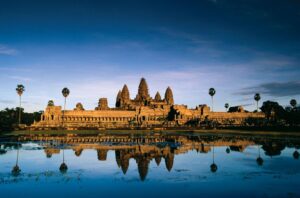
Today, Angkor Wat draws millions of tourists each year to Siem Reap. Visitors marvel at its scale, carvings, and spiritual atmosphere, making tourism a cornerstone of Cambodia’s modern economy. While this global attention brings prosperity, it also poses challenges of preservation, as heavy foot traffic and climate change threaten the fragile stonework.
READ ALSO: Finding order abroad, missing home within, by Falmata Ma’aji Muhammad
Enduring Legacy
Angkor Wat stands as Cambodia’s living symbol—a monument of stone that embodies civilisation, faith, education, and power. Its corridors echo with both ancient grandeur and modern footsteps, reminding the world how one city’s legacy can continue to shape history.
Follow the Neptune Prime channel on WhatsApp:
Do you have breaking news, interview request, opinion, suggestion, or want your event covered? Email us at neptuneprime2233@gmail.com