
Attakar: Advancing cultural resilience and heritage through archaeological evidence,by Tawheed Yakub
Across the rugged hills and valleys of Southern Kaduna lies a people whose history has been shaped by migration, settlement, agriculture, traditional institutions and an enduring determination to preserve their identity.
They are the Attakar, also known in different historical and linguistic references as Atakad, Atakat, Attaka, Ataka, Takad or Takat, an indigenous people whose principal homeland is associated with Kaura Local Government Area of Kaduna State, with Attakar communities also extending into parts of Riyom Local Government Area of Plateau State.
The Attakar occupy an important place within the diverse ethnolinguistic landscape of central Nigeria. Their identity is expressed through their language, ancestral settlements, family structures, traditional authority, economic life, oral traditions and cultural practices.
Their history, however, cannot be understood merely by looking at modern political boundaries.
Long before the emergence of Nigeria’s present-day states and local government areas, communities had already established relationships with particular landscapes, cultivated their lands, developed systems of governance and transmitted their histories from one generation to another
For the Attakar, this heritage remains a living inheritance. It is found in the hills where their ancestors established settlements, in the language spoken within families, in the traditions preserved by elders and in the stories that continue to connect the present generation with those who came before them.
The Attakar story is therefore not simply a story of the past. It is a story of identity, resilience, adaptation and continuity.
A Homeland Shaped by Hills and Valleys
The geography of Attakar country has played an important role in shaping the history of its people.
The traditional homeland is closely associated with the hilly terrain of Southern Kaduna, particularly the communities around Kaura. The landscape consists of rocky elevations, valleys, cultivated areas and natural formations that have influenced settlement patterns and economic activities over generations.
For the Attakar, the land represents much more than physical territory. It is connected to ancestry and memory.
It is connected to family histories and the places where earlier generations lived, farmed, worshipped and sought protection. Archaeological investigations around Zangang have provided important evidence of earlier Attakar settlement. Researchers have documented features including house foundations, granary remains, grinding stones, stone tools, pottery fragments, caves and rock shelters.
These remains offer a physical record of communities that existed long before the modern era. The hills were also significant from a security perspective. Elevated settlements could provide strategic advantages during periods of conflict and insecurity, allowing inhabitants to observe the surrounding terrain and defend their communities.
Consequently, the Attakar landscape can be regarded as a historical archive. Its hills and valleys preserve traces of generations whose lives might otherwise be known only through oral accounts.
Traditional Leadership and the Attakar Institution
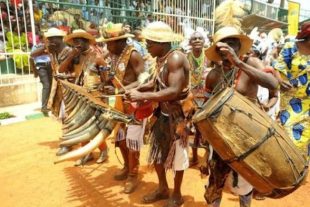
Traditional authority remains an important expression of Attakar identity. The traditional institution of the people is represented by the Agwam Afan Takad, with Fadan Attakar serving as an important centre of traditional authority.
The institution represents continuity between the contemporary Attakar community and generations that preceded it. Traditionally, elders and community leaders played important roles in maintaining social order, resolving disputes, guiding families and preserving communal values. Leadership was therefore not simply a matter of authority; it was also a responsibility.
The traditional institution provided a framework through which customs and collective memory could be preserved.
In contemporary society, the role of traditional institutions has evolved. Modern government structures, formal courts, education and other institutions now perform many responsibilities once handled primarily within traditional systems.
Nevertheless, traditional leadership continues to provide an important symbol of unity and cultural continuity. For many Attakar communities, it remains a visible connection to their ancestral past.
Takad: The Language of Identity
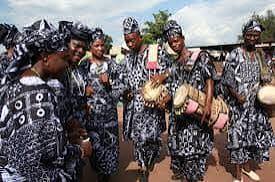
Perhaps one of the clearest expressions of Attakar identity is their indigenous language, commonly referred to as Takad, with related forms and spellings appearing in historical and linguistic literature.
Takad belongs to the broader linguistic environment of the Central Plateau languages and exists within the complex network of related languages spoken across Southern Kaduna and neighbouring parts of Plateau State.
This language is much more than a means of communication. It is a repository of memory.
Through language, a people preserve names, greetings, proverbs, expressions, songs, stories and traditional knowledge. A language can contain ideas and cultural meanings that are difficult to reproduce fully in another language.
For this reason, the continued use of Takad is closely connected to the preservation of Attakar identity. The modern world, however, presents challenges.
English dominates formal education and official communication, while Hausa is widely used as a regional lingua franca. As migration and urbanisation increase, younger members of indigenous communities may increasingly communicate in languages other than their ancestral tongue.
The challenge is therefore not merely linguistic. When an indigenous language declines, the community risks losing part of the cultural knowledge embedded within it.
Preserving Takad consequently means preserving a significant part of the Attakar historical consciousness.
Family, Kinship and Communal Responsibility
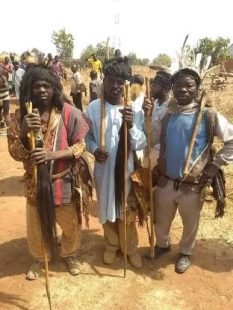
Family has traditionally occupied a central position in Attakar social organisation. The extended family provides a structure through which children learn about their ancestry, responsibilities and place within the community.
Elders have historically been important custodians of family history. They tell younger generations about ancestors. They explain relationships between families and teach traditional values.
They also preserve knowledge about important events and places. Communal responsibility has also been reflected in agricultural activities, ceremonies, marriages, funerals and other major events. Such practices reinforce the understanding that individual wellbeing is connected to the wellbeing of the wider community.
Read Also: The Verre People: Preserving identity, language, culture and community resilience, by Tawheed Yakub
Modern education, migration, Christianity, Islam, formal employment and urbanisation have transformed many aspects of social life. Nevertheless, family remains one of the strongest channels through which Attakar identity can be transmitted.
Agriculture and Traditional Economic Life
Agriculture has historically played an important role in the economic life of Attakar communities.
The fertile valleys and surrounding lands provided opportunities for cultivation, while knowledge of the local environment enabled generations to develop agricultural practices suited to their surroundings.
Archaeological evidence from earlier Attakar settlements, including grinding stones and granary foundations, points to the importance of food production and storage in earlier community life. Farming was consequently more than an economic activity; it was a source of knowledge.
Children could learn from their parents how to recognise suitable land, cultivate crops, store harvests and work according to seasonal patterns.
Agricultural activities could also strengthen relationships between families through communal labour and cooperation.
Hunting similarly formed part of the traditional economic experience of communities living within the surrounding environment.
Knowledge of animals, vegetation, terrain and seasons was an important form of indigenous knowledge.
Although modern employment and changing economic conditions have transformed traditional livelihoods, agriculture remains connected to the history and identity of the Attakar people
The Heritage of Traditional Craftsmanship
Traditional craftsmanship provides another window into Attakar cultural history. Archaeological investigations have recovered pottery fragments and other artefacts from earlier settlements, demonstrating the importance of material culture in understanding the community’s past.
Pottery, in particular, represents the combination of practical knowledge and artistic skill. The production of traditional vessels required knowledge of materials, shaping and firing techniques developed through experience and transmitted across generations.
Such crafts served practical purposes within the household while also reflecting the technological knowledge of the society that produced them. The challenge today is that many traditional crafts face competition from modern manufactured goods.
Plastic, metal, and industrially produced household items have reduced the everyday dependence on traditional products.
Nevertheless, preserving traditional craftsmanship remains valuable because it preserves knowledge about how earlier generations lived and interacted with their environment.
The Archaeological Heritage of Attakar
One of the most significant aspects of Attakar history is the archaeological evidence found within its traditional settlements.
Research around Zangang has revealed remains associated with earlier habitation, including foundations of houses, granaries, grinding stones, stone tools, pottery, caves, rock shelters, and other features.
Such discoveries are important because archaeology provides physical evidence that complements oral tradition.
Where oral history tells communities about their ancestors, archaeological remains can provide tangible evidence of how those ancestors lived.
The settlements also demonstrate the importance of the hills within Attakar history. Elevated communities could provide defensive advantages during periods of insecurity and conflict.
The physical remains of these settlements therefore deserve protection. They are not simply stones and abandoned structures. They are fragments of a historical record.
If properly documented and preserved, they can help future generations understand the experiences of those who inhabited the region centuries ago.
Oral Tradition: The Living Archive
Before widespread literacy and modern documentation, much of Attakar history was transmitted orally. Elders served as custodians of collective memory.
Through stories, genealogies, proverbs, songs and accounts of migration and settlement, knowledge was passed from one generation to another. Oral tradition could explain where families came from, how communities were established and how relationships developed between neighbouring groups. It also served an educational function.
Stories and proverbs could communicate lessons about courage, responsibility, respect, cooperation and acceptable behaviour. But oral history is fragile.
When an elder dies without passing knowledge to younger generations, an irreplaceable part of the community’s history may disappear. This makes the documentation of Attakar oral history particularly important.
Recording interviews with elders, documenting traditional songs and proverbs, photographing historical locations and preserving family histories could create valuable resources for future generations.
The objective should not be to replace oral tradition. It should be to ensure that the knowledge contained within it survives.
Religion and Cultural Transformation
Religion has been part of the changing history of Attakar society. Earlier Attakar communities maintained indigenous religious beliefs and practices involving concepts of a Supreme Being, spirits, ancestors, morality and the relationship between the visible and spiritual worlds.
Over time, Christianity and Islam became part of the religious landscape of the wider region, contributing to significant changes in education, social organisation, beliefs and community life.
The growth of Christianity in particular became closely connected with the establishment of schools and missionary institutions in many parts of Southern Kaduna.
Islam also became part of the broader religious environment in which Attakar communities developed.
Religious transformation, however, does not automatically erase ethnic identity. A person’s religious identity and ethnic heritage can exist alongside one another.
Language, ancestry, family history, traditional institutions and cultural memory can continue to connect people to their ethnic heritage even as religious beliefs and practices evolve.
The history of the Attakar therefore demonstrates how culture can change without necessarily disappearing.
An Identity Beyond Administrative Boundaries
The geographical distribution of Attakar communities also demonstrates an important feature of Nigerian ethnic history.
Their principal homeland is associated with Kaura Local Government Area of Kaduna State, while communities are also found in parts of Riyom Local Government Area of Plateau State.
These locations reflect the fact that ethnic identities frequently existed before the creation of modern administrative boundaries.
States and local government areas are political structures. Ethnic identities are historical structures.
Consequently, an administrative boundary may divide communities on a map without necessarily dividing their language, ancestry or cultural relationships.
For the Attakar, homeland is therefore more than an administrative designation. It is a network of ancestral places, family connections, linguistic relationships and shared memories.
The Attakar Through the Colonial Era
The colonial period introduced profound changes to the political and administrative organisation of the region.
Colonial authorities reorganised territories according to administrative priorities, and indigenous communities were sometimes grouped within larger political units based partly on geographical or linguistic considerations.
Such arrangements contributed to the complex administrative history of Southern Kaduna and the Plateau region.
The experience demonstrates an important reality about Nigerian history: contemporary boundaries do not always correspond to the historical boundaries of indigenous communities.
Despite these political changes, the Attakar retained a distinct sense of identity rooted in language, ancestry and community.
Their ability to maintain this identity through changing political structures is itself an important part of their history.
Culture, Music and Celebration
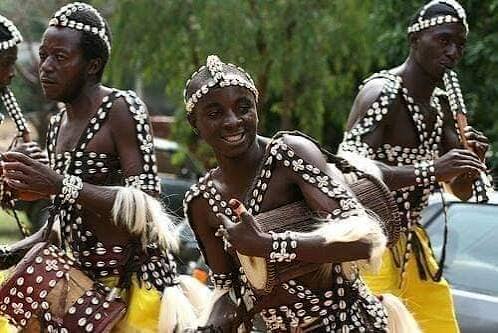
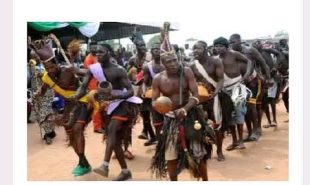
Culture becomes most visible when people gather. Traditional music, dance, ceremonies and communal celebrations provide opportunities for people to express their identity and strengthen relationships.
For indigenous communities, cultural gatherings also serve an educational purpose. Young people watch older generations; they learn traditional forms of expression, they hear stories, they participate in ceremonies, and they develop a deeper understanding of the community to which they belong.
Cultural festivals and gatherings can therefore function as living archives. Unlike a museum object that remains behind glass, living culture is practised; it is heard, performed, taught, and transmitted from one generation to another.
Marriage and the Continuity of Generations
Marriage has traditionally served as an important institution for strengthening relationships between families.
It connects individuals but also creates wider networks of kinship and responsibility. Parents, relatives and elders have historically played important roles in major stages of family life.
Marriage also creates another avenue through which cultural knowledge is transmitted. Children learn their language from their parents; they hear stories from grandparents and participate in family ceremonies.
They develop relationships with members of their wider community. In this way, the family becomes one of the most important institutions responsible for cultural continuity.
Every generation inherits something from the previous one—and carries the responsibility of passing it forward.
Modernisation and the Attakar Generation
The Attakar people now live within a rapidly changing society. Education has opened opportunities for young people beyond their ancestral homeland.
Migration has connected families to Kaduna, Jos, Abuja and other Nigerian cities. Technology has transformed communication. Social media has created new opportunities for communities to document and promote their heritage.
Yet modernisation also presents challenges. A young Attakar growing up outside the traditional homeland may become more comfortable speaking English or Hausa than Takad. Traditional crafts may become unfamiliar. Oral traditions may be transmitted less frequently, and historic settlements may receive insufficient attention.
And cultural ceremonies may gradually lose their relevance to younger generations; the solution is not to reject modernity; the challenge is to make modernity an instrument of preservation.
Young Attakar people can pursue modern education while learning their indigenous language. Digital technology can be used to record elders. Social media can promote cultural history. Schools can teach children about their ancestry. Researchers can document archaeological sites.
Modernisation should expand the possibilities available to a people—not require them to abandon their identity.
Preserving the Attakar Language and Heritage
The preservation of Attakar heritage begins within the family; parents can speak Takad with their children, and elders can deliberately share traditional stories and knowledge.
Young people can record and document these traditions using modern technology. Community organisations can establish cultural programmes. Researchers can document vocabulary, oral history, songs and traditional knowledge. Historical sites can be mapped, studied and protected.
The objective should be to create a bridge between generations. The Attakar child of the future should be able to study modern science, technology, medicine, law or journalism while still knowing the language, history and traditions of their ancestors.
Cultural preservation should therefore not be viewed as resistance to progress. It is a way of ensuring that progress does not come at the cost of identity.
A Heritage Worth Carrying Forward
The Attakar story is ultimately a story of resilience and continuity. It is the story of a people whose identity has endured through changing political structures, religious transformation, economic development, migration and modernisation.
Their hills preserve the traces of earlier settlements, their archaeological sites provide physical evidence of ancestral life, their language carries the voice of generations, their families transmit knowledge and identity, their traditional institutions provide a connection with the past.
Their oral traditions preserve memories that written records may never fully capture, and their young people represent the future of the community.
The responsibility for preserving this heritage does not belong to traditional rulers and elders alone; it belongs to parents who teach their children, to young people who choose to learn their language, to scholars who document their history, to cultural organisations that preserve traditional knowledge and to every member of the community who understands that modernisation and culture remain vital to development and unity.
Follow the Neptune Prime channel on WhatsApp:
Do you have breaking news, interview request, opinion, suggestion, or want your event covered? Email us at neptuneprime2233@gmail.com