


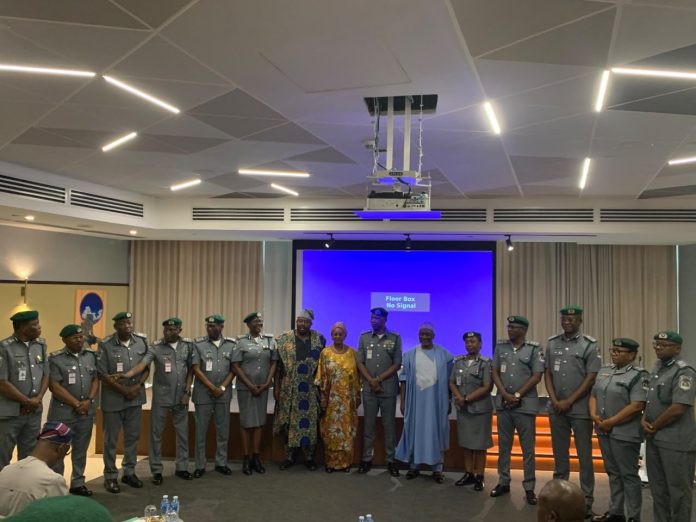
CGC hails Customs Reforms, urges Senate to deepen legislative support for modernisation
The Comptroller-General of the Nigeria Customs Service (NCS), Bashir Adewale Adeniyi, has called on the Senate Committee on Customs to strengthen legislative support for the Service’s ongoing modernisation drive, stressing that effective oversight should focus on institutional reforms and data-driven systems rather than individual transactions.
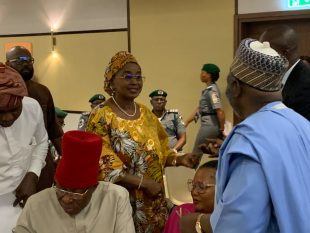
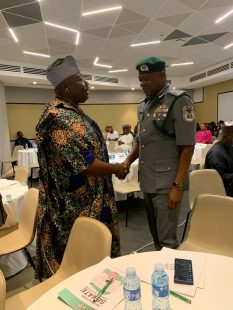
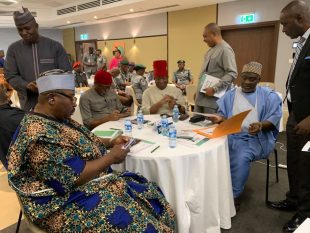
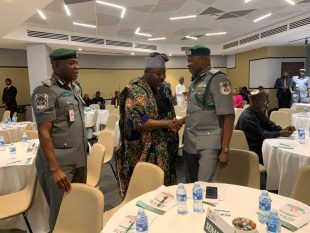
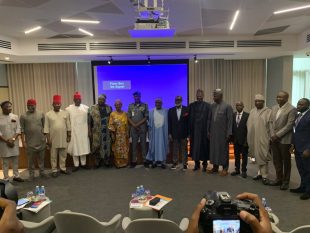
Speaking on Wednesday at the opening of a two-day retreat for members of the Senate Committee on Customs, themed “Legislative Oversight in the Context of Nigeria Customs Service Modernisation and Reforms,” the CGC said the engagement was designed to foster a deeper understanding of the reforms transforming the Service.
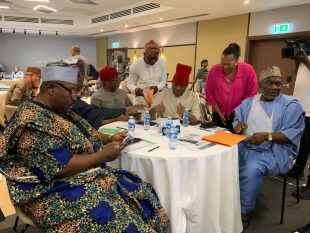
Adeniyi noted that while the Customs Service regularly appears before the National Assembly for budget defence and revenue accountability, the retreat offers lawmakers a rare opportunity to gain first-hand insight into the systems underpinning the Service’s reforms.
“We are not asking you to be less exacting with us. We are asking you to be exacting from a position of complete familiarity with what we are building,” he said.
Highlighting recent achievements, the Customs boss disclosed that the Service generated N7.277 trillion in revenue in 2025, exceeding its annual target by 10.24 per cent. He added that between January and May 2026, the Service had already collected N3.35 trillion.
READ ALSO:Customs unveils final list of 3,852 successful candidates, introduces annual recruitment exercise
According to him, the figures reflect the impact of systemic reforms rather than favourable economic conditions.
“Revenue growth during periods of currency adjustment can sometimes create a misleading impression. What matters is whether the increase is driven by stronger systems, and we believe ours is,” Adeniyi stated.
The CGC also pointed to Nigeria’s emergence as Chair of the World Customs Organization (WCO) Council, describing it as international recognition of the country’s commitment to customs reforms.
He explained that the Service’s modernisation agenda is centred on reducing human discretion in cargo clearance through automated processes, risk-based assessments and digital technologies.
Adeniyi described the Trade Modernisation Project and the deployment of the B’Odogwu electronic customs platform as critical milestones that have enhanced transparency, accountability and operational efficiency.
READ ALSO: Nigeria Customs wins Commonwealth Gold Award for ‘Customs Cares’ CSR Programme
He further credited the Nigeria Customs Service Act 2023 with providing the legal framework for the reforms, including electronic processing, advance rulings, the Authorised Economic Operator programme and sustainable funding mechanisms.
“The National Assembly did not merely oversee these reforms; it created the legal foundation that made them possible,” he said.
The Comptroller-General urged lawmakers to periodically review the implementation of the Act to identify provisions requiring amendment in response to evolving trade realities.
He argued that legislative oversight must now move beyond scrutiny of individual consignments to evaluating the effectiveness of automated systems, risk management frameworks, valuation databases and cargo clearance timelines.
“The important questions today are about how our systems are designed, how risk engines are calibrated and whether our processes deliver the intended outcomes,” he said.
READ ALSO: Customs strengthens professionalism as NIPR inducts 70 public relations officers
Adeniyi also underscored the importance of sustained political backing for customs reforms, noting that automation often faces resistance because it reduces opportunities for discretionary interference.
While commending President Bola Tinubu and the Federal Ministry of Finance for supporting the reform agenda, he said lasting success depends on continued legislative commitment.
Among his recommendations to the Senate Committee were greater emphasis on performance outcomes rather than administrative activities, protection of the integrity of automated risk management systems, a review of customs waivers and concession policies, and more frequent engagement between lawmakers and the Service beyond routine oversight sessions.
Acknowledging that some aspects of the reform programme are still being implemented across ports, Adeniyi admitted that officers and stakeholders are continuing to adapt to the new systems.
Nevertheless, he expressed confidence that the direction of the reforms remains clear.
READ ALSO: Nigeria Customs, World Bank strengthen collaboration on audit, revenue reforms
“We are building a Customs administration that operates on rules rather than relationships, and we are determined to leave behind a modern institution for future generations,” he said.
The two-day retreat brings together members of the Senate Committee on Customs, senior officials of the Nigeria Customs Service, retired Deputy Comptrollers-General and other resource persons to review the progress of the Service’s reform agenda and strengthen legislative oversight.
Follow the Neptune Prime channel on WhatsApp:
Do you have breaking news, interview request, opinion, suggestion, or want your event covered? Email us at neptuneprime2233@gmail.com

