
Dadiya: A fascinating glimpse into the heritage and evolution of an enduring Northeast Nigerian tribe, by Tawheed Yakub
In the mountains and fertile valleys of Northeastern Nigeria lies a people whose identity has endured through generations of migration, social change, religious transformation and modernisation.
They are the Dadiya, also known in some references as Ladiya or Loodiya—a distinct indigenous people whose communities are principally found across parts of Gombe, Adamawa and Taraba states.
Read Also: The Verre People: Preserving identity, language, culture and community resilience, by Tawheed Yakub
Their cultural homeland is particularly associated with Balanga Local Government Area of Gombe State. At the same time, Dadiya-speaking communities are also found in parts of Lamurde in Adamawa State and Karim-Lamido in Taraba State.
For the Dadiya people, heritage is not simply a collection of traditional practices preserved for ceremonial occasions. It is woven into language, family, agriculture, ancestral settlements, traditional authority, communal relationships and the memories handed down by generations.
Their story is therefore not only about the past. It is about how a determined people kept preserving their identity while navigating the realities of contemporary Nigeria.
A Homeland Shaped by Mountains and Memory
The geography of the Dadiya dwelling place has played an important role in shaping the history and lifestyle of its people.
The communities are historically associated with the Muri Mountains and the surrounding plains and valleys, where generations have established settlements and cultivated the land. For the Dadiya people, the land represents far more than economic resources. It carries memories.
Settlements, farms, hills and valleys can preserve stories about ancestors, families, migration and community life. The landscape itself becomes part of the people’s historical consciousness.
Agriculture, which has traditionally formed a major part of Dadiya economic life, has also strengthened the relationship between people and their environment.
The cultivation of crops such as groundnuts, maize, beans and rice has historically provided food and supported livelihoods, while farming activities encouraged cooperation among families and neighbours.
The farm was therefore not merely a workplace. It was also a place where knowledge was transferred from one generation to another.
Traditional Leadership and the Folo Dadiya
Traditional institutions remain an important part of Dadiya cultural identity. The traditional ruler of the Dadiya people is known as the Folo Dadiya, with Bambam recognised as an important centre of traditional authority.
Traditional leadership historically served functions that extended beyond ceremonial responsibilities. Elders and traditional authorities provided guidance, helped maintain social relationships and contributed to the preservation of customs and communal values. The traditional institution also represents continuity.
In a rapidly changing society, it provides a visible connection between the present generation and those who came before it.
For many communities, traditional authority remains one of the institutions through which cultural memory is preserved and transmitted.
Language: The Voice of Dadiya Identity
Perhaps nowhere is Dadiya identity more clearly expressed than in its language. The Dadiya language, also referred to as Ladiya or Loodiya, is an indigenous language spoken across communities in Gombe, Adamawa and Taraba states.
The language belongs to the Niger-Congo family and is associated with the wider Waja linguistic environment. Different varieties have been documented within the Dadiya-speaking area, reflecting the geographical and historical diversity of the people.
But language is more than a communication system. It contains the worldview of a people. Through language, generations preserve greetings, names, proverbs, songs, stories, traditional knowledge and expressions that carry meanings shaped by their particular history. This makes the preservation of the Dadiya language and norms a cultural responsibility.
As Hausa and English continue to dominate wider communication, education, administration and urban life, younger generations may increasingly find themselves using indigenous languages less frequently. The danger is not simply that certain words may disappear; the decline of a language can come with the gradual loss of stories, expressions and cultural concepts that are difficult to reproduce in another language.
Communal Values and the Strength of Family
Family remains one of the most important foundations of Dadiya social life. As is observed in many indigenous Nigerian communities, the extended family has traditionally played a major role in raising children, maintaining relationships and transmitting cultural knowledge.
Elders have historically served as custodians of family histories and communal memory. They tell younger generations about their ancestors, explain customs and pass on lessons acquired through decades of experience.
Communal responsibility has also been reflected in farming, marriages, funerals, celebrations and periods of hardship. Such practices reinforce the idea that individual wellbeing is closely connected to the wellbeing of the wider community.
Modern education, migration and employment have transformed many aspects of social life, but the importance of family and community remains central to Dadiya identity.
Culture Expressed Through Celebration
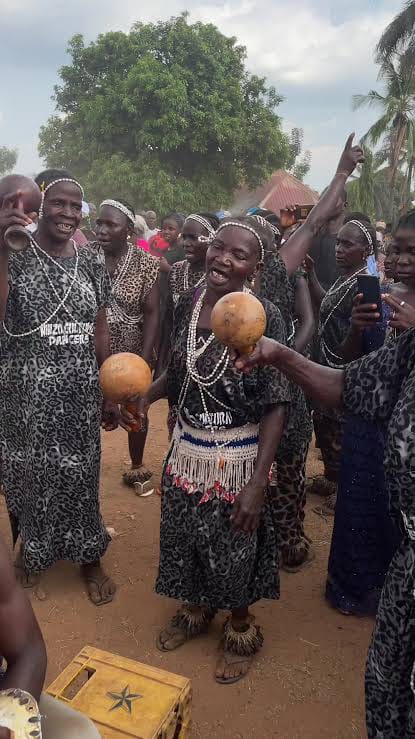
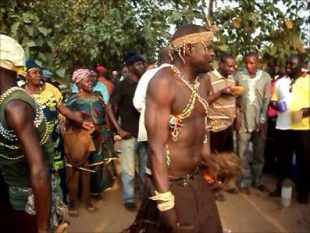
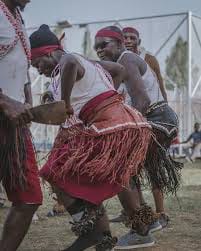
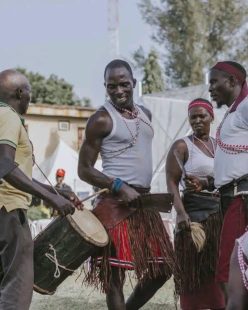
Culture becomes most visible when communities gather. Among the Dadiya, festivals, ceremonies, music, dance, storytelling and traditional gatherings provide opportunities for people to celebrate their heritage and reconnect with their roots.
Cultural festivals such as Yeelin and KAL are associated with Dadiya cultural life. Beyond celebration, such occasions serve an important social purpose. They bring generations together.
They provide opportunities for young people to observe cultural practices. They allow traditional music, dance and forms of expression to remain visible. They also create opportunities for Dadiya people who have migrated to other parts of Nigeria and beyond to reconnect with their ancestral communities.
In this sense, cultural festivals can function as living archives—places where history is not simply read but experienced.
Marriage and the Continuity of Family
Marriage has traditionally been an important institution within Dadiya society. It connects individuals not only to one another but also to families and wider kinship networks.
Parents, relatives and elders have traditionally played roles in guiding families through marriage and other major stages of life. The family established through marriage becomes another channel through which culture is transmitted.
Children learn their language from their parents. They hear family histories from grandparents and learn customs through participation in community life. In this way, marriage and family contribute to the continuity of cultural identity.
An Oral Tradition Rich in Ancestral Knowledge
For generations, much of Dadiya history and traditional knowledge has been preserved orally. Before modern education and written documentation became widespread, elders served as repositories of collective memory.
They preserved stories about ancestors, settlements, migration, farming, relationships, customs and important events.
Traditional songs and proverbs also provided ways of transmitting moral lessons and communal knowledge. But oral history is vulnerable. When an elder dies without passing on the knowledge they carry, an irreplaceable part of a community’s history may disappear.
For this reason, documenting Dadiya oral history should be regarded as an important cultural preservation effort. Recording interviews with elders, documenting traditional songs and proverbs, collecting old photographs and preserving family histories could provide future generations with valuable records of their heritage.
Religion and a Changing Cultural Landscape
Religion has also been part of the changing history of Dadiya communities. Today, Dadiya communities include people of different religious backgrounds, while Christianity, Islam and indigenous traditions have all played roles in the wider cultural history of the area.
The arrival of Christian missionaries in the region during the twentieth century contributed to significant social and religious transformation. Islam has also formed part of the religious landscape of communities across the wider region.
Yet religious change does not necessarily mean the disappearance of ethnic identity. A person’s religious affiliation and cultural identity can exist alongside one another.
Language, family history, ancestral settlements, traditional ceremonies, music and communal relationships can continue to preserve a people’s cultural identity even as religious beliefs and practices evolve.
Dadiya Beyond Administrative Boundaries
Modern state boundaries do not completely define the geographical extent of Dadiya identity. Dadiya-speaking communities are found across parts of Gombe, Adamawa and Taraba states.
This is a reminder that ethnic and linguistic identities often predate contemporary administrative boundaries.
Government boundaries may divide communities administratively, but historical relationships, family connections and language can continue to link people across those borders.
For the Dadiya, the idea of homeland is therefore larger than a single local government area. It is a network of communities connected by ancestry, language and shared cultural memory.
Modernisation and Preservation
Like many indigenous communities in Nigeria, the Dadiya face the challenge of preserving cultural identity in an increasingly modern and interconnected society.
Education has created opportunities for young Dadiya people to pursue careers far beyond their ancestral communities. Urbanisation has opened new possibilities.
Technology has transformed communication. Migration has connected Dadiya families to cities across Nigeria and to communities abroad. Yet these same developments can create distance from traditional culture.
A young person who grows up away from the ancestral homeland may speak more English or Hausa than Dadiya. Traditional ceremonies may become less familiar, while oral histories may no longer be transmitted as frequently as they once were.
The solution, however, is not to reject modernisation; the challenge is to make modernity and heritage complementary. Young people can pursue modern education while learning their indigenous language. Technology can be used to record oral histories, and social media can promote cultural festivals.
Digital archives can preserve traditional songs, photographs and stories. Schools and cultural organisations can encourage children to learn about their ancestry. Modernisation should not require cultural amnesia.
Preserving the Dadiya Language
Language preservation remains one of the most important priorities for the Dadiya people. Parents play the first role by speaking Dadiya with their children. A language survives when its speakers continue to find value in using it.
A Heritage Worth Carrying Forward
The Dadiya story is ultimately a story of continuity; it is the story of a people whose identity has survived changing political structures, religious transformation, economic shifts, migration and modernisation.
Their mountains and settlements preserve memories of earlier generations, their language carries the voice of their ancestors, their farms connect them to the land.
Their families transmit traditions; their festivals bring communities together; their traditional institutions provide a connection with the past, and their young people represent the future.
The preservation of Dadiya heritage is therefore not the responsibility of elders alone. It belongs to parents who teach their children, traditional leaders who safeguard communal traditions, and scholars who document history.
For the Dadiya people, that choice is still being made. And as long as the language is spoken, the stories are told, the ancestral settlements are remembered, and the culture continues to be passed from one generation to another, the soul of Dadiya will endure.
Dadiya is more than a name on a map. It is a people, a language, a homeland and a living heritage.
Follow the Neptune Prime channel on WhatsApp:
Do you have breaking news, interview request, opinion, suggestion, or want your event covered? Email us at neptuneprime2233@gmail.com