Delphi: The sacred heart of ancient Greece, by Gift Luckson
Delphi, Greece was one of the most sacred and influential cities of the ancient Greek world.
Location
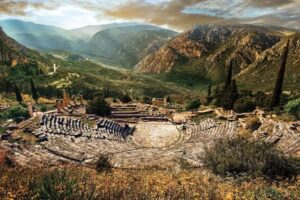
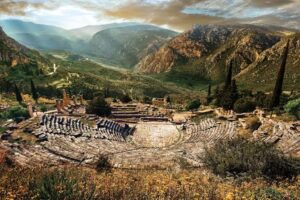
Nestled on the slopes of Mount Parnassus, Delphi was regarded by the Greeks as the centre of the world, marked by the sacred stone known as the Omphalos (navel of the earth).
Delphi’s greatest importance came from the Oracle of Apollo, where the priestess known as the Pythia delivered prophecies believed to be inspired directly by the god Apollo.
According to the Suda, Delphi took its name from the Delphyne, the she-serpent (drakaina) who lived there and was killed by the god Apollo (in other accounts the serpent was the male serpent (drakon) Python).
The sacred precinct occupies a delineated region on the south-western slope of Mount Parnassus.
It is now an extensive archaeological site, and since 1938, a part of Parnassos National Park.
Centre of Great Belief
City-states, kings, and generals from across Greece and beyond consulted the oracle before making major decisions on war, colonisation, politics, and religion.
These prophecies shaped Greek history for centuries.
The city was also a pan-Hellenic sanctuary, meaning it belonged to all Greeks rather than any single city-state.
Religious/Cultural Unity
Delphi serves as a unifying religious and cultural centre in a politically divided Greece.
The Pythian Games, held every four years in honour of Apollo, were among the most important athletic and artistic festivals of ancient Greece, second only to the Olympic Games.
READ ALSO: Street Begging in Nigeria: A humanitarian crisis or security threat, by Gift Luckson
Architectural Ingenuity
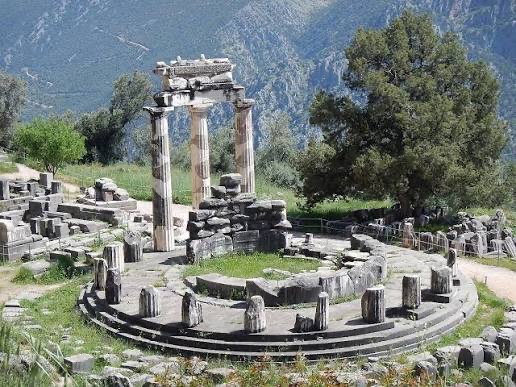
Architecturally, Delphi was rich with temples, treasuries, statues, and monuments donated by various Greek cities to honour Apollo and display their wealth and power.
The Temple of Apollo, the Sacred Way, and the Theatre of Delphi remain enduring symbols of ancient Greek civilisation.
Beyond religion, Delphi influenced Greek philosophy and ethics. Famous inscriptions such as “Know thyself” and “Nothing in excess” reflected the moral values that shaped classical Greek thought.
Modern Days
Today, Delphi is a UNESCO World Heritage Site and stands as a powerful symbol of ancient Greece’s spiritual depth, cultural unity, and enduring intellectual legacy.
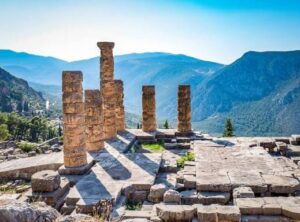
Delphi is now a municipality of Greece as well as a modern town adjacent to the ancient precinct.
The modern town was created after removing buildings from the sacred precinct so that the latter could be excavated.
The two Delphis, old and new, are located on Greek National Road 48 between Amfissa in the west and Livadeia, capital of Boeotia, in the east.
READ ALSO: Into the graceful, calm world of seals, by Gift Luckson
The road follows the northern slope of a pass between Mount Parnassus on the north and the mountains of the Desfina Peninsula on the south. The pass is of the river Pleistos, running from east to west, forming a natural boundary across the north of the Desfina Peninsula, and providing an easy route across it.
On the west side, the valley joins the north–south valley between Amfissa and Itea.
Follow the Neptune Prime channel on WhatsApp:
Do you have breaking news, interview request, opinion, suggestion, or want your event covered? Email us at neptuneprime2233@gmail.com