


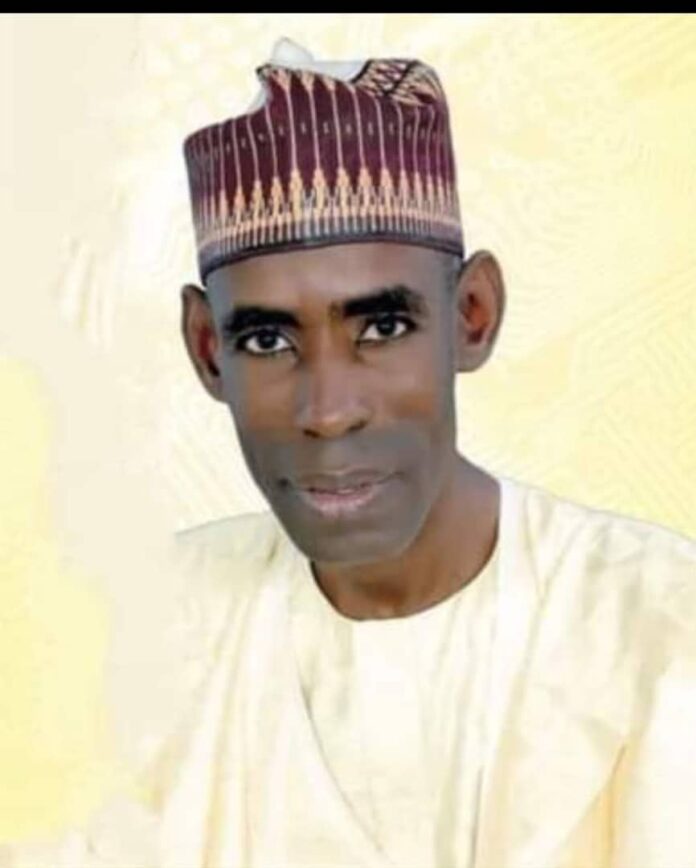
Divided They Fall: Why Nigeria’s opposition must unite to wrestle power from the APC in 2027, by Engr. Bello Gwarzo Abdullahi, FNSE
It troubles me to watch Nigeria’s opposition behave like a patient who knows the diagnosis but refuses the medicine. Every signal pointing to the need for an alternative to the ruling All Progressives Congress (APC) is flashing red, and behind every warning light sits a human face, a stark number, and a ticking clock.
Yet instead of building a disciplined case against the government’s record, opposition leaders are chasing shadows. They remain fractured into warring factions, disowning each other’s candidates, trading insults, and squabbling over zoning before a single ballot has been printed. Let me be painfully clear: if this pattern holds through to 2027, Nigerians will not simply fail to vote the APC out. They will watch the opposition hand the ruling party another term on a silver platter.
The hard numbers show exactly where we are headed, and the economy is the place to start, because that is where most Nigerians actually feel governance, not in a polished press release. When the National Bureau of Statistics reported headline inflation easing to 15.43% in July 2026, the administration rushed to put that figure in every headline. But headline inflation is not what ordinary households buy at the market. Food inflation surged that same month to 20.31% year-on-year, its highest point since September 2025, after six straight months of increases.
Regional figures sharpen this reality further. Food inflation in Adamawa breached 51%, while Katsina and Zamfara both crossed 30%. Today, basic food, transport, housing, and dining swallow nearly 72% of the average household’s budget. A government can quote declining headline figures at a press conference, but no one can point a hungry family to a chart and expect it to fill an empty pot.
This widening gap between official spin and daily reality traces directly to the May 2023 fuel subsidy removal, the single decision that has defined this administration’s relationship with the public. Petrol averaged ₦238 per litre in May 2023; by May 2026 it had climbed to ₦1,596, a crushing 570% jump. Over the same period, the national poverty rate rose from 49.8% to nearly 63%.
A study presented at an Agora Policy dialogue in Abuja this year confirmed that poverty spiked sharply following the subsidy removal, easing only slightly after belated social safety measures were introduced. Even the government’s defenders do not deny the pain; they simply argue it is necessary and that the gains are on the way. A focused opposition does not need to invent grievances here. It only needs to ask, consistently and relentlessly: when exactly will those promised gains reach families now paying seven times more for fuel than they did three years ago?
READ ALSO: Beyond the IPO Debate: What the North actually needs to build, by Engr. Bello Gwarzo Abdullahi, FNSE
On security, the numbers describe a nation absorbing violence in slow motion. Data from Nigeria Watch and the NBS Crime Experience and Security Perception Survey place the human toll of insecurity between May 2023 and April 2024 at roughly 615,000 deaths and over 2.2 million kidnappings, with desperate families paying an estimated ₦2.23 trillion in ransoms.
That nightmare has not stopped. Reports from May 2026 alone recorded 156 violent incidents resulting in 842 deaths and 279 kidnappings in a single month, a 90% jump in fatalities compared to May 2025. Meanwhile, Nigeria’s Defence and Security Budget grew continuously from ₦1.97 trillion in 2021 to ₦5.41 trillion in 2026, passing ₦2.41 trillion in 2022, ₦2.74 trillion in 2023, ₦3.25 trillion in 2024, and ₦4.91 trillion in 2025. A government that keeps throwing money at defense while killings continue to rise is not suffering from a lack of resources. It is suffering from a lack of strategy. An opposition that can find a unified voice has every right to say so plainly.
Human capital tells the same story of grand announcements outpacing actual delivery. The Federal Government estimates that 15 million children are out of school, while independent education experts place the number closer to 18.5 million, with officials publicly arguing over which figure is correct. In higher education, ASUU spent much of 2026 warning of fresh nationwide strikes because the government failed to fully implement the December 2025 agreement, while several state governments have yet to pay the agreed 40% salary increase.
Under the 2026 Federal Budget, the largest allocation goes to debt servicing at ₦15.52 trillion, followed by education at ₦3.52 trillion and healthcare at ₦2.48 trillion. Debt servicing alone is more than double the combined spending on education and health. That single comparison belongs on the cover of an opposition campaign manifesto, not buried in a budget document that few citizens will ever read.
Agriculture, the sector that should have softened the blow of subsidy removal by feeding the nation affordably, has instead become another casualty. Benue State, long celebrated as Nigeria’s food basket, recorded food inflation above 40% year-on-year in mid-2026. This was not caused by poor rainfall but by farmers driven off their land by insecurity, rising diesel costs, and an ongoing herder-farmer conflict managed through reactive band-aids rather than lasting policy. When the nation’s breadbasket states report the country’s highest food inflation, any claim that agriculture is a priority collapses under scrutiny.
Fiscal governance has devolved into a familiar pattern of dysfunction. The 2026 federal budget was presented at ₦58.18 trillion and pushed up by the National Assembly to ₦68.32 trillion, a 17% jump in a few months, largely packed with rolled-over, unfinished capital projects. The Fiscal Responsibility Act mandates quarterly implementation reports within thirty days; in reality, the Q1 and Q2 reports for 2025 were not released until December 2025. By March 2026, actual capital disbursements stood at just 18% of what had been promised. Analysts at BudgIT found the same pattern in several states, where governments implemented only 10% to 30% of their capital budgets in early 2026 despite hitting their revenue targets. The problem is not raising money. It is having the discipline to spend it as planned. A budget that is never implemented is not a strategy; it is a wish list with a naira sign attached.
Faced with these realities, the opposition’s behavior in 2026 has been a study in self-sabotage. Earlier this year, leaders including Atiku Abubakar, Peter Obi, and Rotimi Amaechi gathered under the African Democratic Congress (ADC), with party leadership claiming all aspirants had agreed to back whoever won the primary. That unity crumbled quickly. A rival ADC faction publicly repudiated Atiku’s candidacy and threatened legal action over the party’s name. Obi has since broken off to launch his own presidential bid under the Nigeria Democratic Congress, ruling out any role as a secondary candidate. The PDP Governors’ Forum actively undermined the broader coalition effort. Even an August 2026 coalition summit meant to foster cooperation saw its three headline figures, Atiku, Obi, and Seyi Makinde, skip the event entirely, sending representatives instead. That is not the posture of a team preparing to lead a nation. It is the sound of competing egos sharing a room and pretending it is unity.
The blueprint for a winning campaign is sitting in the government’s own official data:
*Food inflation running at nearly twice the headline rate.
*A poverty rate that climbed to nearly 63% following subsidy reform.
*Over 600,000 violent deaths and 2.2 million kidnappings in a single reporting period, despite a fast-rising security budget.
*Capital budget execution hovering around a dismal 18%.
*Debt servicing costs that more than double the entire health and education budgets combined.
Making this case does not require exaggeration, invention, or the divisive ethnic and religious politics that have marred our past. It requires only an opposition that can set personal ambition aside, settle on a single candidate before the 2027 primaries, align on a crisp manifesto targeting these failures, and carry that message to every corner of Nigeria.
History proves that entrenched power in Nigeria can be defeated when leaders unite for a common purpose, just as it proves the cost of failing to do so. In 2006, when allies of President Olusegun Obasanjo attempted to alter the constitution for a third term, a broad coalition of civil society, journalists, and cross-party lawmakers defeated the bill in the Senate and preserved our constitutional limits. In 2010, when President Umaru Musa Yar’Adua’s illness left the country in limbo, the National Assembly invoked the doctrine of necessity to transfer power to Vice President Goodluck Jonathan, choosing consensus over chaos.
Most notably, in 2013 and 2014, opposition groups, including the Action Congress of Nigeria, the Congress for Progressive Change, and key breakaway factions, merged into the All Progressives Congress. That unified front went on to defeat the ruling PDP in 2015, ending sixteen years of dominant single-party rule.
The election math tells the story clearly. In 2015, a merged APC won 53.96% of the vote against a divided field. In 2023, when the opposition fractured three ways between Atiku Abubakar (PDP), Peter Obi (Labour Party), and Rabiu Kwankwaso (NNPP), Bola Tinubu won the presidency with just 36.61% of the vote, the lowest winning share in Nigeria’s modern democratic history. A united opposition once overthrew a sixteen-year incumbent party. A divided one, eight years later, handed that same party another term on little more than a third of the votes.
The lesson has been clear for a decade. What is missing is not public frustration, actionable data, or historical precedent. What is missing is the political courage of opposition leaders to treat 2027 as a battle to be won for the country, rather than a prize to be fought over among themselves. Until that mindset shifts, the APC’s greatest asset will not be its record in office. It will be an opposition that simply refuses to get out of its own way.
Nigerians cannot afford to let this slide into penury continue. A word is enough for the wise.
Written by Engr. Bello Gwarzo Abdullahi, FNSE.
Email: bgabdullahi@gmail.com
Follow the Neptune Prime channel on WhatsApp:
Do you have breaking news, interview request, opinion, suggestion, or want your event covered? Email us at neptuneprime2233@gmail.com

