


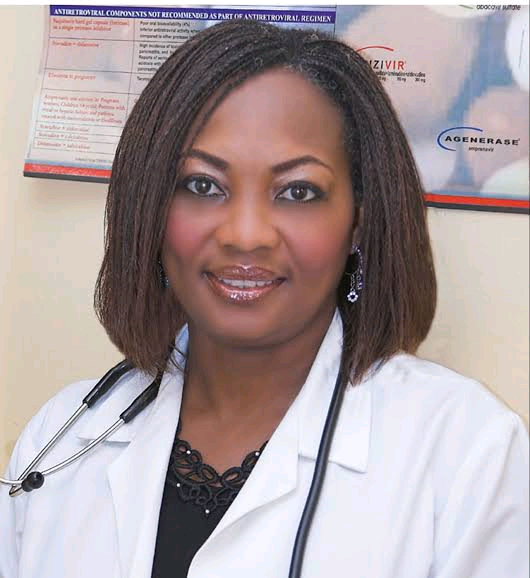
Dr Ameyo Stella Adadevoh: A strong symbol of courage, medical ethics and public service
On 19 August 2014, Nigeria lost a physician whose final weeks of service became one of the most enduring stories of courage in the country’s modern medical history.
Dr Ameyo Stella Adadevoh, a consultant physician and endocrinologist at First Consultant Medical Centre in Lagos, died after contracting Ebola while caring for Patrick Sawyer, the Liberian-American who became Nigeria’s index case during the 2014 Ebola outbreak.
She was 57; her death came less than a month after Sawyer arrived in Lagos on 20 July 2014, carrying a virus that would test Nigeria’s public-health system and expose the extraordinary risks faced by healthcare workers.
On 20 July 2014, Patrick Sawyer arrived in Lagos by air from Liberia, via Lomé, Togo. He was already showing symptoms of illness.
After falling ill at the airport, staff took him to First Consultant Medical Centre in Obalende, where Dr Adadevoh, a consultant physician and endocrinologist, led the team.
At first, Sawyer’s symptoms were considered consistent with illnesses such as malaria. But when Adadevoh examined him, she became increasingly concerned that something more serious could be happening.
Nigeria had never dealt with an Ebola case before. Neither the hospital nor the wider health system was adequately prepared for what was about to unfold.
Yet Adadevoh recognised the danger; she contacted the relevant health authorities and pushed for Ebola testing while taking steps to isolate the patient.
The situation grew increasingly difficult when Sawyer wanted to leave, under pressure from Liberian officials to be released so he could attend an ECOWAS-related meeting.
Adadevoh refused.
According to accounts from Adadevoh and the management of First Consultant Medical Centre, the hospital faced intense pressure over keeping Sawyer there. The Liberian ambassador reportedly accused the hospital of effectively detaining him and threatened legal action.
But Adadevoh stood her ground.
She insisted that Sawyer remain isolated because of the potential danger to other people. Her decision proved crucial.
READ ALSO: Prof. Iya Abubakar: A lifetime of distinguished service to academia and public service
The Ebola diagnosis was subsequently confirmed, and Sawyer died on 25 July 2014.
By then, however, he had already exposed people at the hospital and elsewhere.
Adadevoh and her colleagues immediately became part of the response to the emerging outbreak.
The danger that Adadevoh had been trying to prevent eventually reached her.
She contracted Ebola while caring for Sawyer. On 4 August 2014, Nigerian authorities confirmed that a doctor who had treated the index patient had tested positive for Ebola. Contemporary reports identified the doctor as Adadevoh.
She was moved into isolation and received treatment. Her condition generated enormous concern across Nigeria. Friends, colleagues and members of the public hoped that she would recover.
But the disease proved fatal.
On the afternoon of 19 August 2014, Dr Ameyo Stella Adadevoh died in Lagos.
Before Ebola, Adadevoh had already built a distinguished medical career.
Born in Lagos on 27 October 1956, she studied medicine at the University of Lagos and subsequently trained in endocrinology in the United Kingdom. She worked at Lagos University Teaching Hospital before joining First Consultant Medical Centre, where she spent more than two decades and eventually became Lead Consultant Physician and Endocrinologist.
Her medical career was not limited to Ebola.
She was involved in the treatment and identification of other infectious diseases and was known for her attention to detail and commitment to patient care.
But it was the events of July and August 2014 that transformed her from a respected physician into a national symbol of public service.
Adadevoh’s story is sometimes told as though one person’s action alone stopped Ebola in Nigeria.
The reality was larger.
Her decision to keep Sawyer isolated was a critical early intervention, but Nigeria’s eventual success also depended on contact tracing, isolation, quarantine, laboratory testing, surveillance, government coordination and the work of hundreds of health professionals and international partners.
The CDC later recorded that Nigeria’s outbreak resulted in 20 cases and eight deaths and was contained within three generations of transmission.
The WHO subsequently described Nigeria’s response as a remarkably successful containment effort. Contact tracing eventually reached almost all exposed persons, while authorities established facilities for isolation and monitoring.
Nigeria was declared free of Ebola transmission on 20 October 2014, after completing the required 42-day period without a new case.
Adadevoh did not accomplish that alone. But her early clinical suspicion and refusal to allow an infected patient to leave the hospital became one of the defining moments in the response.
READ ALSO: Paul Osakpamwan Ogbebor: A life of service as Nigeria’s first Defence Academy cadet
Four healthcare workers who treated Sawyer eventually died from Ebola, including Adadevoh.
Her death therefore became a reminder of the enormous personal risks faced by healthcare workers during outbreaks.
At a time when Nigeria had little experience with Ebola and limited preparedness for the disease, Adadevoh continued working in a situation that exposed her and her colleagues to a deadly infection.
She did not know exactly how the story would end.
She simply recognised a danger and acted on it.
A legacy that outlived the outbreak
After her death, tributes poured in from Nigeria and around the world.
Her name became associated with courage, medical ethics and public service.
The Dr Ameyo Stella Adadevoh Health Trust (DRASA) was later established in her memory, continuing work around epidemic preparedness, disease prevention and health education.
Her life has also been remembered through public memorials, educational initiatives and the 2019 Nigerian film 93 Days, which dramatised the events surrounding Nigeria’s Ebola outbreak and portrayed Adadevoh as one of its central figures.
But perhaps the most enduring part of her story is the decision she made when the outcome was still uncertain.
Her decision helped keep Nigeria’s first confirmed Ebola patient within an isolation setting until the diagnosis was established and public-health authorities could respond.
Twenty cases were eventually recorded in Nigeria, with eight deaths, before the outbreak was contained.
Dr Ameyo Stella Adadevoh’s story is therefore not simply the story of a doctor who died from Ebola.
It is the story of a physician who recognised danger, accepted responsibility and acted to protect others, even when the consequences were personally devastating.
Her sacrifice remains an important part of Nigeria’s public-health history.
Follow the Neptune Prime channel on WhatsApp:
Do you have breaking news, interview request, opinion, suggestion, or want your event covered? Email us at neptuneprime2233@gmail.com

