


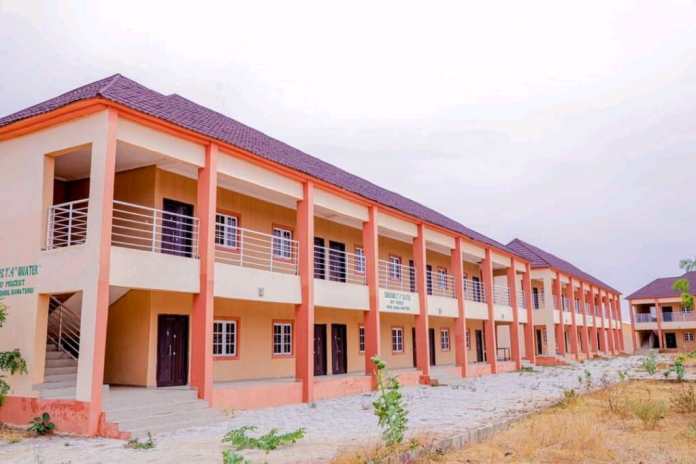
Education Must Be Yobe’s Priority: From policy declaration to functional and quality education, by Umar Yahaya Suleiman
In 2021, while writing my final-year research project on the implementation of the State of Emergency Policy on Basic and Secondary Education in Yobe State, I became interested in a fundamental question: what makes a government policy capable of achieving the purpose for which it was designed? My study examined the education emergency declared by Governor Mai Mala Buni and the subsequent establishment of a technical committee chaired by Professor Mala Muhammad Daura, then Vice-Chancellor of Yobe State University, Damaturu. One of my central arguments was that government needs expertise and evidence at the policy-design stage because it is at that stage that a policy begins to determine where it is heading, how it will be implemented and how its success will eventually be measured.
READ ALSO: States’ emergency declaration on education and the Buni vision, by Hassan Gimba
Some of the recommendations from that period were implemented, while others were not. But that experience remains relevant today. Seven years after the declaration of the emergency, the conversation should not be limited to what the government has done. There have been interventions in school infrastructure, teacher recruitment, scholarships, learning materials and other areas. The more important question now is: what more must be done to ensure that every child who enters a school in Yobe actually learns?
This distinction is important because education cannot be measured only by the number of classrooms constructed, teachers recruited, or projects commissioned. Those are important inputs, but they are not the final outcome. The real outcome is a child who can read, write, calculate, think, communicate and acquire the knowledge and skills necessary for life and work.
The latest education statistics demonstrate the scale of the challenge. The Federal Ministry of Education’s 2024 Annual School Census, through the Digital Nigeria Education Management Information System, records 1,140,079 learners in Yobe State. Yet the learner-teacher ratio is 62.3, compared with 33.6 nationally, while the learner-classroom ratio is 98.8, against a national figure of 60.1. The learner-toilet ratio is even more concerning at 160.2, compared with 65.9 nationally. These figures show that the challenge is no longer simply about having schools; it is about whether those schools are functional and capable of providing a conducive environment for learning.
Therefore, Yobe’s next education strategy should shift from counting what has been built to measuring what works. Every school should be assessed according to whether it has adequate teachers, functional classrooms, furniture, instructional materials, water, sanitation, security and an environment conducive to learning. A completed classroom is an achievement, but a functional classroom serving children effectively is the real objective.
More importantly, learning itself must become the centre of education policy. UNICEF reported in 2024 that 74 per cent of Nigerian children aged 7–14 lacked basic reading and mathematics skills, while 10.2 million primary-school-age children and 8.1 million junior-secondary-age children were out of school nationally. For Yobe, this should make foundational literacy and numeracy an immediate priority. The state should know how many children can read, understand what they read, write and perform basic mathematics. Regular assessment should identify children falling behind early enough for remedial support. Enrolment tells us how many children entered school; learning tells us what the education system has actually achieved.
This naturally brings us to teachers. No education reform can succeed without competent, motivated and properly deployed teachers. My 2021 research identified teacher quality, training, deployment and welfare among the challenges affecting education implementation. Yobe therefore needs more than recruitment; it needs a functioning teacher development and management system that continuously answers four basic questions: who are our teachers, where are they, what can they teach, and what support do they need?
Recruitment should respond to actual vacancies and subject requirements, while posting and transfer should reflect the needs of schools. Rural and hard-to-reach communities deserve deliberate attention, including appropriate incentives where necessary. Teacher development should focus on practical classroom needs such as literacy and numeracy, teaching methods, assessment, classroom management, inclusive education, digital learning and psychosocial support. Ultimately, government should not ask only how many teachers were trained, but what changed in their classrooms after the training.
READ ALSO: Gov. Buni and the roots of tomorrow, by Maji Bappa Maina
At the same time, education administration must be professionalised. My research also raised concerns around recruitment, promotion, posting and transfer. Where these processes are influenced by considerations unrelated to educational need, the consequences eventually reach the classroom. A teacher should not be posted to a school because of influence while another school is left without the personnel it requires. Recruitment should be based on qualification and need, promotion on established rules and performance, and deployment on educational requirements. This is not merely an administrative issue; it directly affects the child.
Furthermore, education planning must recognise that Yobe is not educationally uniform. Urban schools may face overcrowding, while rural communities may struggle with enrolment, retention, distance and teacher shortages. DNEMIS data, for example, show that Bursari Local Government Area had a learner-teacher ratio of 50.4 in the 2024/25 school year, compared with 62.3 for the state as a whole. This demonstrates why resources should be distributed according to educational need rather than mechanically divided equally. A school facing severe teacher shortages, poor infrastructure, insecurity or weak learning outcomes may require greater support.
The same principle should guide the response to out-of-school children. UNICEF reported in 2024 that approximately two million children across Borno, Adamawa and Yobe were out of school, while 56 per cent of displaced children in the three states were not attending school. This is a regional figure, not a Yobe-specific estimate, but it illustrates the environment in which the state is operating. Yobe needs a reliable system for identifying out-of-school children and understanding why they are absent. Poverty, insecurity, displacement, distance, disability and family responsibilities require different responses. Accelerated learning, community learning centres, flexible arrangements and reintegration into formal schools should therefore be considered where appropriate.
In the same way, Islamic and non-formal education should not be excluded from education planning. UNICEF has documented programmes integrating literacy and numeracy into Tsangaya centres in the North-East, including support to 680 centres across Borno, Adamawa and Yobe. This provides an opportunity to develop pathways through which children can receive foundational skills while respecting the character of Islamic education.
Girls’ education also requires attention beyond enrolment. DNEMIS data indicate that female learners constitute 51.3 per cent of learners in Yobe, while female teachers account for 44.7 per cent. The state should therefore focus not only on enrolment but also on retention, completion and learning, particularly for vulnerable girls. Scholarships, safe schools, adequate sanitation, mentoring and community engagement can support this objective.
Meanwhile, Yobe must prepare for emergencies rather than responding only after they occur. Insecurity, displacement, disease outbreaks and flooding can disrupt schooling. The state should have an education continuity plan that provides for temporary learning spaces, teacher redeployment, learning materials and alternative channels such as radio and offline digital learning.
READ ALSO: Yobe Education Recovery Appeal Fund – My passionate appeal for support, by Yusuf Ali
All of these reforms, however, require funding, and funding must be connected to results. If money is spent on classrooms, the government should know how many functional classrooms resulted. If teachers are trained, it should know whether teaching improved. If scholarships are provided, it should know whether beneficiaries remained in school. This is the difference between expenditure and investment.
Finally, education policy must listen to those who implement and experience it. Teachers understand classrooms; parents understand household barriers; students understand the learning environment; researchers provide evidence; traditional and religious leaders understand community realities; and civil society can provide independent perspectives. Government remains responsible for policy decisions, but meaningful consultation can produce better and more implementable policies.
The lesson from the education emergency declared in 2019 is therefore not that Yobe has failed, but that policy declaration alone cannot transform education. Transformation requires continuity, expertise, competent teachers, professional administration, reliable data, adequate resources, stakeholder participation and measurable accountability.
Yobe must now move from policy declaration to implementation, from construction to functionality, from enrolment to learning, from recruitment to teacher quality, and from expenditure to results.
The priority should be the child. Every child should have the opportunity to enter school, every child who enters should have the opportunity to learn, every teacher should have the capacity and support to teach, and every naira committed to education should be traceable to a purpose and measured against a result.
Education is not simply another item in the state budget. It is the investment through which almost every other ambition for Yobe must be built. If Yobe wants stronger institutions, a productive economy, a capable public service and reduced poverty, it needs educated citizens.
The question, therefore, is no longer whether education should be a priority. It must be. The real question is whether Yobe is prepared to build an education system in which every child can enter, every child can learn, every teacher can teach, every school can function, and every public naira can be accounted for.
Umar Yahaya Suleiman writes from Hausari Ward, Nguru, Yobe State.
Email: umarnguru2015@gmail.com
Follow the Neptune Prime channel on WhatsApp:
Do you have breaking news, interview request, opinion, suggestion, or want your event covered? Email us at neptuneprime2233@gmail.com

