


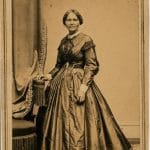
Elizabeth Key Grinstead: The first person of African descent to sue for her freedom during slavery, by Gift Luckson
Elizabeth Key Grinstead (or Greenstead) (c. 1630 or 1632 – 1665) was one of the first mixed-race people in the Thirteen Colonies to sue for freedom from slavery and win.
Key won her freedom and that of her infant son, John Grinstead, on July 21, 1656, in the Colony of Virginia.
Key based her suit on two connected arguments: her father’s status as a free Englishman and her status as an indentured servant. Key’s father was an Englishman who had acknowledged her and baptised her as a Christian in the American branch of the Church of England.
READ ALSO: Venture Smith’s courageous journey from slavery to freedom, by Gift Luckson
He was a wealthy planter who had tried to protect her by establishing a guardianship for her when she was young, before his death. This guardianship outlined that her father gave Key away on an indenture which was supposed to end when she turned 15, but this agreement had expired well before the time of the suit.
A Lawsuit for Freedom
Based on these factors, her attorney and common-law husband, William Grinstead, argued successfully that she should be freed. The lawsuit was one of the earliest “freedom suits” by an African-descended person in the English colonies.
In response to Key’s suit and other challenges, the Virginia House of Burgesses passed a law in 1662 establishing that the social status of children born in the colony (“bond” or “free”) would follow the social status of their respective mothers.
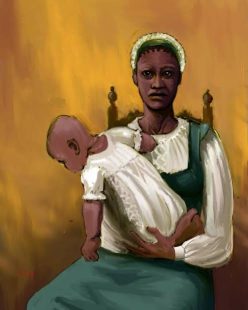
This law differed from English common law, in which children’s social status was determined by their fathers, who had an obligation to support both legitimate and illegitimate children. Virginia and other colonies incorporated a principle known as partus sequitur ventrem or partus, relating to chattel property.
Hardened Boundaries of Slavery
The legislation hardened the boundaries of slavery by ensuring that all children born to enslaved women, regardless of paternity or proportion of European ancestry, would be born into slavery unless explicitly freed.
Early Life
Key, sometimes spelt Kaye, was born in 1630 or 1632 in Warwick County, Virginia. Her mother was an indentured African woman, and her father was Thomas Key, an English planter and a member of the Virginia House of Burgesses, representing Denby, which was later part of Warwick County, but is today’s Newport News.
Thomas Key’s legal white wife lived across the James River in Isle of Wight County, Virginia, where she owned considerable property. Born in England, the Keys were considered pioneer planters as they had come to Virginia before 1616, remained for more than three years, paid their passage, and survived the Indian massacre of 1622.
Around 1636, in a civic case at Blunt Poynt court, Thomas Key was charged with fathering the mixed-race Elizabeth Key. Initially, he denied the charge. Complaints about illegitimate children were brought to court so that fathers would be required to provide support for those children, under English common law, including arranging for apprenticeships so that they could learn skills necessary for their livelihood.
Thomas Key first said an unidentified “Turk” was Elizabeth’s father, but the Court relied on witnesses who testified to his paternity. Thomas Key took responsibility for Elizabeth, arranging for her baptism in the established Church of England and supporting her financially. Sometime before his death that same year (1636), Thomas placed Elizabeth (then aged six) in the custody of Humphrey Higginson for a nine-year indenture.
Sold into Slavery
Higginson, a wealthy planter who owned several plantations, was expected to act as her guardian until Key reached the age of 15 (considered the “coming of age” for girls; during this period, girls frequently married or began working for wages at age 15). Upon reaching age 15, Elizabeth Key would be free. During this period in early Virginia, African and European servants were likely to be indentured for a period of years, usually to pay off passage to the Americas.
The colony required illegitimate children to be indentured for a period of apprenticeship until they “came of age” and could be expected to support themselves. While mortality was high, it was common for indentured servants to earn their freedom.
Working-class people of different ethnicities lived, worked, ate, and played together as equals, and many married or formed unions during the colonial period.
READ ALSO: Harriet Jacobs: A voice of courage against slavery, by Gift Luckson
Thomas Key intended Higginson to act as Elizabeth Key’s guardian, but the latter did not keep his commitment to take the girl with him if he returned to England. Instead, he transferred (or sold) her indenture to Col. John Mottram, the first Anglo-European settler in Northumberland County. In about 1640, Mottram moved to the undeveloped county, taking Elizabeth at age 10 with him as a servant. There is little record of Key’s next 15 years. As a result of the Elizabeth Key freedom suit (and similar challenges), in December 1662, the Virginia House of Burgesses passed a colonial law to clarify the status of children of women of Negro descent around “doubts [that] have arisen whether children got by an Englishmen upon a negro woman should be slave or free.”
It required the children born in the colony to take the status of the mother, whether bond or free, using the principle of partus sequitur ventrum. The statute was a departure from the English common law tradition in which a child of English subjects received their social status and an obligation of support from their father.
Some historians believe the law was primarily based on the economic demands of a colony that was short on labour; the law enabled slaveholders to control the children of enslaved women as labourers. But it also freed the white fathers from acknowledging the children as theirs, providing financial support, or arranging for apprenticeships, as they were required to do in England, or emancipating them.
Some white fathers did take an interest in their mixed-race children and passed on social capital, such as education or land; many others abandoned them. Other European colonies (and later American states) passed similar laws, which enslaved all children born to enslaved mothers. If they had free white fathers, as many did under the power conditions of the time, the fathers had to take separate legal action to free their children.
Only in 1865 did the Thirteenth Amendment to the United States Constitution end slavery in the South and across the United States, except for people enslaved by Native Americans who were not freed by American Indian law until one year later in 1866.
Notable Descendants
Her descendants include actor Johnny Depp, her eighth great-grandson, and Depp’s daughter, actress Lily-Rose Depp.
Follow the Neptune Prime channel on WhatsApp:
Do you have breaking news, interview request, opinion, suggestion, or want your event covered? Email us at neptuneprime2233@gmail.com

