


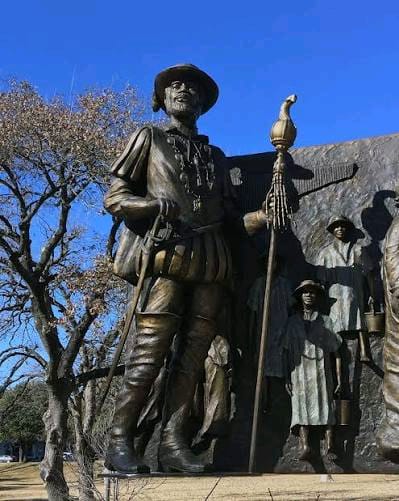
Esteban de Dorantes: The African slave who defied all odds to become a diplomat and linguist, by Gift Luckson
The story of Esteban de Dorantes (also known as Estevanico, Mustafa Azemmouri, or Esteban the Moor) is one of the most incredible, cinematic, and overlooked survival stories in human history.
Enslavement
Enslaved as a young man, he ended up becoming the first African to cross the North American continent, a brilliant multilingual diplomat, a revered healer, and an explorer whose final journey inspired the European search for the legendary Seven Cities of Gold.
From Morocco to the New World
Esteban was born around 1500 in Azemmour, a port town on the Atlantic coast of Morocco. As a young man, he was captured and sold into slavery during a period of severe famine. He was purchased by a Spanish nobleman named Andrés Dorantes de Carranza, who took him to Spain, renamed him “Esteban,” and brought him along on the ill-fated Narváez Expedition of 1527.
READ ALSO:Where Tradition Meets the Mountains: The untold story of the Cham people, by Gift Luckson
The mission seemed straightforward: sail from Spain with 500 men to conquer and colonise Florida. Instead, it became a disaster of epic proportions.
In 1527, Esteban and his master boarded the ships of the Narváez Expedition. The mission was grand.
The Narváez Disaster
The expedition was plagued by bad luck from the start. Hurricanes shattered their fleet, diseases tore through the ranks, and hostile encounters with local Indigenous tribes left them stranded on the Florida coast.
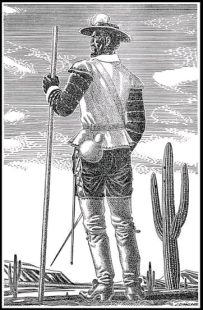
Desperate, the remaining men slaughtered their horses, melted down their armour to make tools, and built five flimsy rafts to escape by sea. They hoped to sail along the Gulf Coast to Spanish settlements in Mexico.
Instead, a brutal storm wrecked the rafts on or near Galveston Island, Texas. Of the roughly 300 men who plunged into the wilderness, only four survived the next few years of starvation, exposure, and captivity by local tribes. Esteban was one of them.
The Four Survivors & The Medicine Men
The four survivors were a striking group: three Spanish noblemen—Andrés Dorantes, Álvar Núñez Cabeza de Vaca, and Alonso del Castillo Maldonado—and Esteban.
READ ALSO: Modern Abayas: Blending creativity and modesty in Northern fashion, by Gift Luckson
For years, they survived as captives and labourers among various Indigenous groups. But as they moved westward, their status dramatically changed. They began to gain renown as healers and medicine men.
Esteban was central to this transformation. He possessed an incredible gift for languages and quickly mastered multiple Indigenous dialects and sign languages. While the Spaniards remained somewhat aloof, Esteban was the bridge. He was the one who negotiated with tribes, learned their customs, and carried a sacred gourd rattle adorned with bells and feathers—a symbol of authority and spiritual power.
Together, the four men walked across Texas, New Mexico, Arizona, and northern Mexico, accompanied by hundreds of Indigenous followers who viewed them with deep reverence.
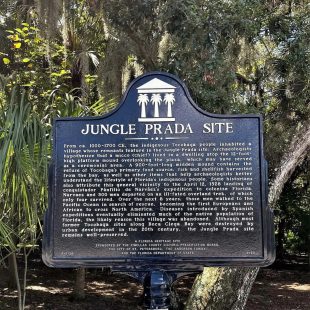
In 1536—eight years after landing in Florida—they finally stumbled upon a patrol of Spanish conquistadors in northwestern Mexico. They had walked thousands of miles across a continent, no European had seen.
The Last Journey Ever: The Search for Cíbola
Once back in Spanish territory, the noblemen returned to Spain or settled down. But Esteban, as an enslaved man, did not have that luxury. The Viceroy of New Spain, Antonio de Mendoza, recognised that Esteban’s unique linguistic skills and survival experience were invaluable. Mendoza purchased Esteban and ordered him to serve as the guide for a new expedition led by a Franciscan friar, Father Marcos de Niza.
Their mission was to find the fabled Seven Cities of Gold (Cíbola).
In 1539, Esteban marched north into what is now Arizona and New Mexico. Because he moved faster than the friar, he went ahead as a scout. He devised a system to send messages back to Father Marcos using wooden crosses.
READ ALSO: Modern Abayas: Blending creativity and modesty in Northern fashion, by Gift Luckson
If the news was minor, a small cross.
If the discovery was grand, a cross the size of a man. A few weeks into the journey, Esteban’s messengers returned with a cross as tall as a person. Esteban had reached the Zuni pueblo of Hawikuh (near the modern New Mexico-Arizona border). He believed he had found Cíbola.
The Mystery at Hawikuh
What happened next remains a subject of historical debate. Esteban approached Hawikuh with his usual flair—wearing bells on his ankles, carrying his sacred gourd rattle, and accompanied by a large retinue of Indigenous followers. He demanded gifts, women, and safe passage.
But the Zuni elders were deeply suspicious. They noted that his gourd rattle bore markings from a rival tribe, and they found it contradictory that a dark-skinned man claimed to be the advance scout for white men. Fearing he was a spy or an invader, the Zuni refused him entry and confined him to a building outside the pueblo.
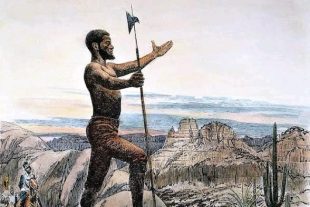
The following morning, a conflict erupted. When the dust settled, Esteban de Dorantes was dead, killed by Zuni arrows.
A Complex Legacy
When Father Marcos de Niza heard of Esteban’s death, he panicked, caught a distant glimpse of the pueblo reflecting the desert sun (which he claimed looked like gold), and fled back to Mexico City. His exaggerated reports sparked the massive, brutal expedition of Francisco Vázquez de Coronado a year later.
Though Spanish histories often reduced Esteban to a footnote or a simple “servant,” modern history recognises him quite differently. He was an extraordinarily resourceful diplomat, a brilliant linguist, and an unbreakable survivor who walked across an unknown continent, leaving an indelible footprint on the history of North America.
Follow the Neptune Prime channel on WhatsApp:
Do you have breaking news, interview request, opinion, suggestion, or want your event covered? Email us at neptuneprime2233@gmail.com