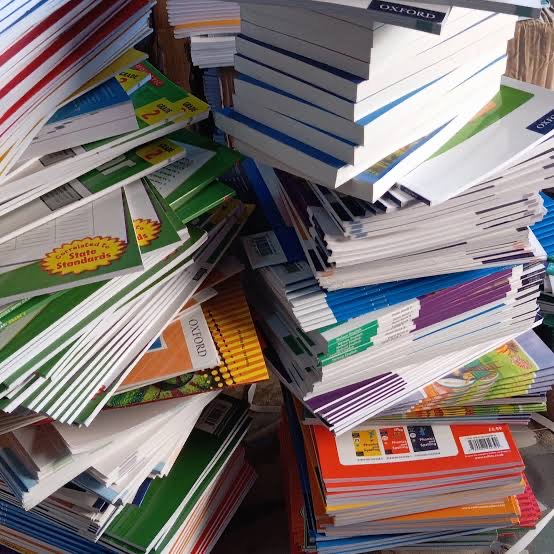
FG launches reusable textbook initiative to lower education costs
The Federal Government has unveiled a comprehensive policy framework aimed at reducing the cost of education for parents and improving learning outcomes.
The policy also seeks to promote sustainability in schools through the adoption of reusable, high-quality textbooks and strengthened quality assurance mechanisms.
The policy, jointly issued by the Minister of Education, Dr Tunji Alausa, and the Minister of State for Education, Prof. Suwaiba Ahmed, was made available to newsmen in Abuja on Friday.
READ ALSO: YSUBEB to prioritize learning materials for schools in 2026 — Executive Secretary
The ministers said the policy formed part of ongoing reforms to reposition the education sector and ease the financial burden on families.
They explained that the framework prioritised the use of standardised, durable textbooks designed to last between four and six years, while prohibiting the bundling of disposable workbooks with textbooks in schools.
According to them, the approach would allow learning materials to be reused across multiple academic sessions, enable siblings to share textbooks, lower recurring education costs and reduce waste, thereby supporting environmental sustainability.
READ ALSO: Gov. Lawal distributes learning materials to 250 public schools
As part of broader reforms, the ministers said the Federal Government had introduced a uniform academic calendar to promote consistency in teaching, learning and school planning nationwide.
They added that graduation ceremonies had been streamlined to curb unnecessary financial pressure on parents, noting that only pupils and students completing Primary Six, Junior Secondary School 3, and Senior Secondary School 3 would be permitted to hold such ceremonies.
The ministers said the policy would also strengthen the assessment, quality assurance, selection, and use of textbooks and instructional materials across the country.
They said the reforms addressed longstanding concerns over frequent cosmetic textbook revisions, weak ranking standards and practices that compelled parents to purchase new textbooks annually without improvements in content or learning outcomes.
According to them, a key provision of the policy is the introduction of structured and meaningful revision cycles, under which textbook revisions must reflect substantive improvements in content rather than minor layout changes.
The ministers further disclosed that the policy introduced limits on the number of approved textbooks per subject and grade level, in line with international best practices observed in countries such as Japan, Kenya, and Tanzania.
They said the Nigerian Educational Research and Development Council would continue to play a central role in the assessment and quality assurance of instructional materials, working with relevant education agencies to ensure that only curriculum-aligned textbooks were approved for use in schools.
The ministers reaffirmed the Federal Government’s commitment to education reform and commended the Universal Basic Education Commission, the Nigerian Educational Research and Development Council, and other technical partners for their contributions to the policy.
They also restated the government’s resolve to safeguard educational standards, promote equity, reduce costs for parents, and ensure access to quality instructional materials nationwide.
Follow the Neptune Prime channel on WhatsApp:
Do you have breaking news, interview request, opinion, suggestion, or want your event covered? Email us at neptuneprime2233@gmail.com