


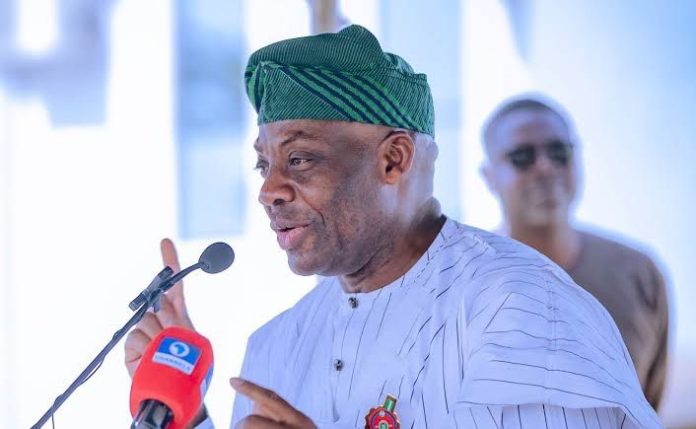
FG rejects Morocco scholarship plan for 100,000 students over cost, course availability
The Federal Government has rejected a proposal to sponsor about 100,000 Nigerian students to Morocco under a bilateral education arrangement, saying it would amount to an inefficient use of public funds.
Minister of Education, Dr Tunji Alausa, disclosed this while explaining the government’s decision to review its foreign scholarship and Bilateral Education Agreement (BEA) programmes.
According to Alausa, the proposal involved sending about 100,000 Nigerian students to Morocco to study courses, including mass communication and journalism, that are already offered by Nigerian universities and other tertiary institutions.
He said the proposal was particularly difficult to justify because the students would first have to spend a year learning French before beginning their academic programmes.
“Number one, we have all those courses in Nigeria. And yet, number two, they were going to spend the first year learning French before they started the programme,” the minister said.
READ ALSO: CAF confirms Senegal’s 2025 AFCON victory, imposes sanctions on Morocco, Senegal
Alausa explained that the government could achieve far greater impact by investing the same resources in Nigerian institutions and supporting students to study within the country.
He said the government had therefore concluded that the existing arrangement was no longer providing sufficient value for money.
“So the Bilateral Education Agreement was not making sense, again, to us in government. It was a way to waste government funds,” he said.
The minister added that President Bola Ahmed Tinubu’s administration would not continue spending public funds on programmes it considers unnecessary.
“And this President will not waste any public funds,” Alausa said.
The Federal Government had earlier announced a review of government-funded BEA scholarships, while assuring students already benefiting from the programme that they would continue to receive support until they complete their studies.
READ ALSO: FG begins disbursement of overseas scholarship allowances to Nigerian students
The policy, however, does not prevent foreign governments from offering scholarships to Nigerian students.
Alausa said countries willing to sponsor Nigerian students could continue doing so, but Nigeria would be more cautious about committing its own resources to overseas education.
The minister said the rationale behind foreign scholarship arrangements had also changed significantly over the years.
He explained that such programmes were initially established when Nigeria lacked sufficient capacity in certain areas of tertiary education.
“But in the last 20 years, we’ve built a number of capacities in the tertiary institutions — universities, polytechnics and colleges,” he said.
The government’s position forms part of broader reforms aimed at strengthening Nigeria’s education sector and ensuring that public spending delivers measurable benefits.
READ ALSO:Al-Ansar University launches automatic scholarship to cut tuition costs
The Federal Ministry of Education has increasingly focused on improving Nigerian tertiary institutions, expanding technical and vocational education, promoting research and innovation, and developing skills aligned with the needs of the economy.
Alausa maintained that the review of overseas scholarships was not simply about cutting funding but ensuring that available resources were deployed where they could have the greatest impact.
The government has also continued to expand domestic student-support initiatives, including scholarships, bursaries and funding through the Nigerian Education Loan Fund.
According to the minister, Nigeria must develop an education system capable of producing the skills, research and innovations needed to drive national development.
He recently stressed the importance of linking academic research with industrial application, saying the country could no longer measure educational success solely by the number of certificates produced.
The minister argued that nations that succeed in the 21st century will increasingly be those capable of transforming knowledge, research and intellectual capital into practical solutions and economic value.
Follow the Neptune Prime channel on WhatsApp:
Do you have breaking news, interview request, opinion, suggestion, or want your event covered? Email us at neptuneprime2233@gmail.com

