


Hezbollah’s drone warfare escalates pressure on Israel, threatens U.S. backed Lebanon talks
Hezbollah has stepped up its use of advanced drone technology in southern Lebanon, introducing new battlefield tactics that are increasing pressure on Israeli forces and complicating diplomatic efforts by Israel and the United States to secure a lasting settlement.
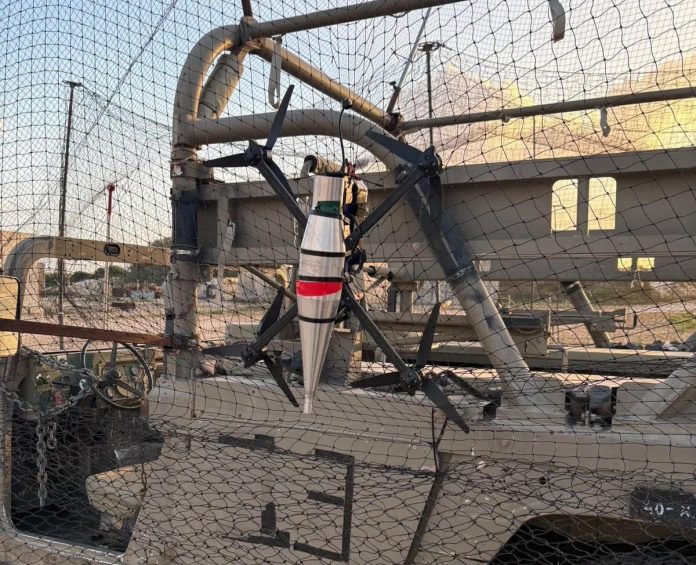
The Iran-backed Lebanese group has increasingly deployed fiber-optic first-person-view (FPV) drones, a technology that gained prominence during the Russia-Ukraine war. Hezbollah reportedly began using the drones in March after resuming attacks following the U.S.-Israeli war against Iran.
A recent assessment by the Armed Conflict and Location Event Data monitor found that fiber-optic FPV drones were used in 21 per cent of Hezbollah’s attacks over a five-month period. More than half of 33 incidents confirmed to have caused casualties among Israeli troops reportedly involved the drones.
Hezbollah has also expanded its use of one-way attack drones, commonly referred to as suicide drones. They accounted for 24 per cent of the group’s attacks during the latest phase of the conflict, compared with six per cent during October and November 2024.
The group’s overall military activity, including rocket attacks, has also increased, rising from about 163 operations per month during the earlier period to roughly 199 per month in the latest phase.
Nasser Khdour, ACLED’s Middle East assistant research manager, said the new drone tactics had enabled Hezbollah to maintain pressure on Israeli troops while reducing the exposure of its operators.
READ ALSO: US-Israeli War on Iran: The New Sheriff in Town (3), by Hassan Gimba
He said the drones allowed the group to strike from greater distances and were also helping it maintain psychological pressure on communities in northern Israel, stretch Israeli air defences and divert Israeli air resources.
Israel Adapts to Growing Drone Threat
The increased use of drones has forced the Israeli military to introduce new countermeasures.
In May, an Israeli military official said the Ground Forces’ Technological Brigade had begun supplying troops operating in Lebanon with wire-mesh nets designed to protect against explosive drones.
The Israel Defense Forces had reportedly obtained about 158,000 square metres of the material, with an additional 188,000 square metres expected to be delivered.
Hezbollah has a long history of adapting its battlefield tactics to counter Israel’s technological advantage.
During the 2006 war, the group used Russian-made Kornet anti-tank missiles against Israeli Merkava tanks. It subsequently developed a twin-launcher system known as “Tharallah” to challenge Israel’s Trophy active protection system.
More recently, Hezbollah has deployed the Iranian-made Almas-1 anti-tank missile, which has reportedly been reverse-engineered from Israeli Spike-MR technology captured during the 2006 conflict.
READ ALSO: US-Israeli War on Iran: The Honey Badger of Nations (2), by Hassan Gimba
Defence analyst Hamze Attar said many of Hezbollah’s traditional weapons became less effective after Israel expanded its use of drones and launched ground operations.
According to Attar, the group subsequently studied lessons from the Russia-Ukraine war and adapted fiber-optic technology for drone operations.
The technology has an important battlefield advantage because fiber-optic-controlled drones are less susceptible to electronic jamming and allow operators to remain farther from the target area.
Attar also said the popularity of video games among younger people could make training new drone operators relatively easy.
He described the weapons as inexpensive and difficult to counter, while allowing Hezbollah to maintain pressure on Israeli troops without exposing operators to the same level of risk.
New Challenge for Netanyahu and Trump
The evolution of Hezbollah’s tactics could further complicate efforts by Israeli Prime Minister Benjamin Netanyahu and U.S. President Donald Trump to achieve a durable settlement on the Lebanese front.
READ ALSO: US feared Israeli plot to target Iranian negotiators during peace talks
Iran has previously linked any lasting ceasefire to an end to Israel’s conflict with Hezbollah. The Trump administration subsequently backed a separate ceasefire arrangement involving Israel, Hezbollah and the Lebanese government.
However, major disagreements remain over the terms of a permanent settlement.
Israel has demanded Hezbollah’s disarmament, while Hezbollah has insisted that Israeli forces withdraw from Lebanese territory. The Lebanese government has also called for an Israeli withdrawal.
Proposals for the Lebanese Army to participate in disarming Hezbollah have meanwhile raised concerns about possible sectarian tensions within the country.
Khdour said the conflict in Lebanon remained closely connected to the wider confrontation involving Iran.
He said Washington had encouraged Israel to pursue an agreement with Lebanon partly to separate the Lebanese front from the broader conflict with Iran and prevent further escalation.
READ ALSO: US-Israeli strike destroys water infrastructure in Southern Iran
Despite suffering substantial losses, Hezbollah has continued to play a significant role in the conflict.
Following a new agreement between Israeli and Lebanese officials in June, a Hezbollah spokesperson told Newsweek that the group remained prepared to continue its operations.
The spokesperson said Hezbollah would maintain its resistance for as long as what it considers Israeli occupation continued.
Netanyahu, meanwhile, has rejected reports that Israel is preparing to withdraw from Lebanon, Gaza or other areas where its forces are engaged.
Despite diplomatic efforts, fighting has continued, with Lebanese authorities reporting Israeli airstrikes and artillery attacks in southern Lebanon.
Israel has also carried out strikes following the reported deaths of two Israeli soldiers in an explosive-device attack in southern Lebanon.
Analysts warn that Hezbollah’s ability to absorb losses and shift toward cheaper, technology-driven forms of warfare could have consequences beyond Lebanon.
Khdour said Israel’s concern was not limited to Hezbollah, as similar tactics could potentially be adopted by armed groups operating in other conflict zones, including Gaza and the West Bank.
Follow the Neptune Prime channel on WhatsApp:
Do you have breaking news, interview request, opinion, suggestion, or want your event covered? Email us at neptuneprime2233@gmail.com

