


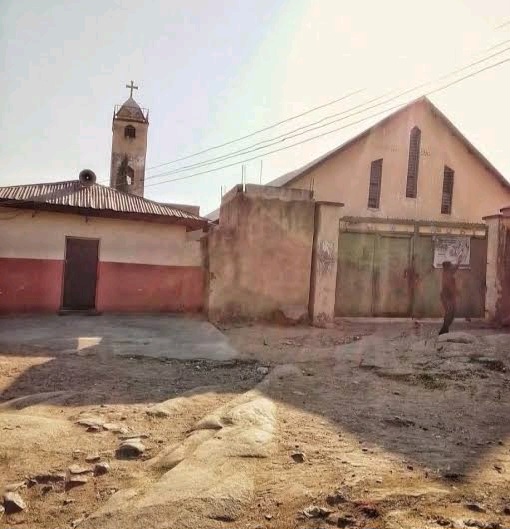
How a church & mosque shared fence for over 100 years in Jos
In the centre of Jos, the Tin City, a Church and a Mosque have stood side by side for over 100 years. The location is Adebayo Street, right next to the city centre popularly called Terminus, where Christians and Muslims worship on the same plot of land.
As a sign of the unity both faiths should embody, the two places of worship even share a common fence. For more than a century they have coexisted, which is a clear example of interfaith resilience.
One of the strongest symbols of this unity is the church and mosque on Adebayo Street in Jos. Despite years of violent conflict in the city, both buildings have survived. They are more than just buildings — they represent hope, peace, and unity for Plateau State and for Nigeria at large.
READ ALSO: Fond memories of Wazirin Fika, by Mahmud Jega
The First Baptist Church Jos and the Nurudeen Society of Nigeria have lived side by side since 1911 without any conflict. For decades, they have drawn attention and sparked conversations as a model of peaceful coexistence.
People who don’t know the history often wonder how two different religious communities have managed to live in peace, especially given the recurring crises in Jos over the years.
History tells us the two worship centres were founded by two brothers who moved from Ogbomosho to Jos in 1911. Even though they practiced different religions, they ran business together, lived in the same house, ate together, and respected each other’s faith without friction.
Both were traders and settled on Adebayo Street. It is said that one was Christian and the other Muslim. Together, they approached a wealthy Yoruba man and retired railway worker named Adebayo and requested land. He granted it, and on that land they built what later became First Baptist Church and Nurudeen Society of Nigeria.
Because of this, Jos shines as a symbol of hope not just for Northern Nigeria, but beyond. The church and mosque on Adebayo Street show us that even in tense environments, understanding can triumph over division.
Also worthy of note is the Assemblies of God Church and Masallacin Gabas Mosque in Lafia, Nasarawa State, situated along Makurdi Road and sharing the same fence. For decades, they have coexisted. I will furnish more details on these two places of worship in due course.
Meanwhile, Jos offers a valuable lesson: with constant dialogue and a real commitment to peace, communities can heal even the deepest wounds. The story of Adebayo Street continues to inspire efforts toward a more peaceful people.
READ ALSO: Late Brigadier Musa Usman: First Governor of North Eastern Nigeria
NOTE: Adebayo Street is very important to the Alago people for two key reasons. One, a prominent Alago leader in the old Benue-Plateau State, Alhaji Muhammadu Odapu Osuza (Commissionan Talakawa), from Keana lived there. If he were alive, he would have told us more about the street. Two, all Alago women from Keana & Doma, who sold cassava flour (alebo), in Jos from the 1960s to date, lived on Adebayo Street, and they used Alhaji Osuza’s house and others, as their warehouse.
Danjuma Joseph (Garkuwan Agwatashi) is a veteran journalist from Nasarawa State.
Follow the Neptune Prime channel on WhatsApp:
Do you have breaking news, interview request, opinion, suggestion, or want your event covered? Email us at neptuneprime2233@gmail.com