


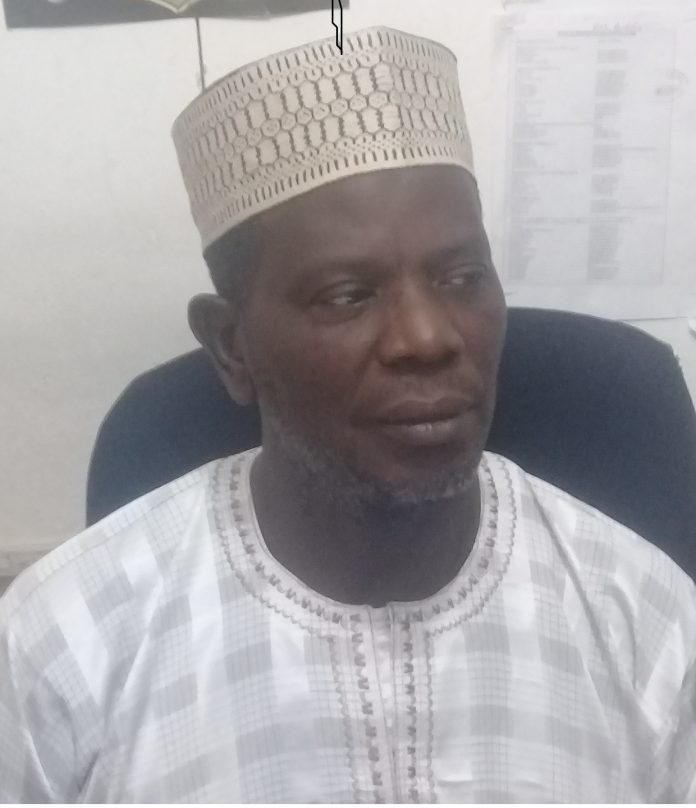
Introduction to Islamic physical security management for the resistance movement in Nigeria (2), by Professor Isa H. Mshelgaru
Nevertheless, not in a manner of comparison, the following defining features outlined in Table 1 set the two systems apart on wider scales.
Table 1: Essential features of Islamic and Secular PSMs
Issues Islamic PSM Features Secular PSM Features
Management Divine trust and religious responsibility Trust and responsibility Profession, or job No obligation
Definitions Application and whole involvement Identity guaranteed Application only Identity loss
Sources Divine, from the Qur’an, Itrah (Nahj Al-Balaghah) Absolute From thinkers and experts Limitations
Source of guide Divine Error free Expertise Error full
Management role Divine trust Responsibility Ordinary role Choice
Viewed Worship Spiritual Mere execution Mundane
Aim/objectives To please Allah (swt) Worldly and heavenly fulfilment To earn a living Worldly satisfaction
Centered on Identity-Centeredness Builds civilization and nation Cultural Dependence Destroys civilization and nation
Focus on Justice and fairness Social development Economic efficiency Injustice and exploitation
Vision Entirety and Strategic Harmonizes present and future Day to day Future crises
Principles Only four Concise and precise 64, from different experts Diverse
Involvement Commitment management Serves righteousness Value-neutral management Indirectly serves oppression
Approach Field oriented Connected to reality Desk-bound Disconnect with reality
Model Development-oriented Progression and advancement Capital-driven and adopted Destructive
Managerial Teaches and guides Justice, rule of law, responsibility, respect for right and ethical exercise of power Codified Behavour and an Instrument for manipulation Extract and dominate
Manager Spiritual technocracy Active spirituality and technocracy Soulless technocracy Lifeless technocracy
Decision factor People Service to humanity Profit or growth Greed and Social crises
Stakeholder Dignity, responsible, justice-seeking entity Dignified and honored Consumerist Excluded and oppressed
Dimensional view of human Multi-dimensional: spiritual and moral Holistic and human Mono-dimensional: materialistic Partial and money-oriented
Motivation 100% intrinsic No cost of motivation Extrinsic Cost of motivation
Utilize Local content On actual local content Abstract models On nonconcrete content
The main issues creating the difference between Islamic security management and non-Islamic security management is embodiment of spirituality and morality as observed in Table 1 which subsequently determines what the focus for each: profit or growth- for non-Islamic management; and justice and people focused for Islamic management, as observed in the Qur’an, Nahj Al-Balaghah and hadith related by Imam Ali (as).
- ISLAMIC PHYSICAL SECURITY MANAGEMENT
Islamic physical security organization and control is a divine form of physical security Management reserved for religiously minded persons and organizations to reach effective operational procedures. Its root is divine, holy, and flawless; limited only by settings and limitations of individual manager applying it. The environment that receives this version of management must itself be Islamic for it to work well, meaning, it must be ideally clean and fair. The Islamic Resistance Movement in Nigeria with all its millions of religious and resistance able men and women is a typical example of such befitting setting for the Islamic physical security management.
Origin and source of Islamic management
The history of Management, as documented by some sources, actually did not start few centuries ago, it is an old discipline, dating back to early human history. Traces management skills were recorded in lives of great men. Imam Ali (as) has earlier said that ‘all great men were exceptionally great manager’. And when this hadith is weighed in conjunction with another one which says: ‘the best manager is one who manages himself’ one will have no option than to reaffirm the inherent relationship of management with human history, as human beings manage their body and soul, and can therefore, imagine when management as a discipline apparently came to existence.
For thousands of years, Muslim managers have worked and develop various fields of management based on inspirations gotten from relevant verses and traditions. For example, Muslim managers received inspirations from different verse of the Quran, notably, the one centered on the managerial life of Prophet Moses (as), revealed in the holy Quran, when conducting the assigned weighty duty of confronting the Pharoah. Moses didn’t only consider his assignment as a divine responsibility but also as a professional managerial exercise. In the conduct of this responsibility, Moses (as) was spiritually guided towards success and along the line, a divine algorism of faultless procedural management practice was laid henceforth for reference. The Nahj Al-Balaghah is likewise another coherent system of moral, social and management from the ‘Harun’ of the Holy Prophet (saw), Imam Ali (as), that can divinely guide managers towards justice, rule of law, responsibility, respect for rights and ethical exercise of power in conduct of managerial and administrative tasks. These two precedencies, derived and driven by divine influences are from the Holy Quran and the descendants (Itrah) of the Holy Prophet (saw). They are virtually suited for all forms of management efforts and are hundred percent perfect in achieving objectives if not for human errors and shortcomings.
Before Moses (as) set out to approach pharaoh, as instructed, he first of all, requested for three essential capacities to arm himself with before taking up the herculean task of facing the cruel enemy, after acquiring the three he demanded the fourth one, which was a capable assistant. The three essential divine guides for his success are cited in Ta-ha (25-28) as; “Rabbish Rahli Sadri (open chest (soul) with light to have good command of things), wa Yassirli Amri (Ease my task for me) and Wahlul uqdatan Min Lisani Yafkahu Qauli” (To have complete and fluent expression of things in a way that is concise and clear for everyone). These verses put together has been named Sharh-e-sadr (capacity of the heart) Management technique by management authorities and experts.
Moses (as) made the fourth request to strengthened his effort, for Prophet Harun (as), be appointed as his supporter (Ta-ha 29-31). Those were the complete essential management ingredients that saw Moses (as) through; an ingredient which still remains a model that will equally make your management successful; anyhow, anytime and everywhere. While managers regard these popular verses as divine model for managing human endeavor, they still remain useful answerable daily supplications.
Islamic Principles of Management
According to Muslim managers, Islamic management is based on only four comprehensive principles contrary to the dozens out there in the secular world. These inclusive principles managers are expected to strictly be adhered to are:
1st. Principles of modern knowledge and science: This includes knowledge and expertise in PS; such as those grounded in emerging knowledge and science
2nd. Principle of jurisprudence: on management, technical and operational related Fiqh (Islamic jurisprudence); involving obligations, prohibitions: dos and don’ts of PS.
3rd. Principle of morality: high ethical standards of behaviors and principles of right and wrong: virtuousness, righteousness, uprightness. It must be centered on ethic.
4th. Principle of wilayatul faqih: religious authority and leadership of the Islamic jurists. That is, be Wilayah-based, (that is, loyal to the leadership rooted in divine authority).
The perfection of the Islamic management principles makes the best use of human capacities, natural resources and capabilities amidst efficiency, effectiveness, justice, farness and dignity.
- ISLAMIC PSM FOR THE ISLAMIC RESISTANCE MOVEMENT
The Islamic PSM is an ideal system of management which demands a suitable ideal environment to operate effectively and the Islamic Movement is a setting that possess such an enabling environment. Among its engagements, there are micro to mega environment to illustrate this management technique on.
What and what to protect in the Islamic Resistance Movement
In the Islamic Movement, the scope of PS job does not only extend beyond ordinary defending and protecting tangible figure and property, but has the intangible as its core critical asset. What to protect can be grouped as;
(i) The leadership of the Movement (i.e., the source, lead and guide of Movement’s ideology)
(ii) The ideology of the Movement (the thought of establishing Islamic system (fikrah))
(iii) The principles and policies of the Movement
(iv) Ideology icons and drivers
(v) Programs, events, activities and their spheres
(vi) Participants and guests
(vii) Ideology propagation assets and infrastructures
(viii) Intellectual properties of the Movement
(ix) Sensitive data and information
(x) Other activists and the general public
There are basically three categories of things to protect in the Islamic Movement: the ideology, leadership and affiliates of the ideology. They are defended from threats to;
(i) Ideology:
Misconception
Misrepresentation
Distortion and Corruption
Derailment
Diffusion
Violation
(ii) Leader (and other figures):
Terrorization (organized)
Harm
Threats
Defamation
Insult
Blackmail
Intimidation
Mislead
(iii) Operations, Assets and Facilities (tangible and intangible)
Terrorism (organized/state)
Sabotage
Espionage
Arson and Assault
Insider Threats
Unauthorized access,
Theft
Disruption
Violence
Vandalism
Accident
Natural disasters
The identity of a member of the Resistance Movement who deserves protection
For effective defense to the resistance Movement, the PS and management providers need to clearly distinguish between a member of the Movement from pretender, infiltrator, impersonator or disguiser; so as to accord him special preference and engage him as an ad hoc in time of critical strategic security situation; even though, even the impersonator can sometimes somehow be of importance. But, how do the providers know who is a true member of the Islamic Movement and who is not?
To be continued.
By Professor Isa H. Mshelgaru.
For responses and feedback, please contact +234 902 701 7690.
Follow the Neptune Prime channel on WhatsApp:
Do you have breaking news, interview request, opinion, suggestion, or want your event covered? Email us at neptuneprime2233@gmail.com

