


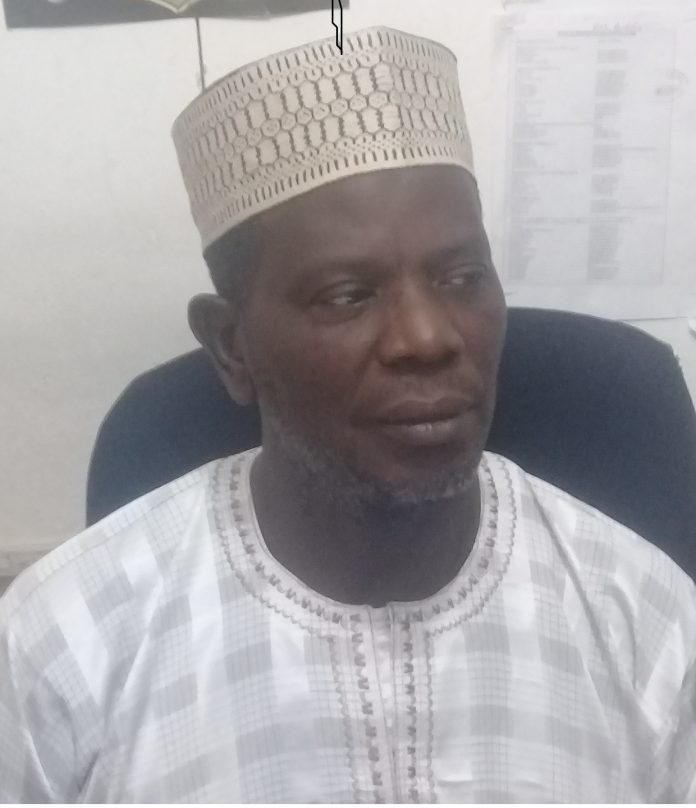
Introduction to Islamic physical security management for the resistance movement in Nigeria (3), by Professor Isa H. Mshelgaru
Continued from last week.
Within the Movement, members have been addressing themselves using the terms: ‘Braza’ and ‘Sister’, ‘Dan gwagwarmaya’ (activist), ‘Follower of’ and ‘Almajirin’ (student of); but these are, however, not clear distinguishing descriptions of who a true member is, rather, they are terms and phrases merely expressing relationship among members and in broader sense a view of activism. I presume the correct definition of who a member is should be born out of one’s connection with the ideology of the Movement.
In this latter case of connectivity with the ideology, it would be logical to retrace steps back to the early days of the Movement, when the Movement was at a stage of an idea and when it was later openly declared, giving birth to what it is today. The Movement was conceived as a conceptual idea in the 1970s when Sheikh Ibraheem Zakzaky apparently became discontented with the system in Nigeria and taught of proffering better alternative of “establishing Islamic system by way of the prophetic model” and swiftly mobilized to realize that. After years of nurturing the concept, Zakzaky publicized his idea in a public declaration occasion in which he leveraged on the popular hadith “whoever among you sees evil, let him change it with his hand; if he cannot do so, then with his tongue; if he cannot do so, then with his heart, which is the weakest level of faith” as a framework for his ideology; then, said: “I declare before you, and the Almighty Allah who is my witness, that I reject the Nigerian system of government, its laws and its leadership. I do not recognize any of this! Instead, I firmly reiterate my belief in the Holy Quran, the Sharia laws, and the laws taught by Prophet Muhammad (saw)”. This few phrased formular statement of thought is the ideology of the Islamic Movement, since inception to date as it metamorphosed to a mass resistance Movement as it is today, nothing ever changed. Since that moment, whoever joins the Movement, did so with same intention and determination, to change the system to an Islamic one, more or less by ‘enjoining good and forbidding evil’.
Consequently, it can now be said that, a member of the Movement is ‘one who beliefs in the ideology of establishing Islamic system and strives to realizing it. Any contrary deed or behavior yielding otherwise is a deviation from lawful act of membership. This tells that, membership of the Islamic Movement is not by registration or physical alliance or proximity; neither it is by participation in activities of the Movement nor wearing ceremonial dresses, nor belonging to certain religious belief but by faith and actions that are guided by the ideology. Shia, Sunni, as well as people of other creeds have equally proven true membership by same faith and actions. Sheikh Zakzaky considers persons with this ideology his co-activists not his followers or students. By this, those with this ideological identity are always at risk of enemy’s threats and are subjects of critical security concern to the PS Manager as well.
From whom is the Islamic Movement being protected?
Haven identified the critical assets of the Islamic Movement that deserve protection, what next comes to mind in designing credible security program is clear identification of entities the Islamic Movement is being protected from. This will afford PS and the manager with the characteristics, strength and weakness of the threat so as to know and acquire the appropriate and sufficient resources to confront it.
As the motive of the Islamic Movement remains unchanged, that is to, ‘establish Islam system’ in this country; a land with deep rooted non-Islamic system by ‘enjoining good and forbidding evil’, naturally, there would be harsh survival reactions from the owners and benefactors of the system. This existing system whose ideology is otherwise known as liberal capitalism, is owned by the western capitalists. They are its sponsors and protectors because it is the system that sustains the continuous dominations and exploitations of Nigerian resources by the West. The capitalists see alternative Islamic ideology and system as rival and threat to their ambitions in the country, as such the western capitalists are the real threat to the resistance Movement. However, they rarely show up directly, instead, they rather project indigenous pawns to do the dirty job while they plot behind the scenes.
These local idiots, posing direct threats on the frontline are only foot field soldiers and crumb beneficiaries of this corrupt system; they are the indigenous authoritarians in position of power and are the first line threat the PS manager faces in defense of the Islamic resistance Movement. They are found in every sector and echelon; playing the threat scripts of the western masters using unlimited entrusted public resources, institutions and mechanisms at their disposal. They can pose hybrid specialized threats using the national Army, Police and other security agencies, hide behind NGOs, organizations or terrorist group and thug elements to cause havoc. This is the might and magnitude of the enemy whose precise understanding is important in providing PS and management to the Islamic resistance Movement to enable it strive to accomplish its ambitions.
The Islamic Resistance Movement as the most ideal society for the Islamic PS Management
Islamic PS management denotes application of Islamic management knowledge, principles, skills, tools and techniques to PS actions and activities in order to achieve target security objectives. These exercises usually take place in a set of environments referred to as workplaces. The workplace is not a mere accommodation, it in one way or the other a setting that influences the operations that take place therein, as well as the quality of the outcomes that are realized from the operations, be it a service or result. This manipulating effects from the workplace underscores the significance of focusing on workplace to enhance the PSM in achieving better success and hitting hard targets.
What then, is the characteristic of this ideal workplace setting that is conducive for attaining most effective Islamic PS management? In his book ‘Education and Training’, Mutahhari underlined holiness as necessary distinctive quality of every workplace when he characterized workplace as a place of spiritual refinement and worship; and that only when such spiritual meaning is attached to workplace and is elevated to status of a ‘mosques’, it becomes a source of blessing and paradise. This makes it a spiritual setting rooted in divine revelation and an avenue for none exclusive human dependency.
Having divine management and the workplace; is not enough to form a complete operational system that will produce effective results, a third critical component of the system is missing and that missing link is the manager; the expert responsible for organizing, planning, scheduling, coordinating the efforts of the rest of the components to executes jobs, achieving intended results.
How should this manager be in the midst of the all-round divine setting and discipline components? Can a non-divine manager be capable and effective in this situation? Definitely not. This is not his domain; a non-divine manager cannot effectively apply the ‘capacity of the heart’ management’ and other divine techniques within the spiritual atmosphere to synergically produce good PS jobs. For sake of completeness, harmony and best performance, all the production components must possess same quality of divine characteristics reminiscence to Prophet Moses (as) when executing his divine duty of confronting the Pharoh of his time. In essence, the manager must be a ‘jihadist’, a worshipper and a possessor of faith in God, pious, ethical, connected to God (wilayah), and resistant, in order to belong and perform well. With this comprehensive and complex combination of divine components when met, the pious management personnel will find themselves in deep state of worship, all the time and everywhere and at the same time being spiritually elevated while realizing difficult task, advancing social conduct, social life and other obligations with all ease. The ‘jihadist’ management is designed to spontaneously move operatives from passivity to intrinsically active participation; creating high self-motivated workers needing no extra extrinsic motivation.
These phenomena are not mere theories without tangible consequences, rather, they are realities with real life applications that bear fruits. At this stage however, the only question requesting an answer is the features and the location where such exemplary society or organization that can receive the Islamic PSM exist. Appropriate societal features like, physical, organizational, psychological and spiritual have been identified as critical issues a society has to bear in order to deliver this mission. In addition to those requirements, the hosting society must have the right structures that will support and facilitate the operations of the system as well as coherent and rich contents. These additional criteria placed on the society hosting the system upon which the Islamic PSM operates complicate the possibility of the search for the right society.
To be continued.
By Professor Isa H. Mshelgaru.
For responses and feedback, please contact +234 902 701 7690.
Follow the Neptune Prime channel on WhatsApp:
Do you have breaking news, interview request, opinion, suggestion, or want your event covered? Email us at neptuneprime2233@gmail.com

