


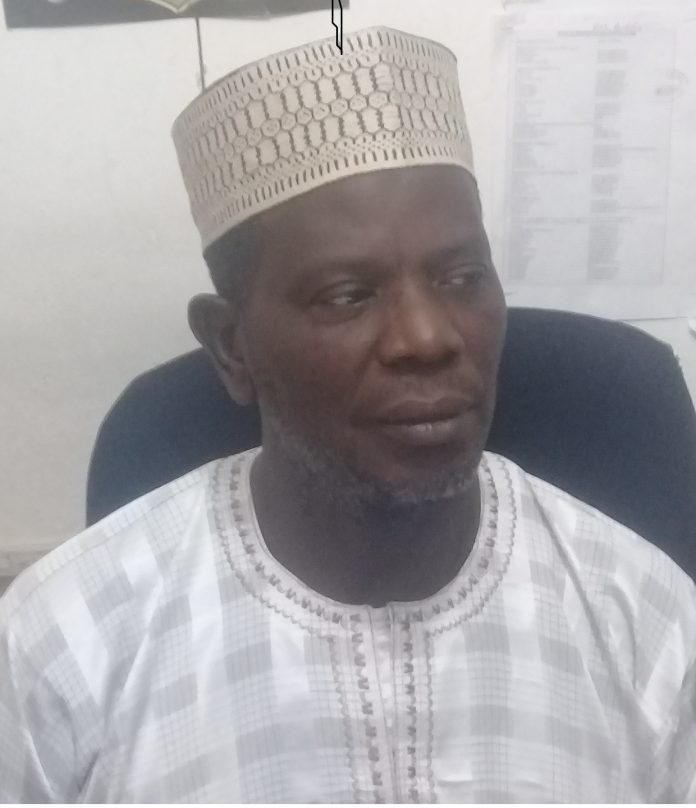
Introduction to Islamic physical security management for the resistance movement in Nigeria (4), by Professor Isa H. Mshelgaru
A lot of Muslim societies and groups have a good number of qualified managers littered here and there but they focus on secular management rather than on Islamic management. They also hold loose and incomplete forms of the divine components mentioned above and as such are unfit for implementation of Islamic PS management. In short, most of the Muslim societies around here are not suitable for application of the Islamic management system because of the absence of those fundamental foundation features and systems.
However, a close enquiry into the Islamic resistance movement under the leadership of Sheikh Ibraheem Zakzaky, which is one of the Islamic societies around, has proven otherwise. The Movement has all that disqualified those societies and in addition has well established structure with strong institutions and sub-institutions; ready embodied with conducive and spiritual workplace, divine operators, massive international events and designed programs manned by pious and able ‘jihadi’ manpower who can apply the Islamic PS management to realize the expected extraordinary outputs?
The volunteer unit of the Movement, the ‘Huras’ is responsible for the Movement’s PS and management of the events and programs. By virtue of its extra religious training and experience, the Hurras, has the exclusive spiritual prerequisite of being exceptional spiritual technocrat. In nutshell, the Islamic Resistance Movement, an arm of the global resistant axis, is the most ideal society for the application of the Islamic PS management techniques in this region.
Examples of the major events and programs the movement observed at large scale in this country, Nigeria include; Mauled Nabi, International Quds day, Ashura and Arbaeen symbolic treks of Imam Hussain (as)’s martyrdom. The Arbaeen symbolic trek is a multi-week-long event commemoration of 40th day of martyrdom of Imam Hussain (as) on the plain of Karbala by Yazid bn Muawiya, circa 1,387 years ago, though not comparable to the herculean task of confronting the Pharaoh, it is heavily demanding in many ways because of the large number of participants and severe threats it encounters from government security agencies. These make this event a good one for demonstrating the Islamic PS management.
Islamic Physical Security Management for Arbaeen of Imam Hussain (As)’s Martyrdom
The annual Arbaeen symbolic trek is the largest event of the Islamic Movement on Nigerian soil that attracts tens of millions of people from all walks of life. Apart from being the hugest in terms of population and vast area coverage, the occasion is scattered deep in remote portions of the country and lasts for weeks, non-stop. These characteristics and associated complexity besides inherent challenges make it the most ideal scenario to demonstrate the Islamic PSM model.
The occasion is of phases: a five days continuous procession from seven destinations enroute Hussainiyya Bakiyatullah, Zaria, the convergence point; with some of the routes stretching well further than 160km, from ‘Dalar gyada’ square in Kano to Zaria, for example. Several others are on other three days routes. The second phase is the Abuja 40th day trek which sees convergence of millions of people from various routes coming to meet at the Eagle Square after trekking for three consecutive days.
The commemoration of Arbaeen comprises many processes and events in different locations and time and has the highest security risk, the most challenging occasion of the Islamic Movement since its inception decades ago. The major security incidences observed hitherto were mainly orchestrated by the Federal Government and the State Government where public institutions and armed forces were used to disrupt peaceful and harmless commemoration occasions.
The foremost documented incidents include: first: the terrorist suicide bombing in the midst of trekkers along Kano-Zaria highway in 2015 which martyred 23 trekkers; second: the massacre of 16 participants in 2016 by the a joint team of national security agencies, on the orders of the former Kano state governor, Abdullahi Ganduje; and the third: was in 2018, when the former President, General Muhammadu Buhari commanded the brigade of guard battalion to brutally massacre 59 peaceful trekkers on the streets of Abuja. Other minor security occurrences were related to traffic, stampede, scarcity of food and water with no loss of life and major injuries.
Tailoring management processes for PS of Arbaeen commemoration in Nigeria
There is no ready-made set of management processes, techniques and other inputs that will fit every new unique human endeavor. Workable inputs are left to the discretion of the manager to tailor the appropriate combination for the job at hand. A successful Arbaeen commemoration PS management will therefore depend on correct selection and alignment of the tailored combination with the life cycle of the PS (from the beginning to the ending) combined together the various components of the Arbaeen events with that of the ‘capacity of the heart’ (Sharh-e-sadr). All these will be done based on strict adherence to the guidance of jurisprudence and wilayatul faqih.
In comparison to Moses (as)’s own assignment, the Arbaeen commemoration can characteristically be phased into four staged life cycle: beginning to ending as;
(i) First Stage: Starting the security assignment
(ii) Second Stage: Organizing and preparing the security assignment
(iii) Third Stage: Carrying out the security assignment
(iv) Fourth Stage: Ending the security assignment
The steps of the ‘capacity of the heart’ management to be employed are three as listed below but in real life application, they do not appear discrete as such, they overlap and interact in different ways determined by situations. The three distinct steps are:
(i) Step one: open chest (soul) with light to have good command of things (Rabbish Rahli Sadri)
(ii) Step two: Ease my task for me (Wa Yassirli A-mri); by helping me get human and non-human experts that will discharge my task as if they are in prophetic mission suggestive of Prophet Harun (as)
(iii) Step three: To have complete and fluent expression of things in a way that is concise and clear for everyone (Wahlul uqdatan Min Lisani, Yafkahu Qauli). Prerequisite instruction, illustration, demonstration and communication skills that will communicate strategic management vision, mission, message etc clearly to others for development purpose.
Anther indispensable addition to be tailoring, is Imam Ali (as)’s character and management practice which will facilitate professional ethics, safeguard human dignity and strengthen trust and confidence within work team and organization, mostly documented in his Nahj Al-Balaghah
The selection process will continue throughout the commemoration period until relevant issues needed to execute each piece of task is tailored in. Tight integration and harmonization of tailored in knowledge with divine knowledge is paramount because it is the only driving force leading to exceptional progress and delivery.
- MANAGING PS FOR ARBAEEN SYMBOLIC TREKS IN NIGERIA
To manage PS of this occasion means merging management procedures with the stages of the PS which has its basis on the processes of the Arbaeen commemoration.
1) Managing PS at the ‘Starting or initiating’ point of Arbaeen symbolic treks
(i) The commemoration activities at this stage that require PS cover include:
Workshops and lectures, trainings, rehearsals, public awareness and sensitization, route mapping, establishment of rest and lodge points, plan match formations, design and production of flags, banners and accessories, procure public address systems.
(ii) The PS activities required to be management at the starting point of the Arbaeen symbolic treks are;
At the starting phase, implementing basic PS measures is essential to protect assets, people, and infrastructure. these are the fundamental activities at this beginning:
Risk Assessment: identify critical assets (equipment, data, personnel), assess potential threats (theft, vandalism, unauthorized access), and evaluate vulnerabilities (weak doors, poor lighting, unsecured entry points).
Perimeter Security: install fencing or barriers around property, ensure gates are locked when not in use, and use visible signage (e.g., “no trespassing,” “surveillance in progress”).
Access Control: restrict entry points to a minimum, issue keys, access cards, or codes only to authorized personnel and implement a visitor logbook for guests and vendors.
Lighting: ensure adequate outdoor lighting (especially near entrances, parking areas, and walkways) and use motion-activated lights in low-traffic areas.
Locks and doors: install high-quality locks (deadbolts, padlocks, electronic locks), reinforce doors and windows with sturdy materials and secure secondary entry points (e.g., roof access).
Surveillance: Set up basic CCTV cameras at key entry and exit points, consider dummy cameras as a deterrent if budget is limited and ensure recording devices are stored securely.
Alarm Systems: install intrusion detection, alarms on doors and windows and consider audible alarms to deter intruders.
Security Personnel: source guards for high-risk areas or large facilities and train participants to monitor and report suspicious activities.
Employee Awareness: train Harris on security protocols (e.g., locking doors, reporting strangers) and encourage a “see something, say something” culture.
Documentation and Policies: develop a basic security policy (e.g., key management, visitor handling) and maintain records of security incidents and improvements.
Regular Checks: inspect locks, fences, and cameras periodically and test alarms and backup systems.
Emergency Preparedness: keep fire extinguishers and first-aid kits accessible and plan for emergencies (evacuation routes, emergency contacts).
(iii) Management Focus at the ‘Starting’ point: Planning, assessment, and implementation
(iv) Key management processes (actions and activities) involved in managing the PS at this point of symbolic treks:
Planning and Assessment: define security objectives, risk assessment, regulatory compliance, and security policies and procedures:
Implementation: training and awareness, perimeter security, access control, and surveillance and monitoring
Ongoing Management: monitoring and maintenance, testing and audits, incident response and adaptation and improvement:
(v) Necessary Management approach required: Open chest (soul) with light to have good command of things (Rabbish Rahli Sadri) and Imam Ali (as)’s system of management principles, moral, technique and conduct.
(vi) Prerequisite requirements to the management approach: ‘open chest (soul) to have good command of things’ management component:
At similar stage Prophet Moses (as) equipped himself with divine knowledge, capacity and capability; similarly, you will obtain and develop necessary things needed to start your assignment to overcome the security management responsibility of such magnitude.
By Professor Isa H. Mshelgaru.
For responses and feedback, please contact +234 902 701 7690.
Follow the Neptune Prime channel on WhatsApp:
Do you have breaking news, interview request, opinion, suggestion, or want your event covered? Email us at neptuneprime2233@gmail.com

