


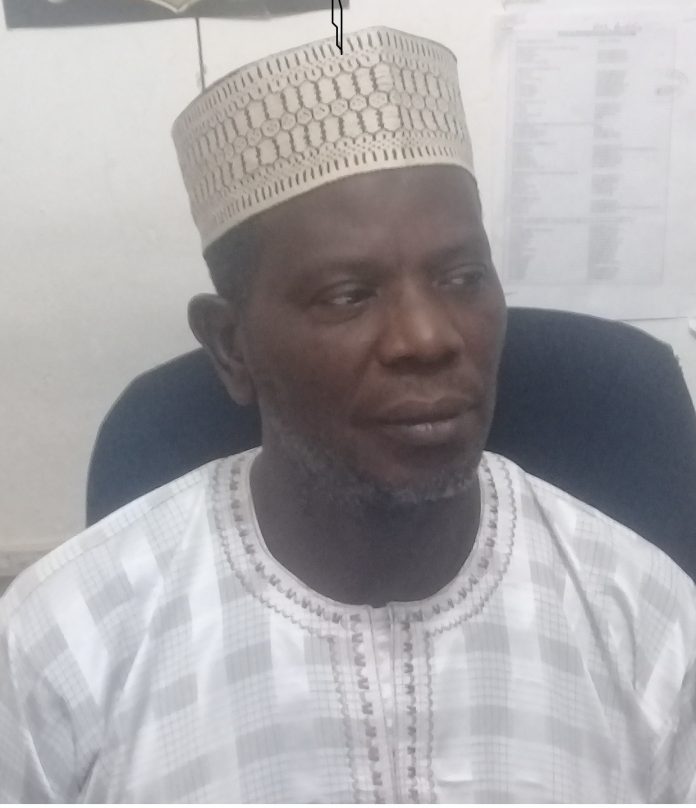
Introduction to Islamic physical security management for the resistance movement in Nigeria (5), by Professor Isa H. Mshelgaru
Your prerequisite requirements are mainly two;
A. Divine knowledge and capabilities: spiritual knowledge and capabilities from the holy Qur’an and the Itrah: this refers to the spiritual characteristics you need to possess to earn divine guidance that will ease you providing PSM to the Arbaeen treks.
Divine knowledge gives inner light of understanding and ability that will afford good command or control of things related to the task: in the arena/field, the task, work environment, specific role in the task and changing or fluctuations, and the dynamisms in them
This is the light that guides to see you through while delivering assigned duty as perfect as expected. Lack of this light weakens ability to make proper choices, decisions and actions leading to faulty decisions and actions and wrong outcomes. Worst still, is when such decisions are passed on to other persons as guides to track course of executing their duties, the negative consequences are going to be much more grievous than can be imagined. Possession of faith, piety and wilayah is precursor to divine knowledge and an excellent model is in Moses (as).
B. Acquired knowledge and capabilities: modern technical and management sciences, skill, tools and techniques involving;
a. Knowledge:
Sufficient familiarity and understanding of;
The core competency areas of (PS) management as illustrated in the guide to project management body of knowledge of Project Management Institute (PMI): PS:
o Integration management,
o Scope management,
o Schedule management,
o Cost management,
o Quality management,
o Resource management,
o Communication management,
o Risk management,
o Procurement management
o Stakeholder management.
PS research and analysis
Research beyond PS discipline: ICT, AI and so on
PSM and its relevant areas
PS field and its changing dynamics
Literacy: written or spoken language, art,
Islamic knowledge: especially Quran, hadith and jurisprudence
Wilayatul faqih and related aspects like linkage to divine source for spiritual guidance
All these forms of knowledge are to enable correct mastery and discharge of task.
b. Mindsets: must develop progressive notations for sense of duty, development, and perfection. People with fixed mindset are indispose and stagnant with no desire for progress and excellence and can miss necessary benefits.
c. Management Skills: the ability to manage PS with expertise and skills utilizing management tools and techniques include:
Communication,
Problem solving,
Empathy (being human),
Time management
Decisions Making
Organization,
Supervision and monitoring
Conflict resolution
Ability to inspire others,
Analytical skill
Resilience
Creativity.
Lower-level managers may additionally need technical skills in various security trades, the like of guard, surveillance, search, access control etc
d. Management Capabilities: required power to lead others to unprecedented height of excellence.
Open to new ideas,
Develop Harris’ career,
Recognize and reward good work,
Team work
Accountable
Integrity
self-awareness
Optimistic
Emotional intelligence
Trust
delegate
organize
transparent
Furthermore, physical capability may be required for other levels of PS management
(vii) Performing the management processes (actions and activities) at the ‘starting’ stage of Arbaeen commemoration:
This is the practical applications of Islamic management, acquired relevant knowledge and associated capabilities, guided by the Islamic principles of management, to put in practice and utilize appropriate resources to realize agreed upon PS ideas associated with the ‘starting’ stage of the Arbaeen commemorations. Executing PSM processes at this phase is critical to building strong, scalable, and cost-effective security program.
Basic requirements at the starting stage before performing PSM activities:
The core requirement before the execution is to establish a foundational understanding of what you are protecting, why you are protecting it, and the environment in which you will operate. The key requirements are:
(i) Define the Purpose and Scope (the ‘why’)
Identify Critical Assets you are protecting: people (leader of the Movement, the ideology of the Movement, participant, visitors, vendors), property (buildings, equipment, vehicles), information (paper files, network infrastructure) and reputation.
Understand the Movement’s Objectives: how does security support the overall mission of the Movement? Security should be an enabler, not a hindrance.
Define Legal and Regulatory Requirements: are there specific laws, standards, or other requirements you must comply with?
Establish Governance: who is ultimately responsible for security? Identify the leaders and key stakeholders.
(ii) Conduct a Risk Assessment (the ‘what could happen’)
You cannot manage risks you haven’t identified. An initial risk assessment provides the justification for all future security spending.
Threat Identification: what are the potential threats? (e.g., theft, vandalism, unauthorized access, espionage, natural disasters, violence).
Vulnerability Assessment: what weaknesses could a threat exploit? (e.g., poor lighting, unlocked doors, lack of cameras, blind spots, untrained Harris, no access control system).
Impact Analysis: what would be the consequence if an asset was compromised? Rank assets based on their criticality to the commemoration events or the Movement (e.g., high, medium, low).
Risk Prioritization: combine the likelihood of a threat with its potential impact to create a prioritized list of risks to address. This tells you where to focus your limited time and budget first.
(iii) Develop a Security Policy Framework (the ‘rules’)
Policies are the blueprint for security program. They define expected behaviors and procedures. It goes by developing:
Core Security Policy: a high-level the aspects that states the Movement’s commitment to security and outlines general principles.
Specific Procedural Documents: develop initial versions of essential procedures. for the starting stage.
Access Control Policy: who is allowed where and when?
Gest and vendor Management Procedure: how are guests handled?
Key Management Policy: how are physical keys issued are tracked?
Incident Response Plan: what are the basic steps to take if a security breach occurs? (who to call, who to notify, how to document).
Role Definitions: who is responsible for monitoring? Who responds to alarms?
(iv) Basic Physical Security Measures (the ‘initial controls’)
Start with low-cost, high-impact measures before investing in complex technology.
Perimeter Security: define the property line. Ensure fences, gates, and exterior lighting are functional.
Natural Surveillance: ensure the environment allows for natural visibility; trim bushes, avoid creating hiding spots.
Access Management: door locks: ensure all exterior doors have functioning locks and begin tracking who has keys; entry points: minimize the number of unlocked and unmonitored entry points and signage: post clear signs indicating access rules (e.g. ‘authorized personnel only,’ ‘all visitors must report to reception’).
Inventory: create a simple log of valuable assets.
(v) Organizational and Human Factors (the ‘People’)
Assign Roles and Responsibilities: designate who is responsible for daily security tasks (e.g., locking up, arming alarms, managing keys).
Basic Awareness Training: inform all participants of the basic security policies (e.g., challenge strangers, don’t prop doors open, report suspicious activity) and create a culture of security.
Establish Relationships: build contact lists and introduce yourself to local, fire department and neighbors (for mutual awareness)
(vi) Documentation and Measurement (the ‘proof’)
Tracking starting point to measure progress and justify future investments.
Create a security Log: a simple notebook or spreadsheet to record incidents, maintenance issues, and key assignments.
Define metrics: decide how you will measure success; starting with basic metrics, such as number of security incidents, number of access control violations (e.g., propped doors) and response time to alarms.
Document everything: keep records of risk assessment, policies, procedures, and training activities.
The goal of this exercise at this stage is not to attain perfection, rather, is to set clarity and foundation. Working through the above listed requirements is like moving from ad-hoc reactions to a proactive managed program that can grow with the symbolic trek events.
Executing the PSM processes (actions and activities) of the starting stage
This stage often referred to as ‘establishment’ or ‘foundational’ phase, is the framework upon which all other security measures will be built. The goal is never to achieve 100% security on day one, but to establish a strong, defensible baseline, identify most critical assets, and create a plan for continuous improvement.
Below is a structured breakdown of key management processes to perform:
(i) Foundation and Assessment (the ‘think first’ phase)
Before purchasing a single camera or hiring a guard, the first think to is, you must understand what you are protecting and from whom, via:
Define Critical Assets:
o Activity: identify and list all assets that are vital to the operation. This goes beyond physical items.
o Examples: key personnel, cash, critical infrastructure like power.
o Output: a prioritized list of assets (e.g., first tier: –most Critical, second tier: –important and third tier: –standard).
Conduct a Risk Assessment:
o Activity: analyze the threats and vulnerabilities associated with critical assets.
o Ask: threats: what can happen? (e.g., theft, vandalism, unauthorized access, natural disaster, violence). Vulnerabilities: how can it happen? (e.g., weak locks, no alarm, public-facing, – reception area with no access control, poor lighting). Impact: what is the impact if the asset is compromised? (financial loss, operational downtime, reputational damage, legal liability).
o Output: a risk register that prioritizes risks based on their likelihood and potential impact.
Understand Legal and Compliance Requirements:
o Activity: research regulations, local codes, and protection laws that mandate specific PS controls.
o Output: a checklist of compliance requirements that security program must meet.
(ii) Strategy and Planning (the ‘blueprint’ phase)
Develop a Physical Security Policy:
o Activity: draft a high-level document approved by management that states the Movement’s commitment to security, its objectives, and the framework for implementation.
o Contents: purpose, scope, roles and responsibilities, policy statements on key areas (access control, visitor management, incident response).
o Output: a formal PS Policy document.
Design a Layered Security (Defense-in-Depth) Model:
o Activity: plan your security in concentric rings, from the perimeter to the inner core.
o Layers to consider: perimeter: fencing, gates, lighting, signage. Building exterior: walls, doors, windows, locks, roof accesses. Building Interior: lobbies, hallways, common areas, secure interior. Asset-Level: safes, locked cabinets.
o Output: a site plan or diagram showing the proposed security layers.
Create Basic Incident Response Protocols:
o Activity: develop simple, clear procedures for how to handle common security events ‘right now’.
o Examples: what to do if an alarm sounds, how to report a suspicious person, who to call for a medical emergency or fire, how to escort visitors.
o Output: a one-page quick-reference guide for a Harris and a more detailed protocol for security/management.
Follow the Neptune Prime channel on WhatsApp:
Do you have breaking news, interview request, opinion, suggestion, or want your event covered? Email us at neptuneprime2233@gmail.com

