


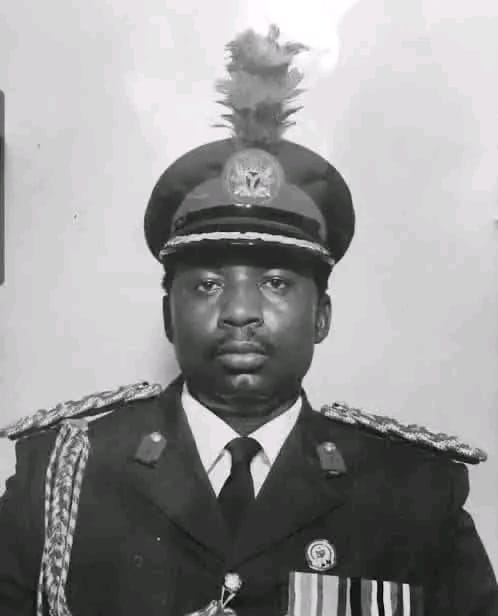
Joshua Mamman Madaki: Honouring a life of military service, political engagement, and national contribution
Joshua Mamman Madaki was one of the notable military officers who transitioned into public service during Nigeria’s era of military governance.
Born on 6 July 1947 in Manchok, Kaura Local Government Area of present-day Kaduna State, Madaki’s early life reflected discipline, education, and a steady path toward national service.
He received his secondary education at St. Paul’s College, Wusasa, an institution known for shaping many prominent Nigerians.
Madaki later joined the Nigerian Army and was part of the fourth intake of the Nigerian Defence Academy, a generation that would go on to play significant roles in the country’s military and political history. His military career steadily advanced, earning him key command responsibilities during a turbulent period in Nigeria’s governance.
READ ALSO: Coup in Guinea-Bissau as military officers declare ‘total control’ of country
During the military coup of 27 August 1985 that brought Major General Ibrahim Babangida to power, Lieutenant Colonel Madaki was the commanding officer of the 6th Guards Battalion based at Bonny Camp in Lagos. His unit was placed on standby on Lagos Island and tasked with securing the eastern approaches to Victoria Island, a strategic assignment that underscored the trust placed in him. Following the success of the coup, Madaki was promoted and appointed Commander of the Brigade of Guards.
In December 1987, Babangida elevated him to the rank of Colonel and appointed him Military Governor of Bauchi State. Madaki later became Military Governor of Plateau State, serving from August 1990 to January 1992.
His tenure in Plateau State coincided with a sensitive period marked by communal tensions. During the 1991 national census, disputes involving the Dong, Tudun Wada, and Kabong communities in Jos North disrupted census activities in those areas. In response, Colonel Madaki established a judicial commission to investigate the ownership and status of the affected communities, an effort aimed at restoring order and clarity.
After retiring from the Nigerian Army, Madaki remained active in national affairs. He joined the National Democratic Coalition, known as NADECO, a pro democracy group that opposed the military regime of General Sani Abacha and called for a return to civilian rule. As Nigeria moved toward the Fourth Republic, Madaki became a member of the People’s Democratic Party, reflecting his continued interest in shaping democratic governance.
Beyond politics, he also contributed to sports administration. In August 2001, he was appointed President of the Nigeria Rugby Football Association, a role that highlighted his broad interests and leadership beyond military and political spheres.
As the 2003 general elections approached, Madaki explored several political platforms in his bid to contest the governorship of Kaduna State. In June 2002, reports emerged that he intended to run under the All People’s Party, aligned with the All Nigeria People’s Party. By October 2002, he had moved to the Alliance for Democracy, where he continued preparations for the gubernatorial race.
Tragically, Joshua Mamman Madaki’s life was cut short on 7 May 2003 when he died in a motor accident after one of the tyres of his jeep burst, causing the vehicle to somersault.
READ ALSO: Honouring General Benjamin Adekunle: A life of military service and dedication
His death came just weeks before the elections he hoped to contest, bringing an abrupt end to a career marked by military service, political engagement, and national contribution.
Follow the Neptune Prime channel on WhatsApp:
Do you have breaking news, interview request, opinion, suggestion, or want your event covered? Email us at neptuneprime2233@gmail.com