


Looking Within the Continent: Why Shettima’s Ethiopia nutrition mission matters, by Abubakar M. Kareto
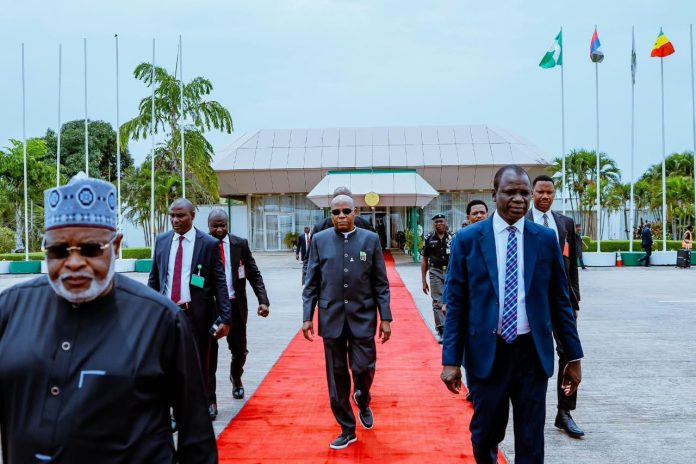
When Vice President Kashim Shettima departed for Addis Ababa to lead the inaugural Nigeria-Ethiopia Nutrition Leadership Exchange Visit, the mission signalled something far more consequential than conventional diplomatic posturing. Accompanied by state governors, federal ministers holding the budget and agriculture portfolios, and emergency management leadership, the Vice President stepped into a focused government-to-government engagement invited by Ethiopian Deputy Prime Minister Temesgen Tiruneh. The objective is practical: observe firsthand how a peer nation transformed high-level political intent into grassroots delivery across farms, training centres, and vulnerable rural households. For Nigeria, where childhood malnutrition remains an urgent developmental drag, this high-level mission represents a long-overdue institutional recalibration.
READ ALSO: From the Hot Savannah to the Villa: The odyssey of Kashim Shettima at 60, by Abubakar M. Kareto
The human and economic stakes underpinning this journey are staggering. Nigeria Demographic and Health Survey findings show that national child stunting hovers around thirty-seven percent, leaving over eleven million boys and girls with irreversible cognitive and physical deficits before their fifth birthdays. In several northern states, the crisis deepens further, with stunting figures climbing well past fifty percent. The World Bank calculates that undernutrition strips billions of dollars from Nigeria’s gross domestic product every year through lost adult productivity, diminished work capacity, and spiralling healthcare costs. Yet for decades, domestic discourse has suffered from a peculiar intellectual reflex: the stubborn assumption that viable policy solutions must always arrive with Western stamps from Geneva, Washington, or London.
Dismissing this Addis Ababa mission because it is an African-to-African exchange reflects that exact intellectual limitation. External consultants and donor-driven pilots rarely understand the harsh fiscal realities, subnational governance frictions, and macroeconomic shocks native to our region. Several African nations, facing identical systemic head-winds, have achieved measurable turnarounds by designing frameworks suited to their institutional environments. Rwanda reduced child stunting from thirty-three percent to under twenty-seven percent by embedding nutrition within its Vision Umurenge social protection system and holding district mayors personally liable through local performance contracts. Kenya lowered its under-five stunting rate from nearly thirty-nine percent to eighteen percent through costed county-level nutrition action plans and expanded community maternal delivery, while Senegal’s dedicated nutrition unit under the Prime Minister’s office proved that sustained high-level coordination can generate deep efficiency from limited public revenues.
Ethiopia earned its place in this conversation through the landmark Seqota Declaration of 2015, which elevated the elimination of child stunting by 2030 into an inter-ministerial political pact. Rather than leaving nutrition trapped within the health sector as an afterthought, Ethiopia anchored it across agriculture, water, education, and social protection. The results speak through operational numbers: community-level growth monitoring now covers over seventy-seven percent of targeted districts, backed by village irrigation projects, poultry and dairy distribution, and direct support to rural families. By treating malnutrition as a cross-cutting problem of state governance rather than a collection of scattered charity projects, Ethiopia built a working delivery mechanism that protects tens of thousands of young children every single year.
The concrete value of this exchange lies in what Nigeria’s delegation can take home to sharpen its own frameworks. Nigeria does not lack comprehensive policy papers; the National Multisectoral Plan of Action for Food and Nutrition and the National Economic Council’s Nutrition 774 initiative already outline the goals. The missing components have always been disciplined coordination, statutory subnational financing, and local government accountability. By touring intensive wheat and banana clusters in Oromia, the Bounty of the Basket training hub, and household interventions in Mojo, Nigerian leaders can see how agricultural yields link directly to infant diets. Seeing how regional and district officials are measured in Ethiopia provides the precise operational blueprint Nigeria needs to turn its seven hundred and seventy-four local councils into functional delivery outposts.
This engagement carries no naive romanticism. Ethiopia contends with its own sharp fiscal constraints, internal conflicts, and uneven regional performance, while its absolute stunting levels remain a challenge. Conversely, Nigeria brings hard-won institutional strengths to the table, including decades of expertise in mandatory industrial food fortification that Ethiopia itself is still working to scale. The mission is not about wholesale copying. It is about studying how political leadership, inter-agency discipline, and community-level agricultural support can be merged into a functioning system, providing the peer pressure and practical lessons that foreign study tours rarely deliver.
Turning to our continental peers is not sentimentality; it is hard-nosed strategy. True developmental progress takes root when strategies match our political realities, public budgets, and governance structures. Rwanda, Kenya, Senegal, and Ethiopia have proved that dismantling child malnutrition requires focused political ownership and coordinated administration, not miracles. The true measure of Shettima’s journey will not be the diplomatic communique signed in Addis Ababa, but the legislative line items, state counterpart funds, and local government actions executed upon return. Nigeria has gathered the lessons; the task now is to out-execute.
Abubakar M. Kareto is a Public Affairs Analyst and Communications Strategist focusing on governance, policies, economy, and institutional reforms across Nigeria and Africa. He can be reached on X @amkareto and via email at amkareto@gmail.com.
Follow the Neptune Prime channel on WhatsApp:
Do you have breaking news, interview request, opinion, suggestion, or want your event covered? Email us at neptuneprime2233@gmail.com

