


Mortgaging Tomorrow: Inside Nigeria’s ₦166.79 trillion balance sheet dilemma, by Abubakar M. Kareto
Nigeria’s public debt threshold has breached another critical fiscal frontier as official data from the Debt Management Office confirms total sovereign obligations climbed to a record ₦166.79 trillion as of June 2026. This escalation represents an expansion of ₦7.44 trillion in 90 days, reflecting a quarterly jump of 4.7% from the ₦159.35 trillion recorded at the close of March. Viewed against a 3-year trajectory, aggregate public debt stood at ₦87.38 trillion in mid-2023, translating to an increase of more than 90%. For economic managers, these figures reveal narrowing policy latitude, intense balance-of-payments pressures, and escalating future tax liabilities for citizens.
READ ALSO: The Money Illusion: Unpacking Nigeria’s FAAC revenue paradox (2021 to 2026), by Abubakar M. Kareto
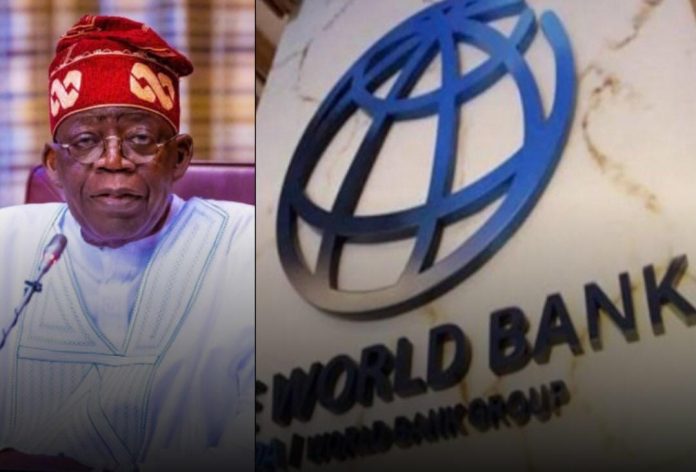
Yet even as sovereign commitments reach unprecedented heights, official borrowing channels remain wide open. The federal authorities are presently negotiating 3 fresh financing tranches totaling $1.5 billion from the World Bank. These proposed credits consist of equal $500 million allocations intended to fund agro-climatic resilience across vulnerable northern landscapes, expand household social protection registers, and support nationwide early childhood development interventions. While these initiatives target acute social deficiencies, their timing underscores a severe economic dilemma. Seeking additional multilateral facilities while existing obligations strangle domestic revenues raises uncomfortable questions regarding debt sustainability and long-term solvency.
A forensic breakdown of the debt portfolio reveals significant concentration risks. Domestic obligations account for ₦91.59 trillion, or nearly 55% of the total, while external liabilities constitute the remaining ₦75.20 trillion. Calculated at the prevailing official rate of ₦1,379 to the dollar, foreign liabilities stand at $54.52 billion, with multilateral exposure heavily weighted toward the World Bank, which claims over $20 billion. The federal tier remains the primary borrower, shouldering over 91% of all commitments. Subnational governments carry the remaining ₦14 trillion balance, exposing state treasuries to acute currency vulnerabilities whenever foreign loan deductions are debited directly from monthly federation account distributions.
The mechanics driving this expansion extend far beyond routine budgetary shortfalls. Severe currency depreciation has mechanically inflated external commitments in local currency without providing any fresh cash injection into public coffers. In foreign currency terms, external debt grew marginally over recent years, yet recalculating those obligations through a deeply weakened exchange rate added tens of trillions of naira in paper debt. Simultaneously, domestic deficit financing has leaned heavily on high-yield treasury instruments. Long-term federal bonds now hold ₦22 trillion of securitized Ways and Means advances formerly owed to the central bank, converting an inflationary overdraft into rigid contractual coupon obligations that compete directly with essential public services for retained revenue.
The primary hazard facing the nation is not the debt-to-output ratio, which remains around 45% and sits well within conventional international advisory ceilings. Gross domestic product cannot settle contractual debt service obligations; coupons are paid exclusively with actual revenue collected in cash. When interest charges swallow between 60% and 80% of federally retained income, capital budgets invariably suffer neglect. Infrastructure investments in regional electricity transmission grids, primary healthcare infrastructure, rail networks, and modern water transport systems are deferred or funded through expensive domestic paper, while tight monetary policy pushes treasury yields upward, severely crowding out private enterprise from commercial lending.
This fiscal squeeze brings the proposed $1.5 billion World Bank package into sharp relief. Concessional loans featuring extended grace periods and single-digit interest rates remain far preferable to high-yield sovereign Eurobonds or commercial bank overdrafts. Nevertheless, concessional borrowing remains real debt that requires eventual repayment using scarce foreign exchange. Channeling borrowed funds into social programs that generate neither direct export earnings nor immediate tax revenues risks compounding the existing servicing burden. Unless borrowed sums translate into measurable institutional efficiency and leakages are ruthlessly plugged, the treasury merely replaces private commercial debt with institutional multilateral debt while total leverage mounts unabated.
READ ALSO: Nigeria’s offshore presidency and Pretoria’s quiet lesson for Abuja, by Abubakar M. Kareto
Escaping this tightening vice demands firm discipline and deep structural reforms. The nation cannot borrow its way toward stability, nor can it rely on repeated exchange rate adjustments to mask spending excesses. Future borrowing must remain strictly concessional, transparently ring-fenced to revenue-generating infrastructure, and accompanied by automated tax systems that widen the tax net without penalizing compliant businesses. Subnational entities must be prevented from accumulating foreign obligations without verifiable independent revenues to service them. Reversing this trajectory requires genuine political willpower to curtail waste, enforce statutory borrowing limits, and confront the difficult realities of the national balance sheet before the fiscal window closes entirely.
Abubakar M. Kareto is a Public Affairs Analyst and Communications Strategist focusing on governance, policies, economy, and institutional reforms across Nigeria and Africa. He can be reached on X @amkareto and via email at amkareto@gmail.com.
Follow the Neptune Prime channel on WhatsApp:
Do you have breaking news, interview request, opinion, suggestion, or want your event covered? Email us at neptuneprime2233@gmail.com

