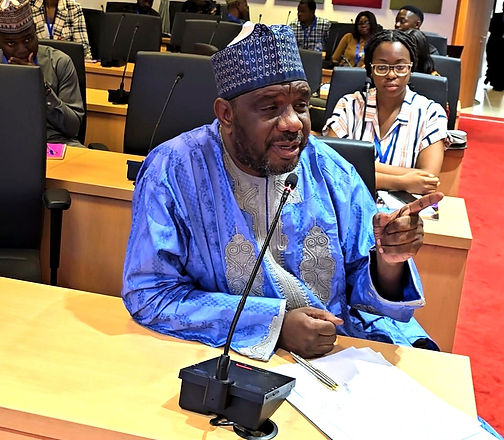
Nearly Two Years in Office: How Dr. Muhammad Sani Idriss is redefining NCAOOSCE
When Dr. Muhammad Sani Idriss assumed office as Chief Executive Officer of the National Commission for Almajiri Education and Out-of-School Children (NCAOOSCE) nearly two years ago, the task before him was both urgent and complex. The Almajiri system, deeply rooted in history and culture, has long demanded thoughtful reform rather than cosmetic solutions. At the same time, the challenge of out-of-school children continues to pose serious implications for Nigeria’s social and economic future. With his blend of policy experience, administrative discipline, and social development insight, expectations were high that his leadership would move the Commission beyond rhetoric into measurable impact.
Dr. Idriss’ professional journey reflects sustained engagement with public service and human development. Well-versed in governance and social intervention frameworks, he came into office with a clear understanding that the Almajiri challenge is not merely educational, but also social, economic, and moral. This perspective has shaped his approach to leadership at the National Commission for Almajiri Education and Out-of-School Children.
One of his earliest priorities was institutional coordination. Dr. Idriss recognized that effective reform could not be achieved in isolation. He therefore emphasized collaboration within the Commission and with key stakeholders, including state governments, traditional institutions, Islamic scholars, development partners, and international organizations such as UNICEF. Addressing the Almajiri and out-of-school children challenge, he maintains, requires shared ownership rather than fragmented responsibility.
This collaborative outlook was evident when Dr. Idriss called for the revitalization of public schools as a critical strategy to reduce the number of out-of-school children in Nigeria. Speaking at a seminar organised by the United Nations Children’s Fund (UNICEF) in collaboration with the Federal Ministry of Education and other partners in Abuja, he decried the low literacy levels of some pupils in public schools, noting that such outcomes discourage other out-of-school children from seeking formal education. According to him, strengthening the quality and appeal of public schools is essential to restoring confidence in the education system.
Beyond institutional alignment, programmatic reform has been central to his tenure. Under Dr. Idriss’ leadership, the Commission is implementing a multifaceted education system designed to combat illiteracy, integrate formal education with Qur’anic learning, and introduce skill acquisition and entrepreneurship programmes. These interventions are aimed not only at improving literacy and numeracy but also at mitigating youth poverty, curbing delinquency, and alleviating destitution among vulnerable children.
A notable focus of his administration has been the welfare dimension of child-centred education. Dr. Idriss has consistently argued that learning cannot thrive in conditions of hunger, neglect, or exposure to street risks. Consequently, NCAOOSCE has prioritized initiatives that address feeding, shelter, healthcare access, and overall child protection. This approach reframes Almajiri reform as a child rights and development issue rather than a security concern.
Dr. Idriss has also advocated for a change in the approach to education advocacy. He has emphasized that efforts to encourage school enrolment must reflect cultural sensitivities and local realities, particularly in communities where the Almajiri system is deeply entrenched. In his view, culturally informed advocacy is more likely to gain acceptance and produce lasting results.
Data-driven policymaking has equally featured prominently in his leadership agenda. Recognizing that past interventions suffered from poor coordination and unreliable statistics, Dr. Idriss has pushed for improved data collection, monitoring, and evaluation mechanisms to ensure that policies and programmes are informed by evidence rather than assumptions.
Sustainability remains another pillar of his reform agenda. Rather than short-term interventions, Dr. Idriss has championed vocational training and entrepreneurship programmes that can transition older Almajiri pupils and other vulnerable children into productive livelihoods. He believes this is key to breaking the cycle of dependency and street begging often associated with the system.
READ ALSO:Almajiri School Fire: Tinubu urges improved school safety
Despite the technical demands of his office, Dr. Idriss continues to deliver a clear message to Nigerian society: the Almajiri child and the out-of-school child are not burdens, but shared responsibilities. He has called on parents, religious leaders, policymakers, and education stakeholders to move beyond rhetoric and “walk the talk” in addressing the challenges facing the education sector.
As he approaches his second anniversary at the helm of NCAOOSCE, the direction of his leadership is increasingly clear strengthen institutions, revitalize public education, protect the child, integrate learning systems, and build pathways to dignity and self-reliance. For Dr. Muhammad Sani Idriss, reforming Almajiri and out-of-school children education is not merely an administrative task, but a national mission still unfolding.
Kasim Isa Muhammad wrote from Potiskum, Yobe state.
Follow the Neptune Prime channel on WhatsApp:
Do you have breaking news, interview request, opinion, suggestion, or want your event covered? Email us at neptuneprime2233@gmail.com