Opposition unity and the hard politics of 2027, by Engr. Bello Gwarzo Abdullahi, FNSE
The 2027 election season is no longer approaching; it has arrived. Under the Electoral Act 2026, INEC has fixed 16 January 2027 for the presidential and National Assembly elections. That is 117 days from today, and campaigns have been open since 19 August. Party primaries are behind us, and the principal tickets are known. The ruling party must now defend its record on the cost of living, insecurity and power supply. The opposition faces the harder task of wresting power from a well-resourced incumbent while divided across several parties, each with its own candidate, following and grievance. The problems both sides must answer for are serious, and the outcome will turn on far more than who speaks loudest.
Former Vice President Alhaji Atiku Abubakar, now the presidential candidate of the African Democratic Congress (ADC), held a world press conference at his Abuja residence on Friday 18 September. He urged President Tinubu to adopt his proposal for government intervention to bring down the price of petrol, to reconsider his approach to the fuel subsidy, and to use his remaining eight months in office to ease the burden on households, workers and businesses. He even offered to let the President rename the idea and take the credit. These are salient points, and I think Atiku was right to start with the cost of energy, since it feeds into every other price in the economy.
But the reaction to the press conference taught me more than the press conference itself. Nobody on the government side engaged the merits of the fuel proposal. The APC’s national publicity secretary said Atiku had offered no sensible alternative. A presidential adviser, citing an arbitration ruling in Paris on 17 September, demanded answers on the Mambilla hydropower project instead. A minister objected to how the former Vice President had addressed the President. A press conference can set the agenda for an afternoon, but it cannot hold that agenda unless a costed proposal, a rapid-response team and a party structure stand behind it.
READ ALSO: G100, 2027 and the future of democracy in Nigeria, by Engr. Bello Gwarzo Abdullahi, FNSE
Nigeria’s opposition politics must move beyond press conferences, personalities and public declarations toward disciplined electoral organisation. Atiku’s role and the ADC platform are best read as part of a larger question: can widespread dissatisfaction with the ruling party be converted into a coherent, nationwide political force? The 2023 results show why that question is both fair and difficult. Bola Tinubu won with about 8.79 million votes, 36.6 per cent of the total cast. Atiku polled roughly 6.98 million and Peter Obi about 6.10 million—those two alone exceeded the winner’s tally by more than four million—while Rabiu Kwankwaso added another 1.5 million. Only about 27 per cent of the 93.5 million registered voters actually turned out. G100 convener Salihu Lukman made the same arithmetic point to the parties on 31 August: together they polled more than the winner and lost through fragmentation. I would add a caution, though. Votes are not interchangeable. A voter who backed Obi in 2023 will not automatically follow a merged ticket, and a Kwankwaso supporter in Kano has his own reasons for voting as he does. Arithmetic tells us what is possible; only organisation makes it happen. And the mood on the ground has shifted since 2023—disenchantment with the ruling party’s record on the economy and security has, for many, turned “renewed hope” into renewed hopelessness.
Several things need to go right for the opposition to succeed. The first is a credible policy alternative. Criticism of the incumbent is legitimate and necessary, but it is not a programme. A candidate who says petrol should be cheaper must say by how much, over what period, at what cost to the budget, who bears that cost, and what happens to the import bill and the refineries. The same discipline applies to insecurity, power, education and institutional reform. As an engineer, I insist that every proposal carry a cost, a timeline and a named delivery mechanism, published in a form a sceptical economist, journalist or rival spokesman can check. The petrol proposal is a fair first test. If the campaign cannot publish the costing behind it within a fortnight, the government’s line that there is no alternative will stick, and the opposition will have handed the argument over. Beyond that, I would expect a costed manifesto covering the economy, security, power, education and institutional reform by the end of October.
The second requirement is a coalition that is real at every layer, not just in the meeting room. It has to work at four levels simultaneously: agreement among political leaders, workable arrangements between the parties, support across different blocs of voters, and grassroots machinery capable of turning that support into votes. The record so far shows how much remains undone. Opposition leaders meeting in Ibadan in April declared an intention to field a single presidential candidate. On 31 August the G100 brought six parties—ADC, NDC, PDP, APM, PRP and SDP—to the Yar’Adua Centre in Abuja to begin negotiating a framework for cooperation, yet neither Atiku nor Obi attended. Obi has since said any alliance must first be negotiated between the parties themselves, which is a fair position—a candidate cannot bind a party he does not control—but it also means that, five months after Ibadan, no published agreement says who will campaign where, who will deploy agents where, or what each party will receive
The precedent every Nigerian strategist reaches for is 2015, and it deserves a closer look. The parties that merged to form the APC did so in February 2013, giving them roughly two years to integrate structures, settle the ticket and train agents before the vote. The 2027 opposition has 117 days.
The third requirement is a disciplined single-candidate arrangement, though the calendar has changed what that can mean. Atiku, with Rotimi Amaechi as running mate, holds the ADC ticket; Obi, with Senator Rabiu Kwankwaso, holds the NDC’s. On INEC’s revised timetable, the last day for withdrawing and replacing presidential candidates was 22 August. The Federal High Court ruled in May that INEC cannot shorten the ninety days Section 31 of the Electoral Act 2026 allows parties to withdraw a candidate, and ninety days before 16 January falls on 18 October—so that window is either already closed or closing within weeks. Party lawyers should settle at once which date governs. Either way, the room to edit the ballot paper is closed or closing, and whatever is agreed will have to work mainly by persuading one candidate’s supporters to vote for another. That is a task for organisation, not announcement.
A consensus arrangement can still reduce fragmentation, but only if the parties answer five questions in writing. Who decides which candidate is supported, and by what test—a jointly commissioned poll, a comparison of verified structures in the states? How is the party that stands aside, and its running mate, accommodated? Who controls and reports the pooled funds? How are governorship and National Assembly tickets shared where the parties compete? And will the party that stands aside actually mobilise its wards and polling units for the beneficiary? That last question is the hardest, because a candidate can withdraw in a day, but a party machine takes weeks to turn round. My test is simple: if there is no signed agreement between at least the ADC and the NDC answering these questions by 18 October, I will conclude a single ticket is not realistic this cycle, and the parties should instead agree in writing how they will behave if the Constitution’s run-off provisions bring the contest down to two candidates.
The fourth requirement is grassroots organisation, and here I would ask readers to think as an engineer does. Generation counts for nothing without transmission and distribution to the last consumer. Enthusiasm at a rally is generation; a marked ballot in a box is delivery; and between the two lies a network of ward coordinators, polling-unit agents, transport, communication and money—built, tested and maintained long before peak load arrives. Nigeria has 774 local governments, 8,809 wards and 176,846 polling units, and presidential politics cannot be run solely from Abuja. A party serious about the presidency needs a named, trained and accredited agent for every polling unit where it expects votes, plus reserves, a coordinator in every ward and local government, and a state directorate reporting to the national campaign daily. The Constitution also requires a winning candidate to secure at least 25 per cent of the votes in two-thirds of the states, so strength in a handful of regional strongholds is not enough.
The electorate itself is changing. The register, which stood at 93.5 million in 2023, is now reported to be approaching 100 million after more than ten million new registrations, subject to de-duplication. Provisional July figures show the North-West adding the most new voters, with Kano leading the states and women forming a small majority of new registrants. These are constituencies best reached through community, youth, women’s, professional and traditional networks, not the media alone. My benchmark: by 15 November, each campaign should be able to publish, state by state, how many polling units it has a named agent for—and I would want to see at least four in five covered in the states it must carry.
The fifth requirement is lawful financing and electoral integrity, and I want to be direct about both. Campaigns cost money—transport, printing, media, security, agents’ allowances, legal fees, communication—and there is nothing improper in raising and spending it openly, within the limits and disclosure rules of the Electoral Act. Vote buying, intimidation and falsification are a different matter entirely. They are offences, and they corrode the very system the opposition claims to be defending. Opposition parties need transparent fundraising, published accounts, professional logistics and legal teams—not reliance on inducement.
Protecting the vote has also become more technical. Section 60(3) of the Electoral Act 2026 makes electronic transmission of polling-unit results to INEC’s IReV portal compulsory, but where transmission fails through communication failure, the signed and stamped physical Form EC8A remains the primary source for collation and declaration. In practice, that makes an agent at every polling unit indispensable—to witness the count, countersign the result sheet, leave with a copy, and confirm that what was uploaded matches what was signed. The ADC leadership’s April press conference alleging bias at the electoral umpire illustrates the point: an allegation is only as strong as the evidence behind it, and that evidence is generated at polling units. A party that cannot show, within twenty-four hours of polls closing, that it holds signed result sheets from most units it contested will have little to bring to a collation centre or a tribunal.
Identity, messaging, songs and political symbolism also matter, and I would not dismiss them. Religion, ethnicity and regional interests cannot simply be wished away in a country as diverse as ours, and pretending otherwise is as dangerous as exploiting them—but they should not become the sole basis of mobilisation. To their credit, both principal opposition tickets pair a Northerner with a Southerner and balance the country’s two major religions, giving the parties material for a message built on shared conditions: the price of fuel and food, the cost of transport, the safety of farms and roads, electricity, school fees. That message has to be delivered in the languages and idioms voters actually use, and it has to be the same message in Kano and in Enugu. Political songs and slogans can build an emotional connection and travel faster than any manifesto, but they cannot substitute for organisation and polling-unit presence. A jingle does not sign a result sheet.
Pragmatism in politics is legitimate—alliances shift, zoning arrangements get renegotiated, former opponents reconcile. But vote buying, intimidation, violence and falsification are not strategies, and no amount of pragmatism makes them so. It helps to keep four things distinct. Legal rules—the Constitution, the Electoral Act—bind everyone and are not up for negotiation. Party rules—constitutions, guidelines, primary procedures—bind members and change only through the party’s own processes. Political conventions—such as zoning or rotating the presidency between North and South—are understandings parties may honour, adapt or abandon at a political cost. Strategic expectations—who is “owed” the ticket, who “should” step aside—are no more than expectations. Political sophistication lies in challenging conventions and managing expectations without tearing down the legal and institutional foundations the whole contest rests on.
READ ALSO: When a song becomes a political movement, by Engr. Bello Gwarzo Abdullahi, FNSE
I would propose a practical roadmap of seven actions, each with a test anyone can check. First, settle the presidential and running-mate arrangement in writing—naming who is supported where and what each party receives—before 18 October; failing that, agree in writing how the parties will act in a run-off. Second, produce costed, credible policy alternatives, starting with the petrol proposal within two weeks and a full manifesto by the end of October. Third, build elite, party, voter and electoral coalitions simultaneously rather than sequentially, under a joint directorate reporting to all the principals. Fourth, put in place lawful financing and professional campaign infrastructure—published donation rules, audited accounts, a legal team in every geopolitical zone, and a rapid-response desk that answers attacks within hours. Fifth, organise systematically at ward and polling-unit level, and publish the number of polling units, out of 176,846, with a named agent. Sixth, develop a coherent national message that respects Nigeria’s diversity while speaking to conditions common to all. Seventh, put in place the legal and organisational machinery to protect the integrity of the vote—agents trained on Form EC8A and the Section 60(3) procedures, a parallel results centre, and lawyers on standby at collation centres. All of this has to be calibrated to our peculiarities as a people.
The overarching message is simple. Opposition unity must become an organisation, not merely an announcement. Political enthusiasm must become voter mobilisation. Criticism of government must be converted into credible policy and electoral execution. The opposition of 2015 had roughly two years to build what it needed; this one has 117 days. The real contest begins after the press conference—when politicians negotiate, reconcile ambitions, integrate structures, raise funds, mobilise communities and prepare to defend the vote. I will judge the opposition’s seriousness by what it can show on 18 October, at the end of that month, on 15 November, and finally on 16 January itself.
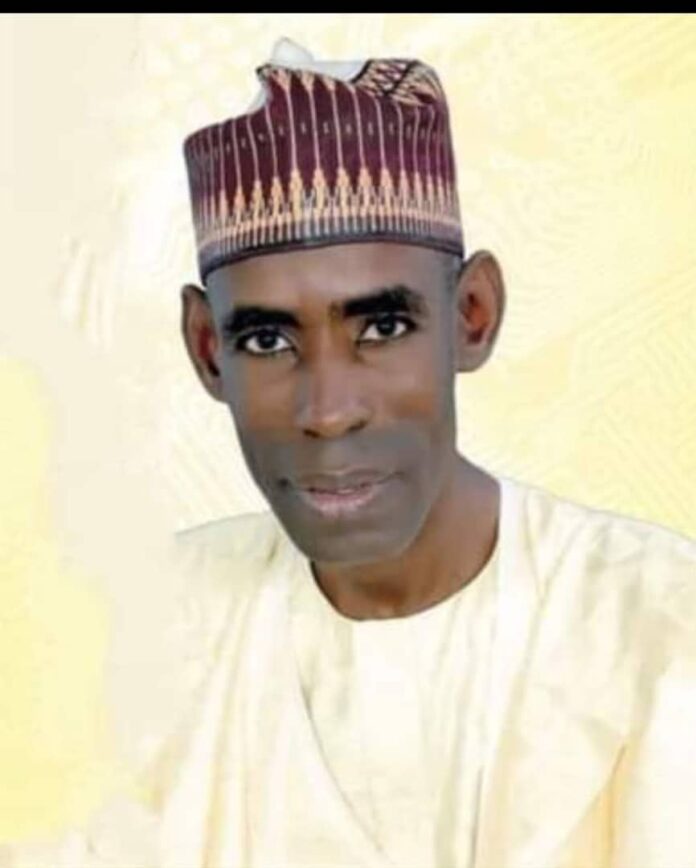
Written by Engr. Bello Gwarzo Abdullahi, FNSE.
Email: bgabdullahi@gmail.com
Follow the Neptune Prime channel on WhatsApp:
Do you have breaking news, interview request, opinion, suggestion, or want your event covered? Email us at neptuneprime2233@gmail.com