Rumblings of Coup d’Etat: Matters arising, by Ayuba Ahmad
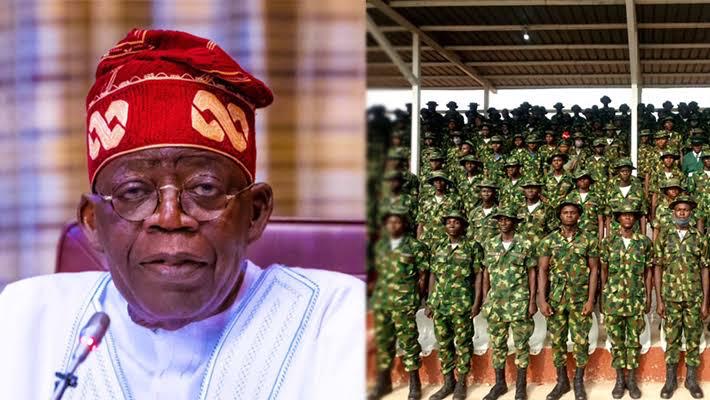
Despite vehement denials by the military, the rumours about botched coup plans against President Bola Ahmed Tinubu have persisted in the public domain for close to two weeks since the breaking of the story.
According to details first reported by an online news platform, Sahara Reporters, between sixteen and twenty senior officers from across the services have since been undergoing interrogations in detention facilities of the Defence Intelligence Agency, DIA.
Said to be led by a Brigadier General, an unnamed former governor from the south of the country is allegedly the financier of the coup, which was supposedly scheduled for execution on the 25th of October, 2025. A Lieutenant Colonel Almakura, nephew to a former governor of Nasarawa State, is the only one who has so far been pointedly mentioned.
According to the news reports, the usual military parade as part of activities marking the country’s 65th independence anniversary was cancelled as a precautionary measure.
The coup plotters were said to have planned to eliminate the President, the Vice President, the Senate President, the House Speaker and other top functionaries of the administration. Perhaps, there was a recall of the incident of the assassination of Egyptian President Anwar Sadat on 6th October 1981 during the country’s Victory Parade in Cairo. In which case, a parade at the Eagle Square on 1st October, could have been seized upon as an auspicious occasion to carry out the coup plan.
Speaking through its Director of Defence Information, Brigadier General Tukur Gusau, the military has vehemently refuted the story, dismissing it as “false, malicious and intended to create unnecessary tension and distrust among Nigerians.”
He said that the cancellation of the military parade on the nation’s independence anniversary was to “allow the President to attend a strategic bilateral meeting outside the country and for members of the armed forces to sustain the momentum on the fight against terrorism, insurgency and banditry.”
While admitting that sixteen officers were indeed arrested and undergoing interrogations, General Tukur Gusau, however, said the incident was not related to any coup attempts but “a routine internal process aimed at ensuring discipline and professionalism.”
According to his narrative, the breaches over which the officers are being investigated include issues around “stagnated promotions and persistent failures of promotion examinations.” He announced that “an investigative panel has been constituted and its findings will be made public.”
Any attempts at truncating the nation’s ongoing representative system of government are an outright unpatriotic act that is at variance with the imperatives and collective aspirations of the nation at this point in its history.
A coup, as at this moment, is a frightful, retrogressive and revisionist action whose results will clearly be tantamount to obliterating the heroic struggles and attendant gains Nigerians have made in entrenching democracy over military dictatorships in the last two and a half decades. Also, a violent overthrow of the government today can very easily throw up a serious crisis of the dimensions of a monumental anarchic situation on the borders of civil strife.
Read also: Dangers inherent in the ongoing waves of defections in the country, by Ayuba Ahmad
It is in the context of the seriousness of the story that the military high command has been frantic in its reaction. Not only is the military duty-bound to always ensure the safety and security of the citizens of the polity, it is also expected to valiantly stand in defence of the nation’s democracy and government, against unconstitutional disruptions or usurpations by way of violent takeover, such as a coup d’etat.
However, while discharging its statutory responsibilities to the fatherland, the citizenry must be taken into confidence by informing it of some modicum of the facts of critical undercurrents. In the prevailing circumstance, the military has not been honest and forthright with Nigerians. This is in view of the many gaping holes in the explanations of the Defence spokesman on the reported botched coup d’etat.
Firstly, it is strange that the figures of the alleged grumbling officers, allegedly over delayed promotions or persistent failures of promotion examinations can, at a go, be as huge as the number of those that General Gusau has admitted to be in detention.
By the way, how does the shared act of expression of grievances about delayed or perceived injustice in promotions amount to breaching codes of discipline? How does a complaint over perceived injustice become a crime deserving of arrest, a lengthy period of incarceration and elaborate investigation, as it is in the instance of the sixteen officers? By his explanation, General Tukur Gusau is, uncunningly, portraying the country’s military as a constrictive and repressive institution with utter disregard for the basest of human rights.
By its approach to the situation, the military may have inadvertently walked into a dilemma at the close of the day. Will the military make a volte face and tell the public the “truth”, if, on conclusion of investigation, the truth is that, indeed, the officers were actually found to have engaged in a conspiracy to carry out a coup d’etat?
It is inconceivable that the case can at this stage, be hushed up, obfuscated or swept under the carpet. A secret trial is not a possible way out of the quagmire in the light of its widespread exposure and the avid media attention already generated. Whatever happens, the military does not have any option other than to get the officers prosecuted before a military court-martial or the regular court of law.
An emerging matter of concern is that the controversial coup story has been generating divergent opinions along partisan and regional dimensions. For instance, most opposition political parties have, though separately, called on the relevant authorities to come clean by telling the nation the true picture of the situation.
Besides emphasising the right of the people to know, the opposition political parties are wary that the coup story could be a political ploy to win public sympathy for the President and the APC. Some of the opposition figures have gone further to insinuate that the coup story could be a deliberate contraption to legitimise an imminent plan to institute a dictatorship.
Not surprisingly, the commentaries coming from the Southwest, the home base of the president are laden with ethnic innuendos. With the warning that a coup d’etat now “is a calamitous ill wind that will set the country back by decades”. Afenifere, the Yoruba social and political organisation, said that a coup against President Bola Ahmed Tinubu will be “viewed as a conspiracy against the Yoruba people and the Southwest.” A conspiracy by whom?
Our view at Neptune Prime, is that, rather than telling tales like those folklores told to children under the moonlight, the military establishment should have done better in handling the story of the coup d’etat. It should have promptly availed the Nigerian public the “truth” about the situation. Because of the tardiness in managing the crisis, the military has clearly woven an intricate web from which it is finding it difficult to disentangle.
Consequent on the unnecessary delay and rigmarole, the room is being created for the story to fester, thereby allowing for mischief makers and peddlers of rumours to thrive in spurring negative narratives. For instance, the change of guards in the leadership of the military by President Bola Tinubu on Friday, has been interpreted in the rumour mills as a fallout from the coup plot.
Even as the majority of the citizens are feeling the prevailing excruciating economic situation, the position of a broad spectrum of Nigerians is against the truncating of the trajectory of democracy that has lasted for an unprecedented, unbroken twenty-six years. Nigerians would most certainly have rallied around the government and the military in the superior interest of entrenching democracy.
That is saying, in other words, that it is wrong to think there is any section of the country with greater stakes in the sustenance of democracy in the country.
Follow the Neptune Prime channel on WhatsApp:
Do you have breaking news, interview request, opinion, suggestion, or want your event covered? Email us at neptuneprime2233@gmail.com