


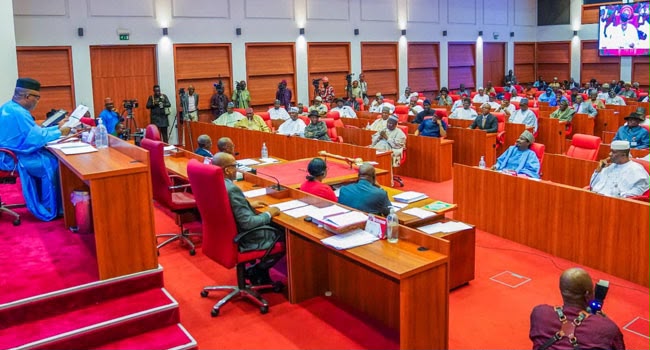
Senate pushes constitutional reform for single six-year tenure
Senate Leader Opeyemi Bamidele has disclosed plans to sponsor a constitutional amendment bill seeking to introduce a single six-year tenure for Nigeria’s president and state governors after the 2027 general elections.
Bamidele made the disclosure while speaking with journalists in his office on Tuesday, explaining that the proposed reform would be among the first bills he intends to introduce in the next Senate.
According to the lawmaker, the current two-term structure often compels elected leaders to focus on re-election campaigns shortly after assuming office, thereby reducing the time and attention devoted to governance.
READ ALSO: Senate to begin constitutional amendment January — Lawan
He argued that a single six-year tenure would enable presidents and governors to concentrate fully on delivering their mandates without the pressure of seeking a second term.
“One of the first bills I hope to sponsor, by the grace of God, when we return for the next Senate, is a proposal that will allow anyone elected as president or governor to serve only one term of six years,” Bamidele said.
The Senate Leader noted that under the existing arrangement, many officeholders spend a significant portion of their first term strategizing for re-election instead of focusing entirely on governance.
He maintained that a single tenure would encourage leaders to maximize their time in office from the outset.
“If you know you have only six years and no opportunity for re-election, you are more likely to give your best from day one because you understand that it is your only chance to make an impact,” he stated.
Bamidele acknowledged that the proposal may generate differing opinions among lawmakers and the public but stressed that legislators have a responsibility to champion reforms they believe can strengthen governance and democratic institutions.
He further emphasized that laws should evolve to reflect changing realities and national priorities, describing legislative reform as a core responsibility of parliament.
“The essence of lawmaking is that laws must grow and adapt just like society itself,” he said.
Should the bill be formally introduced and approved by the National Assembly, it would require substantial amendments to the Nigerian Constitution before becoming law.
Political analysts expect the proposal to trigger widespread debate across the country, particularly regarding its implications for governance, accountability, political stability, and democratic representation.
Follow the Neptune Prime channel on WhatsApp:
Do you have breaking news, interview request, opinion, suggestion, or want your event covered? Email us at neptuneprime2233@gmail.com