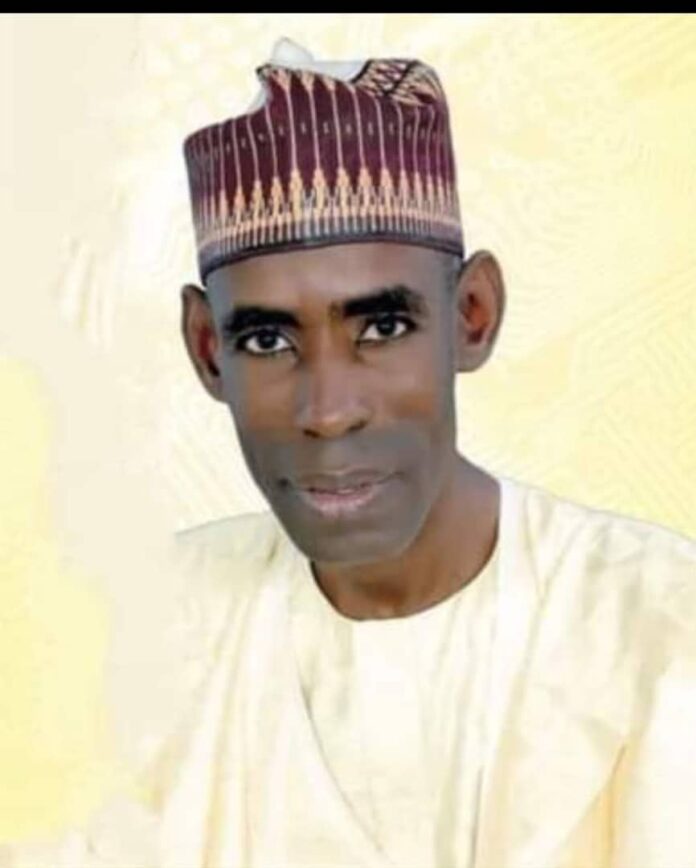
The Jigsaw and the Rainbow: Why the chickens are coming home to roost, a rejoinder to Mahmud Jega’s “Rainbow Coalition or Solar Eclipse?”, by Engr. Bello Gwarzo Abdullahi, FNSE
Certain happenings in the political and socio-economic space often give a clear picture of what to expect as an election approaches. It is in that light that I have scrutinised Mahmud Jega’s column, “Rainbow Coalition or Solar Eclipse?”, which is sharp, timely and dealt with what Nyesom Wike’s Rainbow Coalition means for the polity. Jega’s comparisons with Jesse Jackson’s 1984 campaign and the alliances of the First and Second Republics establish his central point well: Nigeria has known whole-party alliances and it has known individual defections, but it has never had a politician standing with one foot in each camp. On this I agree with him entirely. What I would add is that the coalition did not fall from the sky. It is one more piece of a puzzle Nigerians have been handed bit by bit since 29 May 2023, and the picture now taking shape should concern anyone thinking about 2027, because other political stakeholders will not sit idly by while someone who is not a member of the party has a field day.
To put the issue in proper perspective, let us look at the pieces in the order they came. At the inception of this administration the fuel subsidy was removed in the inaugural speech, and the exchange rate was unified soon after, leaving ordinary households to work out the policy from its effects. To add insult to injury, a prominent opposition figure was then given one of the most powerful ministries in the cabinet, the Federal Capital Territory. His party, the PDP, was split down the middle through court cases and sponsored factions. Rivers State went through its crisis, including a spell of emergency rule. Governors and legislators kept crossing over to the ruling party until it could count 31 governors. Each step arrived with its own explanation. Together they describe a method: win by absorbing your rivals instead of building a party around a shared programme. The method is cheap to start and ruinously expensive to keep up.
An analogy from electrical engineering helps. When you bring a generator onto a live grid, you first match its voltage, frequency and phase to the grid’s. Close the breaker early because you need the megawatts, and the machine does not add capacity; it shakes the whole system. Wike is a powerful machine, carrying Rivers votes and the resources of the FCT, that was connected to the APC without being synchronised to its discipline, its structures or its candidates. The trip we are now watching was predictable.
The events of the past fortnight bear this out. The APC governors met on 14 September, and their chairman, Hope Uzodinma, announced that they would back no arrangement that could weaken the party or hurt any of its candidates. The national working committee, the Ogun, Kwara, Gombe and Imo chapters, the South-East leadership and the Renewed Hope Ambassadors all lined up behind that stand. Wike did not try to calm anyone. On Arise TV the next night he called the governors politically lazy, said he was not answerable to them, and insisted the President knew all about his plans. He has since said he will never support Uzodinma’s bid for the Senate presidency, and his allies are backing non-APC candidates in Imo and in the Kwara Central senatorial race against Governor AbdulRazaq. That is not a quarrel over manners. It is a fight over who controls the APC’s ballot next year.
The most troubling part of the drama is the silence from the Presidency. The governors say their position matches what the President expects. Wike says the President knows everything he is doing. Both cannot be right, and only one person can say which. I have found no plain statement from the Presidency on the matter in the public record, and silence of this kind is itself a decision. Either the President is deliberately keeping a hedge, letting Wike harvest votes in opposition territory while the governors guard the party, or he cannot rein in a minister he himself lifted up. The first gambles with the party’s unity; the second admits weakness. It does not help that an APC lawmaker has publicly called Wike an asset who should be spared embarrassment, because it shows the ruling party is not speaking with one voice either. It is a Catch-22.
READ ALSO: Opposition unity and the hard politics of 2027, by Engr. Bello Gwarzo Abdullahi, FNSE
This is why I say the chickens are coming home to roost. In 2023 Wike and the G5 governors backed Tinubu without asking the APC’s leave, a fact Wike has thrown back at the governors this month. The party took that help gladly because it paid, and afterwards rewarded the helper with a ministry of great reach. You cannot pay for loyalty with autonomy and then act surprised when the creditor returns for more. A dominant party assembled from yesterday’s rivals gets loyalty that is transactional, and transactional loyalty inflates. The governors had no objection to the method while someone else’s party was the casualty. They object now that it has reached their own states. As the Hausa saying goes, “Munafinci dodo yakan ci mai shi.”
The implications for the polity are serious. A voter who sees a minister of one party sponsoring candidates of a second party while campaigning for the presidential candidate of a third cannot tell whom to hold responsible for what. Opposition parties risk becoming rented vehicles, valued for their tickets and not their ideas, which empties the multiparty system of meaning. The courts and INEC will be pulled in, because the Electoral Act was not written with such an arrangement in mind. Meanwhile the months that ought to go to debating insecurity, prices, electricity and jobs will go to insults traded between governors, ministers and party chairmen.
Since I like conclusions that can be checked, here is what I expect. Where a Rainbow-backed candidate from another party faces an APC candidate, as in the Imo governorship and Kwara Central, the APC candidate will run clearly behind Tinubu in the same constituency, and by a wider margin than in places with no such contest. At least one pre-election suit over the nomination, membership or sponsorship of coalition-linked candidates will reach the courts before voting day. If the Presidency stays quiet until the campaign formally opens, the governors’ forum will move beyond communiqués to sanctions against Rainbow-aligned party members in some of the complaining states. And within six months of the 2027 results, Wike will either join the APC or leave the cabinet; I do not think the hybrid survives a second term. I will accept that I was wrong if the Presidency speaks plainly within weeks and Wike withdraws his non-APC candidates, because that would show the contradiction was being managed and not left to fester.
Jega closes with a rainbow turning into a solar eclipse, and I think the image deserves more credit than he gave it. An eclipse does not destroy the sun. It is simply bodies crossing in front of one another in the wrong order, and the people who stare at it unprotected are the ones who get hurt. Here, those people are the voters. The Presidency can finish this jigsaw by placing the last piece: a plain statement on whether it stands with the governors or with the minister. Without it, 2027 risks being fought inside the ruling camp before it is ever fought against the opposition, and ultimately that will benefit the opposition, provided it is ready to unite.
Written by Engr. Bello Gwarzo Abdullahi, FNSE.
Email: bgabdullahi@gmail.com
Follow the Neptune Prime channel on WhatsApp:
Do you have breaking news, interview request, opinion, suggestion, or want your event covered? Email us at neptuneprime2233@gmail.com