


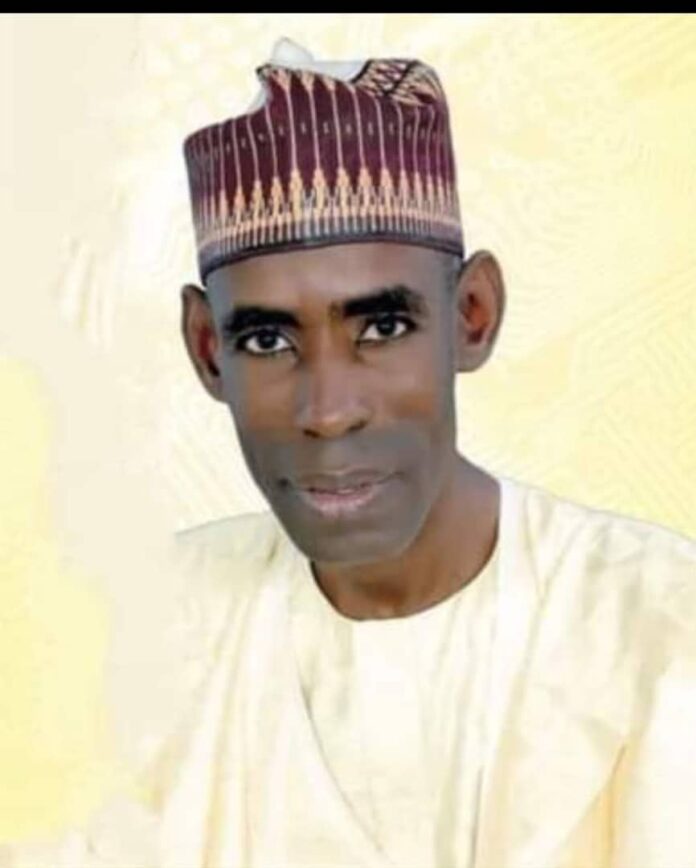
The Kano APC: Showmanship or reality?, by Engr. Bello Gwarzo Abdullahi, FNSE
Anyone who watched the recent APC rallies in Kano—the packed stadiums, the mass reception of defectors, the grand unveiling of the Tinubu Support Campaign Council—could be forgiven for concluding that the ruling party has finally cracked Kano’s political code ahead of 2027. But strip away the noise, the convoy of SUVs, and the choreographed unity photographs, and a more honest question forces itself on us: is the Kano APC building genuine political dominance, or is it simply getting very good at putting on a show?
Go beyond the party banners and the microphones, and look instead at how the ordinary Kano resident is actually living. That is where the true test of any political claim lies, and across Kano and the wider North, the gap between what politicians say and what people are experiencing has grown into something genuinely troubling. Hyperinflation, soaring energy and transportation costs, and the rising prices of everyday staples like rice, maize, and sorghum have quietly eaten away at what families can afford. Walk through Kano’s major markets—Singer, Kanti Kwari, Kurmi—and traders will tell you the same story: fewer customers, smaller baskets, tighter margins, all driven by incomes that simply are not stretching as far as they used to. Out in the rural communities that ring Kano’s commercial hubs, insecurity has become a fact of daily life rather than an occasional headline. In many farming areas across the region, bandits now impose their own informal levies—a kind of terrorist taxation—on farmers who just want to plant, tend, or harvest without incident. And through all of this, politicians keep pointing to defections and stadium crowds as evidence that the public is with them. Ordinary voters, though, are watching all of this with a much more skeptical eye. The unity on display at the podium sits uneasily next to the economic strain that families are actually carrying at home.
READ ALSO: Kano politics, defection, and the opposition imperative, by Engr. Bello Gwarzo Abdullahi, FNSE
For all the outward show of strength, the Kano APC is still, underneath, a house with several tenants who do not fully trust one another. The recent wave of defections and realignments has brought competing power blocs under one roof, but a shared address is not the same thing as a shared family, and the old frictions have not actually gone away. The uneasy union of former rivals—the historic faction built around Dr Abdullahi Umar Ganduje, the network of Deputy Senate President Barau Jibrin, and the newly arrived structure of Governor Abba Kabir Yusuf—means there is already quiet friction over who gets which ticket, who controls which local government, and who fronts the 2027 campaign. Yes, the headline actors have made peace: Barau stepped back from the governorship race in exchange for a return to the Senate, and Yusuf walked away with an automatic ticket. But that peace was worked out in a closed room among a handful of principals. It was handed down, not grown from the ground up—and nowhere is that more visible than in Ganduje’s own backyard.
Here is the uncomfortable truth that the stadium rallies cannot paper over. Dr Ganduje remains, on paper, the senior statesman of Kano APC and its immediate past national chairman—yet he does not command his own Dawakin Tofa Local Government, nor his own federal constituency of Dawakin Tofa, Tofa, and Rimin Gado, nor even his Kano North senatorial zone with the same authority the title suggests. Ward executives in his home base have publicly revolted against him before, and that scar has not fully healed. When it came to naming a deputy governor for Yusuf, Ganduje was not in a position to simply hand-pick one; the choice of Murtala Sule Garo emerged only after consultation with Barau Jibrin, Senator Kawu Sumaila, and other stakeholders—a courtesy seat rather than a command decision. Add to this the sense, shared by more than a few of the old guard, that there is no real love lost between Ganduje and some of his fellow APC heavyweights, and what you have is a party elder whose title outpaces his actual reach on the ground.
Meanwhile, as the national and state leadership focus on stitching together a coalition big enough to look imposing for 2027, the ordinary party faithful at ward level—the people who actually knock on doors and mobilise voters—are watching newcomers walk in and take the best seats. Governor Yusuf spent his first term building a machine inside the NNPP, not the APC, and he is now being asked to lead a structure he did not build, staffed at the grassroots by people he never had to court. That distance between the men on the podium and the men who deliver votes does not close simply because Abuja says it should. Coalitions stitched together for electoral convenience, rather than shared conviction, have a habit of coming apart exactly when it matters most—during primaries, when the tickets and appointments actually have to be shared out. The current calm holds only for as long as every principal believes his side of the bargain will be honoured. The moment that trust wobbles—on an appointment, a ticket, a local government slot—the very fault lines that the defection rallies were meant to bury will resurface, and Ganduje’s uncertain grip on his own turf is likely to be one of the first places the cracks show.
READ ALSO: Choking the opposition, by Engr. Bello Gwarzo Abdullahi, FNSE
Kano’s troubles do not exist on an island. What is happening there is really a reflection of a much larger crisis playing out across the entire North West, where every neighbouring state is fighting its own version of the same fire. In Zamfara and Katsina, ransom-driven kidnapping and banditry have hollowed out rural economies, turning once-productive farmland into no-go zones and pushing entire farming communities off their land. In Kaduna, the trade routes and agricultural corridors that used to connect the region to the rest of the country remain under constant security threat, quietly strangling industrial growth and public confidence alike. And in Sokoto, Kebbi, and Jigawa, millions of out-of-school children, a youth population with nothing meaningful to do, and increasingly porous borders are storing up problems that will outlast any single election cycle.
Widen the lens further, to the three Northern geopolitical zones—North West, North East, and North Central—and the picture only gets more complicated. The North Central remains bogged down by farmer-herder conflict and rural insecurity that continue to grind away at the country’s food belt, with no durable resolution in sight. The North East shows genuine signs of recovery from over a decade of insurgency, but the humanitarian needs, food insecurity, and slow pace of rebuilding remain immense. And the North West is plagued by an escalating banditry crisis that keeps feeding directly into the region’s inflation and economic contraction, making everything else harder to fix.
In all three zones, politicians are leaning hard on early mobilisation—rallies, defections, coalition-building—to project strength ahead of 2027. But ordinary people are not living inside that narrative. They are living with the price of a bag of rice, the fear of the road at night, and the growing sense that nothing is really changing. And this is not a Kano problem alone; it is the national mood. Across the country, people are arriving at broadly the same verdict about a government many now describe, plainly, as clueless and directionless—crushing poverty made worse by subsidy-related price shocks, a currency that has not delivered the relief it promised, and a security system that keeps failing to protect farms, highways, and schools. Seen against that backdrop, the Kano spectacle is not an isolated triumph; it is one more local chapter in a much bigger national story of disappointment.
Put all of this together, and a fairly clear picture emerges of where the Kano APC is actually headed—not a vague sense of unease, but a set of specific things worth watching for.
First, expect the marriage between the old APC establishment and the newly arrived Yusuf camp to remain a transactional truce, not a genuine merger. Barau stepping aside and Yusuf’s automatic ticket bought peace among the principals, but they did not settle who really controls ward chairmen, local government caretaker positions, or the machinery that will run the 2027 campaign. Watch for recurring friction—usually denied in public, but well known in private—between long-time APC members and the governor’s inherited structure, and expect it to surface hardest once the talk moves from grand handshakes to the actual sharing of tickets and appointments.
Second, Ganduje’s own position is worth watching closely, because it tells you something important about how thin the party’s unity really is. Here is a man who chaired the party nationally and governed Kano for two terms, yet cannot claim firm control of his own Dawakin Tofa Local Government, his federal constituency, or his senatorial zone. When the deputy governor slot came up, he did not simply install his choice—Murtala Garo emerged only after Barau Jibrin, Kawu Sumaila, and other stakeholders were consulted, and the new deputy has, since taking office, largely stayed in the background rather than exercising real weight. If Ganduje cannot fully secure his own home turf, and there is little warmth between him and other senior APC figures, it is hard to see him serving as the glue that holds together a much larger, more fractious coalition. His weakness is a preview of the party’s weakness.
Third, Governor Yusuf himself enters this arrangement without an independent APC base of his own. His political capital was built inside the NNPP and the Kwankwasiyya movement, not on APC’s ward network. That leaves him leaning on the goodwill of Ganduje’s and Barau’s structures to actually deliver votes—workable for now, but brittle the moment any faction decides it no longer needs him, or that it stands to gain more from letting him struggle.
Fourth, none of this elite accommodation touches the real complaint of ordinary voters. The hardship described earlier—markets straining under inflation, farmers paying bandits just to work their land, a widening gap between rally crowds and household reality—does not disappear because rival politicians have made peace on a stage. If governance keeps falling short of what people were promised, defections and stadium turnouts will not translate into votes on election day; they may even push away a public that reads elite realignment as self-interest dressed up as unity.
Fifth, insecurity remains the wildcard nobody in this coalition fully controls. A fresh wave of banditry, or one high-profile security failure in the run-up to 2027, would strip away whatever governance credibility the party is trying to project, no matter how united it looks in a group photograph.
And sixth, hovering over all of it, is the national mood. A ruling party whose own leadership in Abuja is struggling to convince Nigerians that it has a handle on the economy, security, and the general direction of the country cannot credibly promise Kano voters something it has not delivered anywhere else. If people across the country continue to see the government at the centre as clueless and directionless, that ceiling will sit over Kano APC too, no matter how large the local coalition grows.
Taken together, the fair expectation is this: the Kano APC likely holds together as an elite arrangement through the primaries, because none of the principals gains anything from a public rupture right now. But that surface unity is unlikely to translate into real electoral dominance. Ganduje’s inability to fully command even his own backyard is a small but telling signal of how much of this coalition is held together by convenience rather than conviction. Unless the party can show real, felt improvement in people’s cost of living and a genuine reduction in insecurity well before 2027, it risks winning the contest of showmanship while losing the one that actually decides elections—the quiet judgment voters make in the privacy of the polling booth. What happens in Kano in 2027 will be determined less by how many defectors the APC can parade on a stage, and more by whether the ordinary person feels, in their own life, that anything has actually gotten better.
Written by Engr. Bello Gwarzo Abdullahi, FNSE.
Email: bgabdullahi@gmail.com
Follow the Neptune Prime channel on WhatsApp:
Do you have breaking news, interview request, opinion, suggestion, or want your event covered? Email us at neptuneprime2233@gmail.com

