


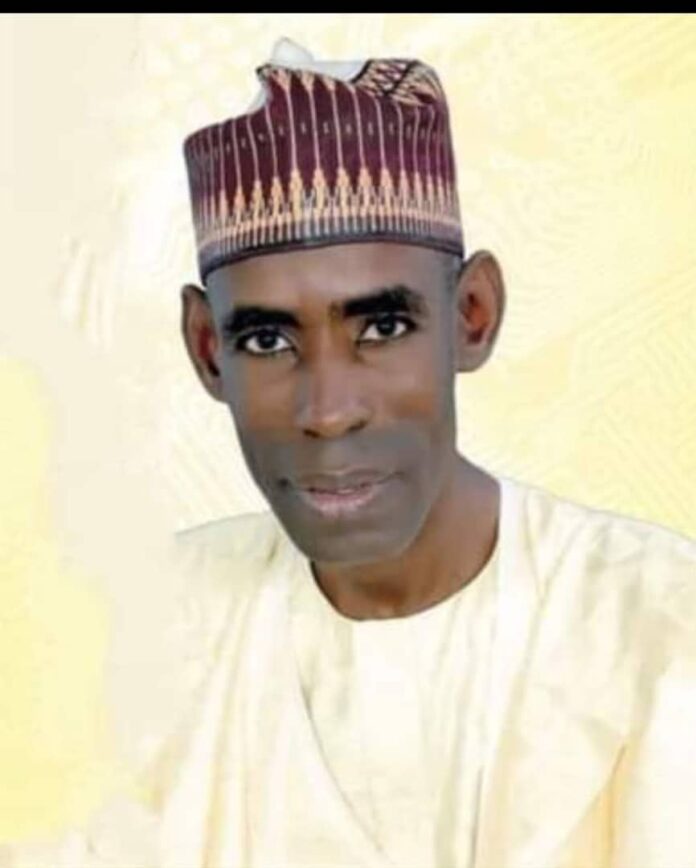
The Kano Emirate Tussle: The weak leader and the might of the federal government, by Engr. Bello Gwarzo Abdullahi, FNSE
Governance in Kano has been reduced to “wasan kwaikwayo”, a stage drama in which everyone knows the script, nobody dares to change it, and the audience still pays for its ticket. There was a time when any child in this city could tell you who the Emir of Kano was; today even grown men pause before they answer. Two men sit in two palaces, each addressed as Emir of Kano, each guarded by armed men, while a state government that holds the law in its hands seems strangely helpless to end the logjam. More than two years after the repeal law of 2024 took effect, the matter is far from over. To me, this is not a failure of law; it is a failure of leadership to do the needful. And while the drama drags on, the damage to our unity as a people goes largely unnoticed.
Let me set out my understanding of the legal position. In May 2024, the Kano State House of Assembly repealed the 2019 Emirate Council Law, the same law under which Ganduje had split the ancient emirate into five, and which led, in 2020, to the deposition of Muhammadu Sanusi II. After signing the repeal law, Governor Abba Kabir Yusuf reappointed Sanusi as Emir of Kano. Within days, the courts issued conflicting orders: the Federal High Court in Kano suspended the operation of the new law, while a Kano State High Court restrained Aminu Ado Bayero from presenting himself as Emir. Then, on 10 January 2025, the Court of Appeal in Abuja held that the Federal High Court had no jurisdiction over Emirate Council matters and nullified its orders. In the same judgment, the court set aside the Kano State High Court’s ruling against Bayero, on the ground that he had not been given a fair hearing, and sent the case back for a fresh hearing before a different judge.
Naturally, each camp took from that judgment what it liked. The state read it as confirmation that the repeal law stands; Bayero’s camp read it as confirmation that he was wronged. My own honest reading is that on the question that matters most, namely whether the Assembly could repeal the law at all, Sanusi holds the stronger hand, while on procedure Bayero has a grievance that has never been fully heard. The appeal filed by the Sarkin Dawaki Babba, Aminu Babba Dan Agundi, is now before the Supreme Court, which on 20 April this year adjourned further hearing to 19 April 2027. A hearing, mind you, is not a judgment. The public record leaves little room for doubt that nothing is finally settled.
Meanwhile, ordinary Kano people live with the consequences. In 2025, the two Emirs led separate Eid prayers at different grounds; this year, both camps prepared rival Sallah durbars, with Bayero formally notifying the police of his plans while the governor’s office insisted that Sanusi would preside. For over two years, security operatives have been stationed around two palaces in the same city. Think of the trader in Kurmi Market who must wonder whether a procession will turn into a clash; the mother who keeps her children indoors on a festival day that should be their happiest; the young man handed a cap and a slogan and told that his honour depends on a quarrel among princes; the elder who remembers when “Emir of Kano” was an answer, not a question. These are the people on whom the drama is being staged.
What troubles me even more is how the arrangement is sustained. Bayero sits in the Nassarawa mini-palace, sheltered and guarded by security agencies that answer to Abuja, not to Kano. Herein lies the catch-22: the state government holds the law but cannot enforce it, while the Federal Government, which controls the guard, will not withdraw it, insisting all the while that the matter is a state one. The result is that the state looks intimidated and helpless in the eyes of its own public. If, as many argued, the real obstacle was that the governor belonged to the opposition NNPP, what is the excuse now that he has defected to the ruling APC? Why can the security cover at Nassarawa not be withdrawn? A governor is said to be the Chief Security Officer of his state, yet within his own capital he cannot determine who is protected and who is not. That is a dangerous precedent, and it should worry every governor in the Federation, whatever his party. Kano today has two Emirs: one recognised by the state government, the other housed and protected by agents of the Federal Government.
READ ALSO: Politics of Kano: Random musings, by Engr. Bello Gwarzo Abdullahi, FNSE
Even so, the first responsibility lies with the Kano State Government. The governor holds a mandate and, on the current record, a law that stands. He has said publicly that there is no plan to replace Sanusi, yet as recently as February this year his spokesman admitted that no outreach to Bayero’s camp had begun. That is the worst of both worlds: no enforcement and no engagement. Being decisive does not mean being heavy-handed. I am not asking for force; blood in the streets of Kano would be a defeat for everybody. I am asking for peaceful, deliberate steps to resolve the impasse. Sanusi, Bayero and the governor himself all belong to the Dabo ruling house. This is, at bottom, a family quarrel, and a family that has survived a civil war can surely sit down, with respected elders beside them, and settle its differences. It is painful to watch a government that cannot settle who sits in a palace in its own capital; it invites the unkind question of whether it can settle anything else.
But it is the posture of the Federal Government that I find hardest to understand. For years the contest was explained away as a proxy war between Ganduje and Kwankwaso, with Bayero widely believed to enjoy federal support. Today the governor of Kano and the President belong to the same party, and the partisan wall that was used to justify federal distance has come down. The police and the DSS are federal institutions, and the party leadership can summon quarrelling chieftains to a table. Yet we hear nothing. If Bayero is in fact seen to enjoy federal backing, the Presidency should say so plainly and withdraw it, because a referee who is quietly playing for one side is no referee. If Abuja is truly neutral, then neutrality is not the same as indifference. Chieftaincy is a state matter, and no one is asking the Federal Government to usurp the courts or the Assembly; we are asking it to use its security machinery and its political weight to keep the peace and nudge both sides toward an honourable end. Silence, in a matter that can set the most populous northern state on edge, is itself a decision, and not a wise one.
What would decisive action look like? First, the parties should jointly ask the Supreme Court to abridge time and take the appeal at the earliest possible date. Second, the Presidency and the APC leadership, working with respected elders and the traditional institutions of the North, should broker a settlement under which the suits are withdrawn, the single Kano Emirate is preserved, and Bayero, son of the late Ado Bayero, is given a dignified title and residence worthy of his father’s memory. Third, the police and the DSS should be instructed, in writing, to act strictly on valid court orders and not on political cues.
READ ALSO: The Kano APC: Showmanship or reality?, by Engr. Bello Gwarzo Abdullahi, FNSE
I prefer conclusions that can be tested, so here are mine. If nothing changes, there will be no Supreme Court judgment before 19 April 2027, and the two-palace arrangement will persist until at least then, with rival observances at the next Sallah. If the Supreme Court affirms the Court of Appeal on jurisdiction, Bayero’s claim ceases to be a legal one and becomes purely political, and the Federal Government will have no excuse left. And if, within ninety days of this article, neither the Presidency nor the APC leadership has convened both parties, then we shall know that the silence is not oversight but policy.
Finally, let this be a wake-up call, and let it be addressed to all of us. To the governor: authority that is not exercised is authority surrendered, and the people did not elect you to watch from the sidelines. To the Presidency and the APC leadership: you hold the security agencies and the party machinery, and history will not accept “it is a state matter” as an answer if Kano burns on your watch. To the elders, the traditional institutions and the Northern leadership: this is the hour to speak, not to whisper. And to the people of Kano: do not allow yourselves to be turned into extras in a play written by other people’s ambitions. A thousand-year-old Emirate that has outlived colonialism, military rule and many governors should not be left to rot in a stalemate of our own making. We cannot wait for the Supreme Court to rescue us in April 2027; the next Sallah will come before then, and nobody can say how a procession that goes wrong will end. Wake up, Kano. Wake up, Abuja. The curtain must come down now, before the audience becomes the casualty.
Written by Engr. Bello Gwarzo Abdullahi, FNSE.
Email: bgabdullahi@gmail.com
Follow the Neptune Prime channel on WhatsApp:
Do you have breaking news, interview request, opinion, suggestion, or want your event covered? Email us at neptuneprime2233@gmail.com

