


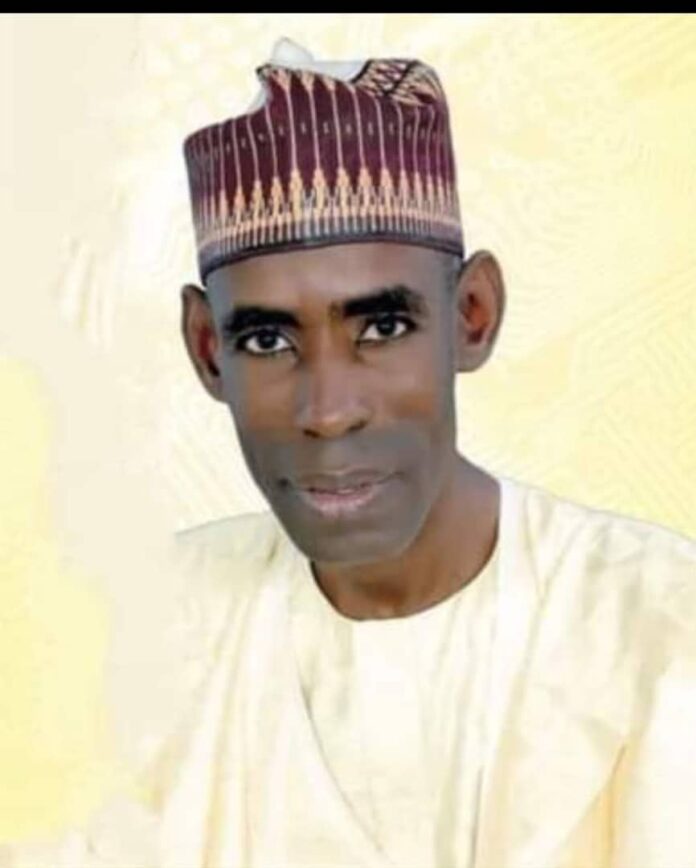
Tinubu, Governors, Wike and 2027: Have the chickens come home to roost?, by Engr. Bello Gwarzo Abdullahi, FNSE
There is an old saying in our part of the world that a house built on many foundations eventually reveals which foundation was never properly laid. Watching the drama unfolding within the ruling All Progressives Congress ahead of 2027, I keep coming back to that saying. What we are witnessing may look, at first glance, like another episode of the familiar Nigerian political theatre, big men trading words, governors protecting their territories, ministers building alliances, politicians positioning themselves for the next contest. But there is something deeper going on. The coalition that brought Bola Tinubu to power in 2023 is beginning to discover an uncomfortable truth: winning power and retaining power are two very different political assignments. In 2023, the APC had one common objective, defeat the opposition, win the presidency and take control of the machinery of government, and that shared purpose made it possible for people with very different interests and backgrounds to sit under the same umbrella. But elections have a way of changing the arithmetic. Once power has been captured, everyone begins asking a different question: what happens next, and where do I fit into it? That is where the trouble begins.
When the APC unveiled its 223-member Presidential Campaign Council in August, it looked, at least on paper, like a formidable political machine. President Tinubu was chairman, Vice President Kashim Shettima vice-chairman and Senator Abdulaziz Yari director-general, with governors, ministers and party heavyweights filling out the rest. It was the sort of structure designed to send one unmistakable message, that the house was organised and ready for 2027. Then came Wike. Nyesom Wike’s Rainbow Coalition has introduced a rather unusual complication into the equation. He insists that the coalition exists purely to mobilise cross-party support for President Tinubu, that it is not an APC organisation, and that those who join it can back Tinubu for president while keeping their own party identities and contesting other offices under those parties. On paper, there may be nothing inherently strange about politicians from different parties rallying around the same presidential candidate. But Nigerian politics is rarely about what is written on paper, and the APC governors have clearly grown uncomfortable with the arrangement. The Progressive Governors’ Forum has warned against any political structure capable of weakening the party or undermining its candidates, and one does not need a political science degree to understand why. Imagine being a governor of the ruling party, preparing for your own re-election, only to discover that a powerful federal minister who does not belong to your party is building a political network inside your state, recruiting across party lines and mobilising support under a structure over which you have no control. You would not be comfortable either.
This is why the Wike controversy is bigger than Wike himself. It raises a fundamental question about where political authority actually resides in the APC today: in the formal party structure, in the governors who control the party machinery at state level, or increasingly in individual power brokers whose influence extends beyond party boundaries altogether. That is the question the APC cannot afford to leave unanswered for much longer.
President Tinubu is not new to coalition politics. Few Nigerian politicians understand its mechanics better than he does; his career was built on identifying interests, bringing disparate actors together, and constructing alliances capable of producing electoral outcomes. That is precisely what makes his present restraint so interesting. He cannot be unaware of the tension between Wike and the governors, and Wike himself has said as much, that the president knows what he is doing. So what explains the apparent silence from the Villa? Perhaps it is a genuine attempt to avoid turning a manageable disagreement into a full-blown confrontation. Perhaps Wike’s usefulness to the presidency is judged too valuable to sacrifice. Or perhaps Tinubu simply believes the competing interests will eventually negotiate their way back to the same table. Whatever the calculation, there is real risk in letting ambiguity persist. Governors need to know where they stand, party leaders need to know where they stand, and politicians already thinking about 2027 need to know whether the structure they are building today will still exist tomorrow. The longer the disagreement drags on, the more every actor begins quietly protecting his own position, and that is how coalitions tend to fragment, not through a dramatic announcement, but through quiet conversations, private meetings and the gradual search for alternatives.
Recent reports that some aggrieved APC governors have explored contacts with former Vice President Atiku Abubakar should not be dismissed simply because such conversations may never produce an actual alliance. They remain allegations, and political conversations do not automatically translate into political defections. But they are revealing nonetheless, because in Nigerian politics, when politicians begin quietly exploring alternatives, it usually means they are no longer entirely comfortable with the arrangement they currently occupy. There is an interesting way of looking at this from an engineering perspective, one that borrows from Particle Swarm Optimisation: each particle does not know the final answer in advance; it simply observes the movement of the others, adjusts its own position, and keeps searching for the point that offers the best outcome. That appears to be what a number of politicians are doing right now, one staying close to the presidency, another maintaining contact with the governors, another quietly keeping a line open to Wike or to Atiku, each calculating in real time, none wanting to be the first to jump, but none wanting to be the last one standing when the political music stops. This is not necessarily evidence of an imminent realignment. It is, however, evidence that political actors are already calculating well beyond the present arrangement.
All of this elite manoeuvring would matter far less if the government were operating in a vacuum. It is not. There is an electorate watching, and for ordinary Nigerians, the great political arguments in Abuja eventually reduce to very simple questions: can I feed my family, can I afford transport, can my children remain in school, can I sleep without fear of being kidnapped, can I run my business without being crushed by the cost of energy and transportation? This is where the conversation becomes serious. The Tinubu administration has pursued major economic reforms, chiefly the removal of the petrol subsidy and the liberalisation of the foreign exchange market, arguing consistently that these were necessary to correct long-standing structural weaknesses. But reform has a human face. Nigerians do not experience it through PowerPoint presentations or macroeconomic charts; they experience it at the filling station, at the market, at the bus stop, at the electricity meter, at the school gate. The eventual political argument over the economy will therefore not be settled by whether a reform is theoretically sound, but by whether ordinary lives are demonstrably better, and that distinction may prove decisive in 2027.
Then there is insecurity, which perhaps requires the least explanation of all, because Nigerians do not need anybody to explain fear to them. They know it and they live with it, having watched communities emptied, families separated, and travellers attacked. Reports through this year have documented thousands of kidnappings across the country, and whether one looks at the North-West, the North-Central or other troubled parts of the federation, the pattern remains painfully familiar: an attack occurs, victims are abducted, ransom negotiations begin, officials issue statements, security agencies promise action, and then another incident follows somewhere else. For the family whose relative has been taken, statistics are beside the point; the only question that matters is when their brother is coming home. When insecurity reaches the level where farmers fear their own farms, parents fear the school run, and worshippers fear their own mosques and churches, it stops being merely a security problem and becomes a political one. The opposition does not need to invent that grievance. It only needs to remind voters of what they have already lived through.
Zoning, too, refuses to go away quietly. When the Secretary to the Government of the Federation, George Akume, advised Northern politicians to shelve their presidential ambitions until 2031, he likely intended to reinforce an informal understanding about power rotating between regions. But politics is rarely that tidy, and the remark has reopened an old and uncomfortable question: who exactly decided that the North must wait? There is no constitutional requirement for Nigerians to vote along a North-South rotation; zoning is an informal arrangement, not a rule of law, yet informal arrangements have shaped alliances and presidential contests in this country for decades all the same. The difficulty for the APC is that asking an entire region to wait its turn becomes politically much harder when that same region is simultaneously living through insecurity, poverty, unemployment and the rising cost of living. The argument may make perfect sense inside an elite political calculation. It sounds very different from where the ordinary voter is standing, and this is exactly where the opposition sees its opening.
Buba Galadima and others have been pressing the opposition to unite around a single candidate, and the logic is simple enough: a divided opposition gives the ruling party room to manoeuvre, while a coordinated one forces it to fight on several fronts at once. But Nigerian political history offers its own warning here. Opposition politicians are very good at agreeing that a government must be defeated; they are considerably less successful at agreeing on who should defeat it. Everybody wants unity until unity requires somebody to step aside, and everybody wants a single candidate until the question becomes why it should be him. The opposition, in other words, faces the same coalition-management problem confronting the APC. It is one thing to bring politicians together around a shared grievance. It is quite another to persuade them to subordinate individual ambition to a collective goal.
So, have the chickens come home to roost? Perhaps. But I would be careful about declaring the APC finished, or about predicting with any confidence what 2027 will bring. Nigerian politics has repeatedly shown that today’s bitter enemies can become tomorrow’s allies, that politicians who swear never to work together can suddenly find common ground when circumstances shift, that a minister can quarrel with a governor today and share a platform with him tomorrow, and that a coalition looking irreparably broken in September can appear perfectly reconciled by December. What should genuinely concern the APC is not any single quarrel or any single politician, but the accumulation of unresolved tensions: Wike and the governors, the formal party structure against parallel structures, economic hardship against the government’s reform narrative, insecurity against public confidence, zoning against Northern political ambition, and the opposition’s own search for a single candidate. Each of these, taken alone, may well be manageable. Together, they add up to a far more complicated political equation, and this brings us back to the house. A house does not collapse merely because its occupants quarrel. It becomes genuinely vulnerable when the people inside it stop agreeing about which walls are actually holding it up.
The APC still commands enormous political resources. It controls the federal government and a substantial number of states, and it retains experienced political operators and a formidable campaign structure. But political resources are not the same thing as political cohesion. The real test for Tinubu will not simply be how many politicians he can assemble on a campaign list, but whether he can keep the competing interests within his coalition sufficiently aligned once the stakes become personal, local and immediate. The real test for the governors will be whether they can defend their own political interests without weakening the party that gives them their platform. The real test for Wike will be whether his political network can complement the president’s re-election effort without becoming a permanent source of friction within the APC. And the real test for the opposition will be whether it can convert public dissatisfaction into organisation, credible leadership and a coherent national proposition. For now, the house is still standing, but there is smoke in several of its rooms, and the question worth asking is whether the people inside will sit down and put the fires out, or keep arguing over who owns the house while the roof quietly begins to burn. That, more than the headlines, may be the real story of Nigerian politics as we move toward 2027.
Written by Engr. Bello Gwarzo Abdullahi, FNSE.
Email: bgabdullahi@gmail.com
Follow the Neptune Prime channel on WhatsApp:
Do you have breaking news, interview request, opinion, suggestion, or want your event covered? Email us at neptuneprime2233@gmail.com

