


Ugarit: Rediscovering the ancient city behind one of history’s first alphabets, by Falmata Ma’aji Muhammad
Story by Falmata Ma’aji Muhammad (Student at Helwan University, Cairo, Egypt)
Long before Rome rose or Athens reached its height, a thriving port city on Syria’s Mediterranean coast was quietly leaving an enduring mark on human civilisation.
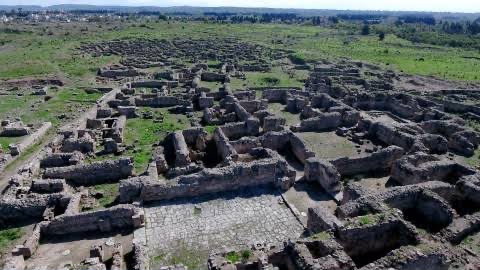
Known today as Ras Shamra, ancient Ugarit lay about 10 kilometres north of present-day Latakia. During the Late Bronze Age, it flourished as a commercial and cultural centre linking Egypt, Anatolia, Mesopotamia, Cyprus and the Aegean world. Yet its greatest legacy lies not in its wealth or architecture, but in one of the earliest known alphabetic writing systems.
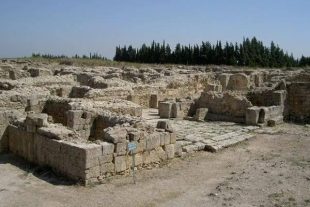
Hidden beneath layers of earth for more than three millennia, Ugarit emerged once again in the twentieth century, offering historians one of the richest archaeological discoveries in the ancient Near East.
A City Brought Back to Light
Ugarit’s rediscovery came by chance in 1928 when a farmer ploughing his land near Ras Shamra uncovered an ancient tomb. The find attracted French archaeologists, whose excavations began the following year under Claude Schaeffer.
What followed was extraordinary. Archaeologists uncovered a well-planned Bronze Age city with a royal palace, temples, homes, workshops and thousands of clay tablets preserved beneath the ruins. These discoveries transformed Ugarit into one of the most significant archaeological sites in the region, with much of the ancient city still awaiting excavation.
READ ALSO: Strasbourg: An ancient European city with enduring modern relevance, by Falmata Ma’aji Muhammad
A Kingdom at the Crossroads
Ugarit’s coastal location made it one of the eastern Mediterranean’s busiest trading centres. Ships arrived from Cyprus and the Aegean while overland caravans connected the city with Mesopotamia and Anatolia. Timber, metals, wine, olive oil and luxury goods passed through its markets, enriching the kingdom and strengthening diplomatic ties with neighbouring powers, including Egypt and the Hittite Empire.
Its international character also fostered an impressive intellectual tradition. The city’s scribes wrote in several languages and scripts, reflecting the diversity of people who lived, traded and governed there.
One of the Earliest Alphabets
Among the thousands of clay tablets discovered at Ugarit was a remarkable writing system consisting of about thirty cuneiform signs representing individual sounds. Dating to around the 14th century BC, it is recognised as one of the world’s earliest known alphabetic writing systems.
The tablets contain royal correspondence, legal records, commercial accounts, religious texts and literary works. Among the most celebrated is the Baal Cycle, a collection of poems that has provided scholars with invaluable insight into the religion and culture of the ancient Levant.
A Prosperous City Lost to History
Ugarit’s prosperity came to an abrupt end around the beginning of the 12th century BC during the widespread upheavals that marked the Late Bronze Age collapse. Archaeological evidence points to destruction by fire, while surviving letters suggest the kingdom faced external threats in its final days. After its destruction, the city was abandoned and gradually disappeared beneath the landscape.
READ ALSO: The Lost Glory of Apollonia: One of the ancient Greek world’s great cities
Ironically, the same catastrophe that ended Ugarit also preserved its legacy. The intense heat baked many of the clay tablets, allowing them to survive for thousands of years until their rediscovery.
A Legacy That Endures
Today, the ruins of Ugarit remain one of Syria’s most important archaeological sites and are included on UNESCO’s Tentative List for World Heritage status. Artefacts recovered from the city are preserved in museums in Syria and abroad, continuing to inform research into the ancient Near East.
Although Ugarit never matched the size or fame of later cities such as Rome or Alexandria, its contribution to human history remains profound. From its vibrant trading networks to its remarkable written records, the ancient kingdom continues to remind the world that even cities long forgotten can leave a legacy that endures across millennia.
Follow the Neptune Prime channel on WhatsApp:
Do you have breaking news, interview request, opinion, suggestion, or want your event covered? Email us at neptuneprime2233@gmail.com

