


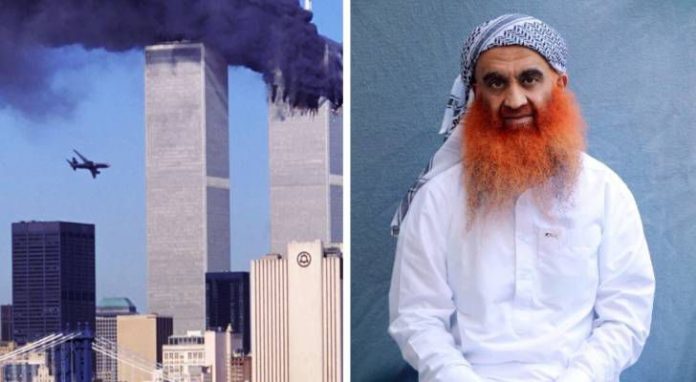
US Judge rejects 9/11 suspect Khalid Sheikh Mohammed’s FBI confessions
A United States military judge has ruled that confessions made by alleged September 11 mastermind Khalid Sheikh Mohammed to FBI agents cannot be admitted as evidence at his trial.
The decision represents a significant setback for prosecutors in the long-running death penalty case against Mohammed and three other defendants accused of involvement in the 9/11 attacks.
On Friday, Air Force Lieutenant Colonel Michael Schrama ruled that statements Mohammed made to FBI agents at Guantánamo Bay in 2007 were not given voluntarily.
According to the New York Times, lawyers who reviewed the unclassified portions of Schrama’s 45-page ruling said the judge concluded that prosecutors had failed to establish that Mohammed’s statements to the FBI were voluntary.
READ ALSO: Iran accuses EU of doing Washington’s bidding over Economic sanctions
Prosecutors had previously agreed to exclude statements Mohammed made during his years in secret CIA detention facilities, where he was subjected to 183 instances of waterboarding and other harsh interrogation techniques following his capture in Pakistan in 2003.
However, Schrama went further by ruling that the subsequent FBI interrogations were also compromised by the earlier treatment.
The judge said there had been an “unbroken continuation” of the CIA’s psychological conditioning and coercion after Mohammed was transferred to Guantánamo Bay.
He also cited the failure of FBI agents to explicitly inform Mohammed of his rights to remain silent and consult a lawyer, as well as the possibility that his statements could be used against him.
The 2007 interrogations were conducted by what prosecutors described as a “clean team” and had been regarded as some of the government’s most important evidence against Mohammed.
READ ALSO: United States and Israel launch coordinated military strikes on Iran
Mohammed, a Pakistani national and former al-Qaeda operative, is accused of masterminding the September 11, 2001 attacks, which killed nearly 3,000 people in the United States.
His defence lawyers have consistently argued that years of isolation, solitary confinement and abuse had conditioned him to provide interrogators with whatever information they wanted.
The ruling comes days after Schrama set June 5, 2028, as the trial date for Mohammed and his three co-defendants — Walid bin Attash, Mustafa al-Hawsawi and Ali Abdul Aziz Ali — before the military commission at Guantánamo Bay.
Chief prosecutor Rear Admiral Aaron C. Rugh said prosecutors would review the ruling before deciding whether to appeal.
Under the applicable rules, prosecutors have five days to determine whether to challenge the decision, although they may seek an extension.
READ ALSO: United States sends ground forces to Nigeria
An appeal could further prolong a case that has already remained unresolved for more than two decades.
Mohammed has been held at the US detention facility at Guantánamo Bay since 2006.
The lengthy delays have continued to frustrate relatives of the September 11 victims, many of whom fear the case may never reach a final resolution.
Follow the Neptune Prime channel on WhatsApp:
Do you have breaking news, interview request, opinion, suggestion, or want your event covered? Email us at neptuneprime2233@gmail.com

