


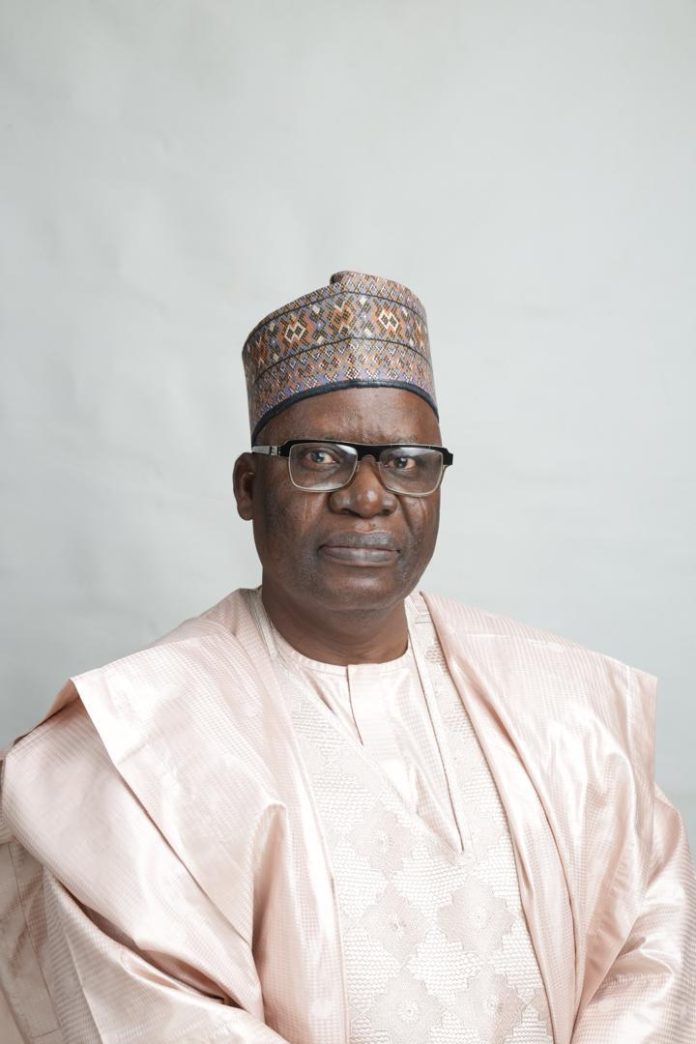
When A Society Begins To Admire The Wrong Heroes: Northern Nigeria, the battle for young minds, and the search for a new social contract, by S. A. Ndanusa, PhD, OON
Northern Nigeria has always been known for many things. It is the land of great empires, remarkable scholarship, resilient commerce and deeply rooted faith. It has produced accomplished teachers, respected judges, distinguished soldiers, visionary entrepreneurs and statesmen whose influence reached far beyond the region itself. For generations, its greatest inheritance was not merely its land or its markets. It was a social order that quietly taught each generation what it meant to live an honourable life.
No society is perfect, and nostalgia is a poor substitute for history. Yet it is difficult to ignore the growing unease that something fundamental has shifted. The anxiety that grips many communities today is not caused only by banditry, drug addiction or violent crime. Those are the visible expressions of a deeper transformation that has been unfolding for years, almost unnoticed, in the values, incentives and expectations that shape the imagination of young people.
We often describe the crisis in Northern Nigeria using the language of security. We speak of trafficking routes, criminal gangs, addiction, porous borders and law enforcement. Others prefer the language of economics and point to unemployment, poverty and inequality. Some locate the problem in governance, while others lament the erosion of moral values. Each perspective captures an important part of the story. Yet each, standing alone, leaves us with the uncomfortable feeling that we are examining different pieces of the same puzzle without ever seeing the picture they create.
Perhaps the more revealing question is not why so many young people are finding themselves trapped in cycles of drugs, crime and violence. Perhaps the more important question is why these pathways have become believable in the first place.
Young people rarely wake up one morning and decide to destroy their future. They respond to the world as they encounter it. They observe what society rewards. They notice who is admired, who is ignored, who prospers and who struggles. Before they listen to lectures, they study examples. Before they obey advice, they interpret incentives. Long before a trafficker places an offer on the table, society has already been conducting a silent conversation with them about success, dignity and belonging.
That silent conversation deserves far more attention than it has received.
For decades, Northern Nigeria possessed an unwritten social contract. Families nurtured character. Schools cultivated discipline. Traditional institutions reinforced communal responsibility. Religious leaders shaped conscience. Markets trained apprentices. Communities celebrated patience, industry and integrity. These institutions were not flawless, but together they created a moral ecology in which young people understood that reputation was earned before wealth was admired.
Today, that conversation has become increasingly confused. Wealth often commands louder applause than wisdom. Visibility sometimes overshadows credibility. The journey attracts less attention than the destination. Across television screens, mobile phones and social media feeds, young people encounter a daily parade of lifestyles detached from the patient labour that ordinarily creates them. They are not merely consuming entertainment; they are absorbing signals about how success appears to work.
Read Also: The Akara Economy: Why we should not laugh at small beginnings, by Suleyman A Ndanusa, PhD, OON
This is where the debate about governance acquires a meaning far deeper than budgets, elections or public administration. Governance is not simply the management of public resources. It is also the management of public example. Every act of integrity strengthens the social contract. Every act of impunity weakens it. Every unexplained fortune that attracts admiration without scrutiny quietly teaches a lesson. Every honest achievement that passes unnoticed teaches another.
Societies educate long after schools have closed for the day.
The classroom is everywhere.
When those lessons become contradictory, confusion follows. When confusion persists, cynicism takes root. And when cynicism replaces confidence, the distance between legitimate ambition and criminal opportunity becomes dangerously short.
This, I believe, is where Northern Nigeria now stands.
The challenge before the region is not simply to suppress criminal enterprises or reduce drug addiction, important as both objectives are. It is to rebuild confidence in the proposition that honest endeavour still offers the most reliable path to dignity, prosperity and significance. Security ultimately depends upon that belief. Once a generation loses faith in it, no number of checkpoints can permanently restore what has been lost.
The encouraging news is that the North is not beginning from nothing. It still possesses institutions capable of renewing that confidence. Its traditional leadership remains influential. Its religious communities continue to command respect. Its entrepreneurial culture is vibrant. Its families remain remarkably resilient. Its universities, businesses and professional communities still produce excellence. These are not relics of the past. They are assets for the future.
They are strategic assets waiting for the future to be reconnected to a common purpose.
Perhaps that purpose is simpler than we sometimes imagine.
Every society is, in one way or another, writing a letter to its children. Some letters encourage patience. Others glorify haste. Some honour integrity. Others admire only outcomes. Some produce citizens. Others unintentionally produce opportunists.
The letter Northern Nigeria writes over the next decade may prove more consequential than any policy document, security strategy or economic plan.
For in the end, the future of the region will not be determined only by the criminals it defeats.
It will be determined by the young people it convinces to choose a different future.
The task before us is therefore not simply to defeat criminality. It is to restore credibility to legitimate success. That is a larger ambition than fighting crime, but it is also the only ambition capable of producing lasting peace.
The future of Northern Nigeria will not ultimately be decided by those who recruit young people into criminal enterprises.
It will be decided by whether legitimate society once again becomes the most convincing author of their dreams.
“Suleyman A. Ndanusa, PhD, OON, is an economist, lawyer, strategic studies scholar, and public policy thinker and practitioner with extensive experience in financial markets, regulation, governance, national Security and development.”
Follow the Neptune Prime channel on WhatsApp:
Do you have breaking news, interview request, opinion, suggestion, or want your event covered? Email us at neptuneprime2233@gmail.com

