

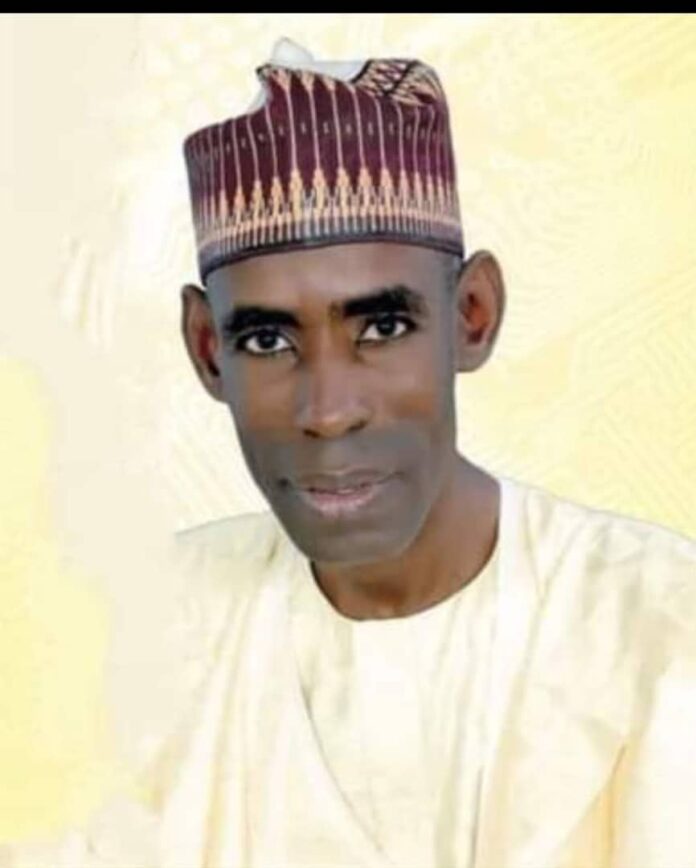
When a song becomes a political movement, by Engr. Bello Gwarzo Abdullahi, FNSE
There are many ways to win an election, but in my experience it usually comes down to three things: the situation on ground, who is aligned with whom, and timing. We talk a lot about speeches, rallies, manifestos and, these days, social media. What gets far less attention is the political song — and I think that is a mistake.
A song outlasts a speech. It survives long after a slogan has been forgotten, and it reaches people in the market, at the motor park, in the neighbourhood, who will never read a manifesto. It takes something complicated and reduces it to a line you can hum without thinking about it. And when that line captures what a lot of people are already feeling, something interesting happens: private frustration becomes a shared, public thing.
We have seen this before in Nigeria. Back in 2006, when the country was arguing over whether President Olusegun Obasanjo should get a third term, a line went round the North: “Ku gayawa Obasanjo, ba za mu yarda ya zarce ba” — tell Obasanjo we will not accept a third term. It worked because it was simple. It was in the language people actually spoke, and it said “we,” not “I.” That distinction matters more than it sounds.
A person who feels alone in their frustration usually keeps quiet about it. But hear a few thousand other people saying the same thing, and suddenly speaking up does not feel so risky. That refrain is where the word “tazarce” entered everyday political conversation, and by May 2006 the National Assembly had thrown out the amendment that would have let Obasanjo stay on.
I think we are watching something similar take shape now, through songs like “Siyasa ’yanci na” — politics is my freedom. “Tazarce” was about resisting one specific thing. “’Yanci” is broader — it is about the idea that ordinary people get to judge their leaders and choose differently if they want to.
But here is the part the opposition cannot afford to miss: a song, on its own, is not a strategy.
From Songs to Organisation
The songs coming out as 2027 approaches tell me something real — that a section of the opposition wants an alternative badly enough to be singing about it. Fair enough. But wanting something and organising for it are two different things, and if these songs do not eventually plug into a disciplined movement, they will just be noise, however catchy.
This is really the distinction the opposition needs to get its head around — the difference between making noise and actually mobilising people.
A song stirs emotion. A slogan stirs excitement. A rally fills a field with people. Social media makes all of it visible. None of that, by itself, wins an election. Elections are won with structures, candidates, organisation, people going out to register and vote, and a message that holds up under scrutiny.
READ ALSO: The Kano APC: Showmanship or reality?, by Engr. Bello Gwarzo Abdullahi, FNSE
Which is exactly why the opposition should be using its music deliberately, not treating it as background entertainment at rallies.
A political song should say something people can actually understand about their own lives. It should speak to real conditions on the ground, and it should be able to move across region, ethnicity, religion and generation without losing its meaning. And it absolutely has to stay on the side of peaceful participation — not incitement, not intimidation.
What “tazarce” actually teaches us is not that a catchy tune can go viral — everyone already knows that. It is that a shared public feeling only becomes politically useful once it is attached to organisation.
The Single-Candidate Imperative
This, to me, is the real test facing the opposition. If several parties genuinely want to offer Nigerians one alternative in 2027, sooner or later they have to answer the hard question: whose name goes on the ballot?
There have already been attempts at this. In April 2026, opposition leaders meeting in Ibadan committed publicly to a unified front and a single presidential candidate. That conversation picked up again at a summit in Abuja on 31 August, where several parties once more circled the same question.
But talk is cheap next to the reality of it. Reports through August and September have made clear just how far apart the different camps still are on the coalition itself, let alone on who should lead it.
This is exactly where political leaders need to show some backbone. If the opposition wants to run as a coalition, it cannot then turn around and field three or four presidential candidates under different party flags — that defeats the entire point of forming a coalition in the first place. What it needs instead is an agreed process for picking a candidate, a shared programme, and some mechanism for managing the ambitions of the individuals involved.
The principle is not complicated: the collective goal has to outweigh any one person’s ambition. That does not mean anyone should be told to sit down and shut up. It means there needs to be a transparent, credible process for sorting out who runs, before Nigerians are asked to choose.
What the opposition needs is not simply a coalition of politicians. It needs a coalition that actually agrees on what it is for.
What History Tells Us
Nigeria’s political history has a habit of reminding us that arrangements which look permanent rarely stay that way. Take the Babangida transition programme — it showed both what was possible and how badly things could still go wrong. Political parties were allowed to operate, but only inside a tightly managed structure, and even then the June 12, 1993 election was annulled outright.
Then came the Abacha years. After the 1993 crisis, democratic institutions were shut down and political life was choked off. And yet groups like NADECO kept pushing, kept demanding a return to civilian rule, even under that pressure.
The third-term fight under Obasanjo is the one this essay keeps returning to, and for good reason: an amendment built to extend his tenure was defeated in the National Assembly in 2006. People will argue forever about the politics behind that outcome, but the fact remains — something that looked unstoppable was checked, through institutions and public pressure working together.
Then there is the Yar’Adua episode of 2009–2010, when the president was absent from the country for months. On 9 February 2010, the National Assembly passed a resolution handing presidential power to Vice President Goodluck Jonathan as Acting President — what became known as the “Doctrine of Necessity.”
These are different moments, and I am not suggesting they are the same story repeated. But together, they say something worth holding onto: Nigerian political arrangements are not as fixed as they look from the outside.
When institutions, political actors and ordinary citizens respond together to a moment of uncertainty, the country’s direction can actually shift. That is why I would resist reading the current mood of exhaustion as some kind of surrender. History suggests Nigerians still have agency — when the moment demands it, and when that feeling finds somewhere organised to go.
Turning “Siyasa ’Yanci Na” Into a Movement
This is where the opposition needs to be smarter about how it uses its own music. “Siyasa ’yanci na” should not end up as just another chorus people hum and forget. If it is meant to stand for political freedom and popular agency, it needs to be tied to an actual programme.
The music has to spell out, in plain language, what the alternative is actually offering. What happens to the cost of living? What is the plan for jobs? For insecurity? For power supply? For schools and hospitals? For strengthening the institutions that keep all of this honest? And, maybe most importantly — how does the freedom people are singing about turn into better governance once the votes are counted?
None of that happens through music alone. It needs town halls, radio, television, social media, people organising on the ground, and actual policy documents, all saying roughly the same thing in different rooms.
A song can get people to the door. Organisation is what walks them through it.
The Economic and Social Reality
None of this messaging works unless it actually connects to what people are living through. Nigeria’s economic strain, the insecurity, the frustration with how things are run — all of that is fair ground for political debate. But the opposition cannot lean on anti-incumbent frustration alone. It has to turn that frustration into something concrete — an actual alternative, not just a complaint. Being against the government of the day opens a door. It does not, by itself, give anyone a reason to walk through it. People need to know what they would actually be voting for.
Parliamentary Cohesion and Legislative Oversight
Opposition politics does not start and stop at presidential elections. Opposition lawmakers have real work to do in the National Assembly — scrutinising policy, debating legislation, questioning public spending, representing the people who elected them. Where opposition parties actually agree on something, working together in the legislature is one of the clearest ways to show it. Voters should be able to tell the difference between rhetoric on a stage and consistent accountability in the chamber.
Grassroots Organisation
A song can move people emotionally. Only registered voters actually move governments. So the opposition needs sustained, peaceful engagement at the grassroots — reaching young voters, women, traders, farmers, informal-sector workers, professionals, rural communities, through real civic education built around the issues that matter to them. The goal cannot just be to make people angry. It has to be to make them informed, organised, and willing to show up and participate peacefully.
Protecting the Ballot
One more thing that should never be forgotten. A movement that stirs up energy but fails to protect the vote has done half the job and stopped there.
Opposition parties need solid structures at the polling unit level, trained agents, dependable systems for collating results, and lawful monitoring mechanisms. Every legitimate vote has to actually be counted and transmitted the way the process requires. Whatever mandate people express through a song eventually has to show up at the ballot box, or it never really existed.
The Real Test
Measured against what “tazarce” achieved, the opposition’s problem today is not a shortage of songs, slogans or grievances.
It is sequencing: Build the coalition first. Then agree the rules. Then settle who carries the ticket. Then get the parties and structures behind that person. Then put together a programme people can actually understand. Then take it to the grassroots. Then protect the vote.
A song can carry a movement further than a speech ever could — but only once that movement knows where it is actually going. That, to me, is the deeper lesson buried in “tazarce.” The song did not defeat the third-term amendment on its own. It was one part of a much larger political, civic and institutional effort. I think the same is true today.
If songs like “Siyasa ’yanci na” are going to be more than a good tune, the opposition needs to give them structure, a real programme, and — above everything else — one candidate who can actually hold together the votes of everyone who wants something different. So the question facing the opposition is not whether there are enough songs, slogans or grievances to work with. There are.
The real question is whether its leaders can put personal ambition below a transparent process, actually resolve their disagreements, and give Nigerians one coherent option instead of several competing ones.
Nigerian history keeps making the same point in different ways: arrangements that look permanent do not always stay that way. The Babangida transition, the Abacha years, the resistance to Obasanjo’s third term, the constitutional response to Yar’Adua’s absence — in each case, a moment of uncertainty eventually produced real institutional and political consequences.
So I would not approach this moment with despair, and I would not approach it with complacency either. If the opposition can turn public sentiment into real organisation, use its music with intention, settle its internal rivalries, and put forward one credible candidate, then 2027 will actually give Nigerians a clear choice about where the country goes next.
Whether that turns out to mark the beginning of the end for APC rule is not something commentators or politicians get to decide. That is for Nigerian voters, at the ballot box.
But one thing I am fairly certain of: a political song can wake people up. What happens after they wake up is down to organisation.
Written by Engr. Bello Gwarzo Abdullahi, FNSE.
Email: bgabdullahi@gmail.com
Follow the Neptune Prime channel on WhatsApp:
Do you have breaking news, interview request, opinion, suggestion, or want your event covered? Email us at neptuneprime2233@gmail.com