


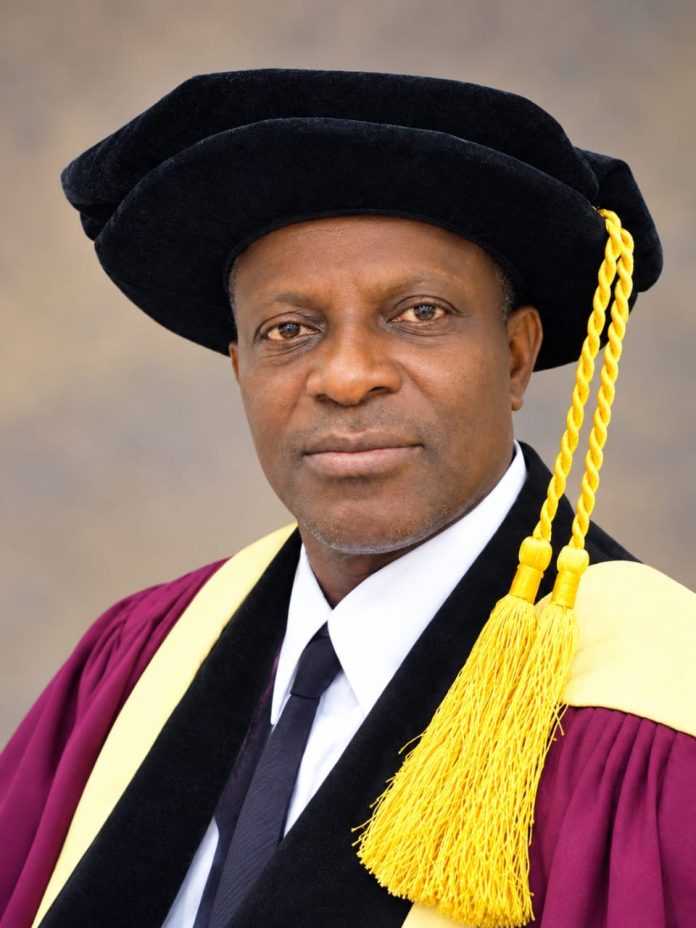
When fatwas become instruments of resistance, by Dr. Sabiu Adamu FPCPharm
When a senior Shi’a scholar issues a fatwa in response to a political crisis, the question is not merely what the ruling says, but what it can set in motion. Across modern Shi’a history, there have been moments when religious authority moved beyond individual religious practice to address economic sovereignty, foreign domination, national defence and matters of profound public concern. The recent fatwa of Ayatollah Muhammad al-Yaqubi therefore deserves to be viewed against this longer historical tradition. Its significance may ultimately depend on whether it merely expresses a position or inspires a wider sense of religious and civic responsibility.
That capacity of religious authority to influence public affairs was dramatically demonstrated in 1891, when Ayatollah Mirza Hassan Shirazi, then based in Samarra, Iraq, opposed the British-backed tobacco concession granted by the Qajar government of Iran. His ruling prohibiting the use of tobacco while the concession remained in force produced a widespread boycott, reportedly extending even to the Shah’s household, and the concession was eventually cancelled. More importantly, the episode demonstrated that religious authority could mobilise ordinary people around a question of national economic sovereignty.
That precedent of mobilisation against foreign influence found a new expression in Iraq in 1920, when Ayatollah Muhammad Taqi al-Shirazi supported resistance to British occupation. His intervention helped galvanise tribes and communities during the Iraqi Revolution of 1920, demonstrating that the religious establishment could become an important voice in a national struggle. The experience also showed that such interventions could have consequences extending beyond the immediate political crisis.
The reach of religious authority became even more striking in 1989, when Ayatollah Ruhollah Khomeini issued his ruling concerning Salman Rushdie and The Satanic Verses. Whatever one’s position on the controversy surrounding the ruling, its international consequences were unmistakable: it generated a major debate involving religious sanctity, freedom of expression, diplomacy and the limits of religious authority across national borders. Thus, a question that began in Iran became an issue of international significance.
From questions of religious sanctity, the debate later extended into nuclear ethics. Ayatollah Ali Khamenei has maintained that nuclear weapons are religiously prohibited, a position repeatedly cited by Iranian officials in presenting their argument that weapons of mass destruction cannot be justified on religious grounds. Here again, the fatwa became part of a wider conversation involving religion, national security and international diplomacy.
That pattern appeared once more in 2014, when Ayatollah Ali al-Sistani called on capable Iraqis to volunteer in defence of the country following the rapid advance of ISIS. The call contributed to a massive mobilisation that became associated with Iraq’s Popular Mobilisation Forces and formed an important part of the country’s resistance to ISIS.
It is within this historical continuum that Ayatollah Muhammad al-Yaqubi’s recent fatwa merits attention. Its ultimate significance will depend on its content, reception and consequences, but it raises an important question for religious leadership everywhere: when society faces a grave moral or political challenge, what responsibility does religious authority have to guide, protect and mobilise the people?
For Nigeria, this question may be considered with humility and respect. The country’s Muslim scholars and Christian religious leaders occupy positions of considerable moral influence and public trust. Without prescribing a particular political response, perhaps the wider lesson from this history is that religious leadership carries responsibilities that extend beyond the walls of places of worship. At moments of serious national difficulty, Nigerians may reasonably look to their religious leaders for principled guidance, moral courage, peaceful advocacy and a clear voice for justice, human dignity and the common good.
Dr. Sabiu Adamu FPCPharm, PhD
Consultant Clinical Pharmacist
Fellow of the West African Postgraduate College of Pharmacists
Rtd Director of Pharmaceutical Services,
Federal Medical Centre,
Keffi
Follow the Neptune Prime channel on WhatsApp:
Do you have breaking news, interview request, opinion, suggestion, or want your event covered? Email us at neptuneprime2233@gmail.com