
Erratic Power Supply: Adelabu’s peculiar mess, by Kazeem Akintunde
Erratic Power Supply: Adelabu’s peculiar mess, by Kazeem Akintunde
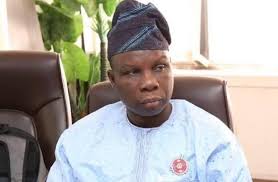
When President Bola Ahmed Tinubu inaugurated Adebayo Adelabu as Minister of Power, alongside 44 others cleared by the Senate on August 21, 2023, he most probably knew that the man knew next to nothing about power generation, transmission and distribution. Yet, he was appointed to oversee electricity supply for millions of Nigerians.
During his campaign for the presidency, Tinubu promised Nigerians that he would turn the power sector around within two years. However, his administration will clock three years in office in a few months’ time, and the sector remains in a state of limbo. Adelabu appears to have no clear answer to the intractable challenges confronting electricity supply in the country.
A first-class graduate of Accounting from Obafemi Awolowo University, Adelabu is a Fellow of the Institute of Chartered Accountants of Nigeria and the Chartered Institute of Bankers of Nigeria. He is also an Associate Member of the Institute of Directors of Nigeria and the United Kingdom.
He began his career with PricewaterhouseCoopers, an international firm of chartered accountants and management consultants.
Adelabu later served as Deputy Governor of the Central Bank of Nigeria, in charge of operations, after his appointment by former President Goodluck Jonathan in February 2014.
In a system where round pegs are placed in round holes, Adelabu might have been more useful in the management of the nation’s economy. But for political expediency, he was made Minister of Power.
Upon assuming office, Adelabu assured Nigerians that the Federal Government would empower citizens through stable and accessible electricity. To achieve this, he said the ministry would leverage the Electricity Act 2023 to boost power supply across the country.
Thirty months later, many Nigerians say the situation has worsened, with consumers paying more for darkness. In the last one month, several parts of the country have experienced prolonged blackouts, partly blamed on the dry season, during which extreme heat worsens living conditions for many households.
The current explanation is that some power generating stations are facing gas supply shortages. However, many Nigerians remain unconvinced, suspecting that entrenched interests within the system are deliberately sabotaging the sector in order to pressure the government into restoring another round of subsidy payments in the electricity market.
After ending the petrol subsidy regime, President Tinubu appears to have been drawn into another subsidy arrangement in the power sector.
The problem, according to government officials, dates back to 2013 when the Federal Government privatised the power sector and handed operations to 11 distribution companies. Since then, a combination of government-regulated tariffs that do not cover full generation costs, chronic liquidity shortages and foreign exchange constraints has left operators trapped in a cycle of unpaid invoices.
The accumulated debt the Federal Government is expected to settle is estimated at about ₦6 trillion.
On April 3, 2024, the government removed subsidies for Band A customers only, raising electricity tariffs to about ₦225 per kilowatt-hour, while Bands B to E remained subsidised.
When generating companies later met with President Tinubu, they claimed the government owed them more than ₦4 trillion in tariff shortfalls from customers in Bands B to E. Months later, they returned with a revised figure of ₦6 trillion, prompting the president to order a forensic audit.
At the end of the audit, Tinubu said only ₦2.8 trillion could be verified. The government subsequently raised ₦501 billion through bonds, with the funds tied to gas purchases, as many generation companies also owed gas suppliers.
However, the Nigeria Labour Congress opposed the move, describing it as “a grand deception and a well-orchestrated robbery of the Nigerian people.” The union questioned why companies that acquired national assets for about ₦400 billion should receive trillions in public support after failing to significantly improve electricity generation capacity, which still fluctuates between 2,000 and 5,000 megawatts.
Despite the opposition, the government proceeded with the payment. Plans were also made to release another tranche of between ₦600 billion and ₦800 billion, with the balance spread over the next 12 to 24 months.
Although the generating companies received the ₦501 billion payment, it remains unclear whether gas suppliers were eventually paid. With gas supply now disrupted, the country once again faces widespread darkness.
If the government refuses to yield to pressure from generating companies, then cost-reflective tariffs may have to be introduced for customers in Bands B to E — meaning Nigerians would pay even more for electricity.
With the 2027 general elections approaching, such a move could have political consequences for President Tinubu’s re-election ambitions.
Many observers say the situation already reflects a peculiar crisis.
For some, confidence in the power sector diminished when the Aso Rock Presidential Villa earmarked ₦10 billion in the 2025 budget to generate electricity through solar power.
In the 2026 budget proposal, another ₦7 billion was allocated to complete the project.
According to State House Permanent Secretary Temitope Fashedemi, the Presidential Villa is expected to disconnect from the national grid by March this year.
The move followed a ₦923 million electricity debt owed to the Abuja Electricity Distribution Company, which had threatened to cut supply to the Villa in 2024.
After reconciliation, the debt was reduced to ₦342 million and paid immediately. Nevertheless, the decision to move the seat of government off the national grid continued.
Critics argue that if the presidency itself struggles with electricity supply and relies heavily on generators, it raises serious questions about the system ordinary Nigerians are expected to depend on.
Shortly after assuming office on June 8, 2023, Tinubu repealed the Electric Power Sector Reform Act 2005 and signed the Electricity Act 2023, allowing state governments and private investors to generate, transmit and distribute electricity.
The reform was designed to encourage renewable energy development and enable states to manage their own power markets.
However, progress has been slow, with many states yet to show serious interest in developing independent electricity systems.
The reform has also raised questions about regulatory clarity, subsidy management and potential friction between state and federal authorities, particularly as the Nigerian Electricity Regulatory Commission appears to be losing influence in the sector it was created to oversee.
So far, 11 states have begun the transition process. Seven — including Enugu State, Ondo State, Ekiti State, Imo State, Oyo State, Edo State, and Kogi State — have already completed the transition, while others such as Lagos State, Ogun State, Niger State, and Plateau State are expected to complete theirs between June and September this year.
Anambra State has also recently passed its electricity law and is preparing to join the list.
Since the return to democracy in 1999, successive administrations have reportedly invested more than $50 billion into Nigeria’s electricity sector. Yet the country still struggles to generate even 10,000 megawatts — far below the over 50,000 megawatts produced by South Africa.
The Transmission Company of Nigeria has frequently been criticised for inefficiency and corruption, while past ministers of power have also faced allegations of mismanagement.
Several former ministers have been investigated by the Economic and Financial Crimes Commission over alleged financial misconduct related to power sector funds.
Critics say the current minister has not been different, accusing him of focusing more on political ambitions — particularly a potential governorship bid in Oyo State — than addressing the country’s electricity crisis.
Meanwhile, some generating companies continue to report strong profits. For instance, Transcorp Power Limited, owned by Tony Elumelu, reported a 115 per cent revenue increase from ₦142.1 billion in 2023 to ₦305.9 billion in 2024, while profit after tax rose by 165 per cent to about ₦80 billion.
Despite such figures, many households in Abuja and other cities continue to experience prolonged blackouts.
Public frustration is growing. Last week, protests erupted in Lagos, where youths demonstrated against poor electricity supply.
Nigeria’s national grid continues to collapse frequently, leaving businesses struggling to survive amid rising fuel costs for generators.
For many Nigerians, the power crisis has become a symbol of deeper governance failures.
As the common saying goes in moments of national frustration: “It is well.”
But the question remains — is it?