
The secret to a long-lasting marriage is patience and understanding – 83-year-old retired civil servant
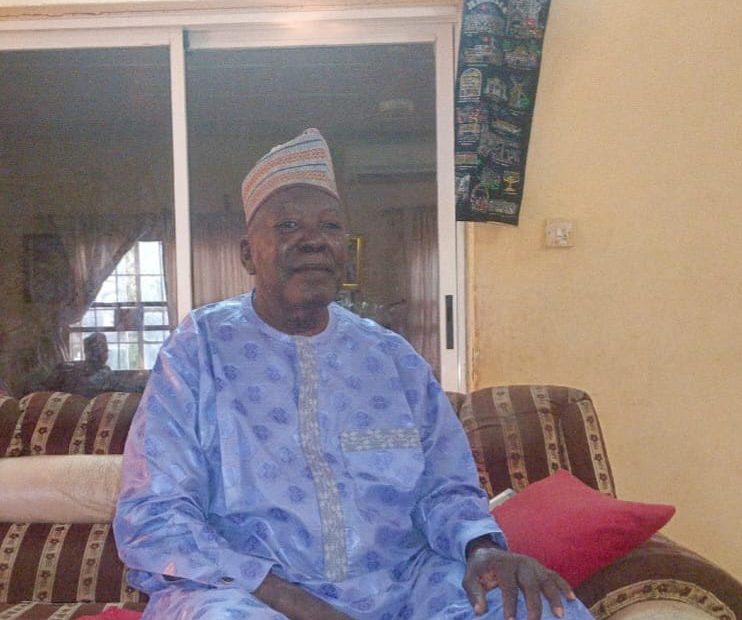
Yakubu Tafida (YT), an 83-year-old retired Deputy Director in the Yobe State Government, reflects on his illustrious career as an engineer, civil servant, and elder statesman. Tafida contributed to the Nigerian Army as an engineer during the Civil War and later served as a councillor for Fika Local Government Area in 1994. To advance his expertise, he attended professional courses in the United Kingdom. Tafida speaks with Neptune Prime about his experiences in public service and the valuable life lessons that others can draw from his journey.
NP: Who is Yakubu Tafida?
YT: I find it interesting that you are asking about my childhood here, you must know that you are asking about something that spans over eighty years. Well, I grew up in Kukar Gadu, a community in Fika Local Government Area of Yobe State, on 4th February 1941. However, I lived with my uncle as a child. I also spent my infancy with the missionaries, being orphaned after losing my parents at a very young age.
YT: I completed my primary school education in Bauchi Province—at the time, it was called a province; now, it is a state. Thereafter, I enrolled in Technical Training School, Bukuru. It is equivalent to what we now refer to as a polytechnic. I focused on electrical and electronics engineering there. After completing my education, I was employed by Northern Nigeria as a technician. Later, I secured a job with the Borno Province, where I held several positions over time.
YT: During the Civil War in 1972, I worked with the Nigerian Army as an engineer with the rank of lieutenant. That period was unforgettable and remains one of the most defining experiences of my life. Later, I served as a project engineer for the Rural Electrification Board. Then, in 1994, I ventured into politics and served as a Councillor for Fika Local Government Area. Finally, I retired in 1997 as a Deputy Director in the Ministry of Works in Yobe State.
YT: It’s also worth mentioning that I had the privilege of studying abroad in the United Kingdom. I attended courses in Southampton and Nottingham City to advance my career as an engineer. Over my professional journey, I worked in Taraba, Bauchi, Kaduna, Borno, and Yobe states.
NP: This is beautiful. Can you tell us some of the most significant events or experiences that shaped your life?
YT: Well, there are many—too many to count. But I can say that being an orphan was one of the most defining experiences of my life. Growing up without my parents was a tough experience, as it came with its unique challenges. My mother passed away during childbirth, and my father passed away three years later. He came from Daya, a community in Yobe State. Being orphaned meant that I had to learn how to handle life on my own without the guidance or support of my biological parents. I relied heavily on relatives for assistance, but there were limits to what they could do for me. However, I thank God that I was able to face these challenges head-on and overcome them.
YT: One key lesson I learned early on was self-reliance. For instance, before I could enrol in primary school, I had to persuade my niece to help me get in. That was my first real encounter with learning how to take initiative. Another major challenge was enrolling in senior school. At the time, my guardian wasn’t around, so I had to attend the interview on my own. To my relief, I passed the interview, securing the third position among the last successful candidates.
YT: Another pivotal moment occurred when I was supposed to start school. My name mistakenly appeared under Bauchi Province instead of Borno Province. Since school admissions were based on provincial boundaries, this posed a significant problem. However, I didn’t let the error discourage me. I wrote to the Education Secretary in Borno, who was European. To my surprise, he travelled to Potiskum to find and assist me. That experience taught me the importance of persistence and doing things by myself.
NP: What were some of the biggest challenges you faced in your life, and how did you overcome them?
YT: Challenges are inevitable in life, and I have faced my fair share. One of the biggest challenges was when I was preparing to get married. I had to do everything myself because no one else showed much interest in my affairs. It was a tough time, but I persisted. Another major challenge was finding work, which didn’t come easily. It required hard work, patience, and persistence. Despite the difficulties, I managed to overcome these challenges through God’s grace and sheer determination.
NP: That’s bravo, sir. How did you meet your spouse, and what’s the secret to your long-lasting marriage?
YT: So, you want to know how we met? That’s quite an interesting story. I met her after completing my technical school. I was on holiday at the time, and that’s when I first saw her. However, our journey to marriage wasn’t without its challenges. Since we came from the same area, people initially frowned upon the relationship, saying it was too close. Nevertheless, everything worked out as planned, and we got married. Soon after, we moved to Maiduguri, where I started working.
YT: The secret to our long-lasting marriage is simple—patience. We have always been patient with each other, and that has been the foundation of our relationship.
NP: In the course of the interview, you mentioned some of the challenges you faced. What advice do you have for the younger generation facing similar challenges?
YT: Well, my advice to every teenager is to focus their mind on what God can do for them. Parents and relatives can offer support, but ultimately, you need to stand on your own and place your trust in God. In recent times, I have observed that many teenagers overly depend on their parents, and that’s not a good practice. Back in the day, I had to engage in farming and gather firewood to sell so I could earn pocket money. I did all of that on my own.
YT: To succeed, one must work hard. Relying solely on others is not sustainable. Eventually, parents grow old or pass away, and one will have to fend for themselves. Hard work and self-reliance are the keys to overcoming challenges and building a successful life.
NP: What do you hope your legacy will be, and how do you want to be remembered?
YT: I have always placed my trust in God, and I hope to be remembered for my faith and reliance on Him. I want people to remember me as someone who demonstrated good character and a positive attitude. These qualities helped me secure work, build a family, and even surpass some of my colleagues.
NP: What advice do you have for Nigerian leaders, especially now that the country is facing many challenges?
YT: Let me say that, with what is happening in the country today, things are indeed getting out of hand. Yes, there are schools, and children are going to school, but there are no jobs available. Insecurity is widespread, and the economy is struggling. Leaders need to learn from our past leaders and lead by example. They should see themselves as servants of the people, not masters. Life is short, and there is no benefit in engaging in bribery, corruption, or embezzlement of public funds. My advice to leaders is to return to the drawing board and revisit the principles of good governance.
NP: How do you think the government can improve the lives of Nigerian citizens?
YT: The government needs to be honest with itself and its citizens. They must first turn to God for guidance and remain truthful in their actions and policies.
NP: Are there any books, quotes, or sayings that have inspired you throughout your life?
YT: “Work hard” is the phrase that has always motivated me. It encapsulates the value of effort and determination. Additionally, I believe in trusting God in whatever we do.
NP: What are your favourite hobbies or activities to do in your free time?
YT: I enjoy reading, watching television, and spending quality time with my family. These activities bring me joy and relaxation.
NP: What traditional Nigerian meals do you enjoy the most, and how often do you get to eat them?
YT: I love the traditional dish ‘Tuwo da Miyar Kuka,’ and I eat it quite regularly. It’s one of my favourites.