


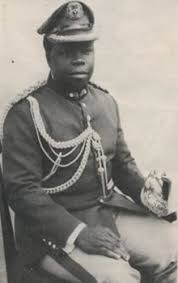
George Agbazika Innih: Soldier, statesman, and pillar of national development
George Agbazika Innih was a distinguished Nigerian Army general and statesman whose career spanned military service, governance, and post retirement national engagement.
He was born on September 25, 1938, in Agenebode, located in present day Etsako East Local Government Area of Edo State. His early education took him through Catholic School in Akure, Government School in Warri, Holy Cross Catholic School in Benin City, and later Edo College, Benin City, institutions that shaped his disciplined outlook and leadership foundation.
Innih joined the Nigerian Army and received professional military training both at home and abroad. He attended the Mons Officer Cadet School in Aldershot in 1962 and later the Royal Military Academy, Sandhurst, where he trained between 1962 and 1964, with further professional military studies completed in 1972.
His early military career saw him serve as a platoon commander with the 4th Infantry Battalion in Ibadan, after which he held several strategic staff and command positions. These included Deputy Military Secretary at the Supreme Headquarters in Lagos, Colonel General Staff with the Third Marine Commando during the Nigerian Civil War, and later Brigade Commander of the Fifth Infantry Brigade in Onitsha.
READ ALSO: Why my children will not join the Nigerian Army – Retired Colonel
During the Nigerian Civil War from 1967 to 1970, Innih served with distinction as a battalion commander in the Third Infantry Division. After the war, he continued to rise steadily through the ranks, occupying key command and administrative roles that reflected both his operational experience and strategic competence.
Following the military coup of July 29, 1975, which brought General Murtala Mohammed to power, Colonel Innih was appointed Military Governor of Bendel State, an area that later became Edo and Delta States. Upon assuming office, he took firm administrative steps by dissolving the existing executive council and statutory boards, suspending contract awards, and setting up review committees to examine state finances and ongoing projects. These actions were aimed at restoring discipline and accountability in public administration.
After the assassination of General Murtala Mohammed in February 1976 and the emergence of Lieutenant General Olusegun Obasanjo as Head of State, Innih was redeployed in March 1976 to Kwara State as Military Governor.
He governed Kwara State until 1978 and became widely regarded as a popular and development oriented administrator. His tenure witnessed the implementation of the Operation Feed the Nation programme, a nationwide agricultural initiative designed to boost food production and encourage self sufficiency.
He also oversaw the construction of major infrastructure projects including the Kwara State Stadium Complex, the Adewole Housing Estate, Unity Road, Taiwo Road, and modern markets across local government areas, notably the Baboko Market in Ilorin.
READ ALSO: Nigerian-born Amanda Azubuike becomes Brigadier General in U.S. Army
After leaving office, Innih returned to military service at the highest levels. He served as Quarter Master General of the Nigerian Army between 1978 and 1979 and later as General Officer Commanding the First Infantry Division from 1979 to 1980. He retired from active military service in 1980, having completed a career marked by discipline, professionalism, and public service.
In retirement, George Innih remained active in national and corporate affairs. He became President of the Retired Officers of Nigerian Armed Forces Organisation and held several leadership positions in the private sector, including Chairman and Managing Director of Niger Valley Agro Industries Limited and Tamsaks Nigeria Limited, as well as Chairman of Bridgestone Finance Limited.
His contributions to national development were formally recognised when he was awarded the Order of the Federal Republic. In 1998, the University of Ilorin conferred on him an Honorary Doctor of Law degree in recognition of his service to the state and the nation.
George Agbazika Innih passed away on August 14, 2002, at the age of 63. He is remembered as a disciplined soldier, an effective administrator, and a public servant whose legacy remains visible in the institutions and infrastructure he helped build.
Follow the Neptune Prime channel on WhatsApp:
Do you have breaking news, interview request, opinion, suggestion, or want your event covered? Email us at neptuneprime2233@gmail.com