

Beyond Cure: Nigeria’s leprosy colonies still waiting for dignity
Across the globe, leprosy is often described as an ancient disease approaching elimination. In Nigeria, however, the reality is more complicated—and more urgent. Beneath national data and policy achievements are dozens of aging settlements where thousands of people affected by leprosy continue to live in conditions that undermine dignity and inclusion.
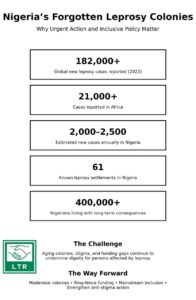
Worldwide, more than 182,000 new cases of leprosy were recorded in 2023, with Africa accounting for over 21,000 of them. Nigeria remains among the high-burden countries, contributing a significant portion of global cases. Although multidrug therapy has made the disease curable, its social and structural consequences often endure long after treatment ends.
Nigeria reports between 2,000 and 2,500 new cases annually. Yet the deeper crisis begins after diagnosis. Across 61 recognized settlements, more than 400,000 Nigerians live with the long-term effects of leprosy—many in former isolation colonies established decades ago. What were once intended as temporary care centers have, in many instances, become permanent enclaves marked by neglect.
READ ALSO: World Leprosy Day 2026: LTR urges Nigeria to tackle stigma, boost funding, restore dignity
Independent reports and field observations consistently reveal deteriorating infrastructure, limited healthcare access, inadequate water and sanitation systems, and minimal social protection. In some colonies, weak access to medical facilities forces families to rely on informal birth practices. Poverty remains widespread, while stigma continues to inflict psychological trauma on residents.
These realities are not isolated humanitarian concerns; they reflect systemic policy gaps.
Nigeria has made measurable progress in reducing national prevalence rates. However, pockets of high burden persist, particularly in underserved communities. The continued existence of deteriorating colonies highlights a critical truth: achieving elimination benchmarks does not automatically eliminate suffering.
Financing remains one of the most pressing structural challenges. Nigeria’s leprosy response still depends heavily on external donor support for key components such as diagnosis, drug supply, and outreach. Notably, there is no clearly earmarked domestic budget line dedicated specifically to leprosy programming. While the broader health sector receives allocations, public budget documents rarely reflect ring-fenced funding for leprosy control.
READ ALSO: Nigeria’s Tuberculosis Emergency: Time to close the funding gap and turn commitment into action
This gap presents serious risks:
Potential interruptions in drug supply
Weak rehabilitation and welfare services
Slow modernization of aging colonies
Recent drug supply disruptions that required external intervention underscore the fragility of the current funding model.
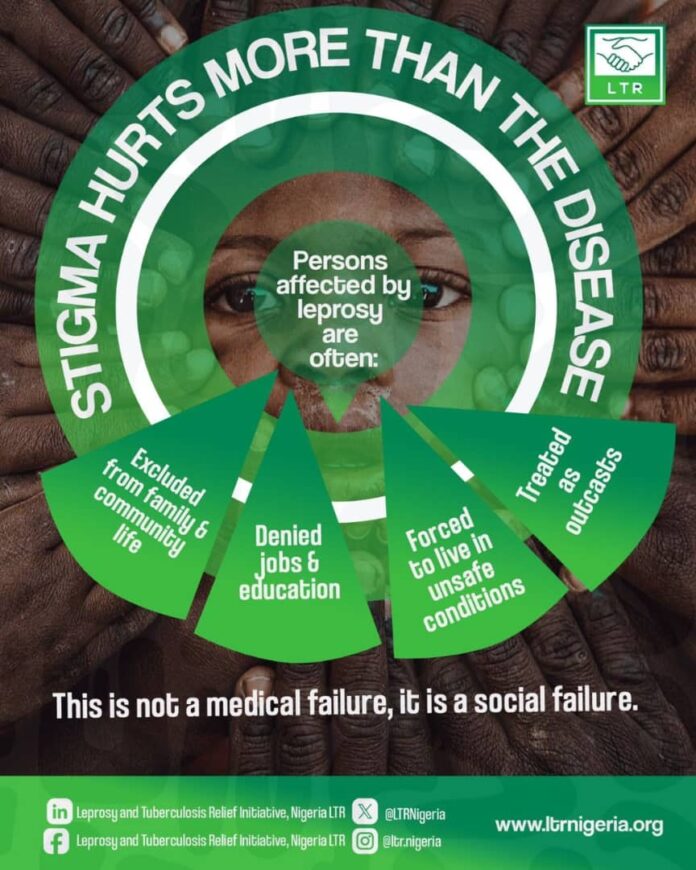
Behind every statistic is a human story. Many Nigerians affected by leprosy continue to face rejection, unemployment, and social exclusion—even after being medically cured. Experts identify stigma as one of the most persistent barriers to early detection and successful reintegration.
For residents of long-standing colonies, the challenge is compounded by their physical environment. Segregated and underdeveloped settlements reinforce the very exclusion national programs aim to dismantle. In effect, stigma becomes embedded in geography.
Nigeria now stands at a crossroads. With political will, strategic financing, and coordinated partnerships, the country can move from controlling disease to restoring dignity.
The Leprosy and Tuberculosis Relief Initiative Nigeria (LTR) continues to play a catalytic role in this transition. Its work focuses on:
Raising community awareness to reduce stigma
Supporting case detection and referrals
Advocating for inclusive policy reforms
Engaging national and subnational stakeholders
Amplifying the voices of persons affected
Through field engagement and policy advocacy, LTR is helping to shift the national conversation from charity to rights, and from isolation to inclusion.
READ ALSO: When pharmacies sell death for a penny, by Festus Adedayo
To bridge the gap between medical progress and social reality, Nigeria must urgently:
1. Modernize existing leprosy colonies into inclusive communities with access to primary healthcare, clean water, sanitation, education, and sustainable livelihoods.
2. Establish a dedicated domestic budget line for leprosy within federal and state health financing frameworks.
3. Fully integrate persons affected by leprosy into disability and social protection policies.
4. Sustain anti-stigma communication efforts to address the social barriers that delay diagnosis and fuel discrimination.
READ ALSO: 73% Nigerians ignorant of high-burden tuberculosis – Official
A Call to Conscience
Leprosy is curable. Neglect is not.
Nigeria possesses the technical capacity to end transmission. What remains is the policy commitment and moral resolve to ensure that those already affected are not abandoned in forgotten settlements.
Progress should no longer be measured solely by the number of cases detected—but by the number of lives restored to dignity.
The Leprosy and Tuberculosis Relief Initiative Nigeria remains committed to working alongside government, donors, communities, and partners to ensure that Nigeria’s path toward zero leprosy is equally a path toward zero exclusion.
Because elimination without inclusion cannot be called victory.
Follow the Neptune Prime channel on WhatsApp:
Do you have breaking news, interview request, opinion, suggestion, or want your event covered? Email us at neptuneprime2233@gmail.com