
From Soil to Citizenship: How inclusivity is unlocking Plateau’s true potential, by
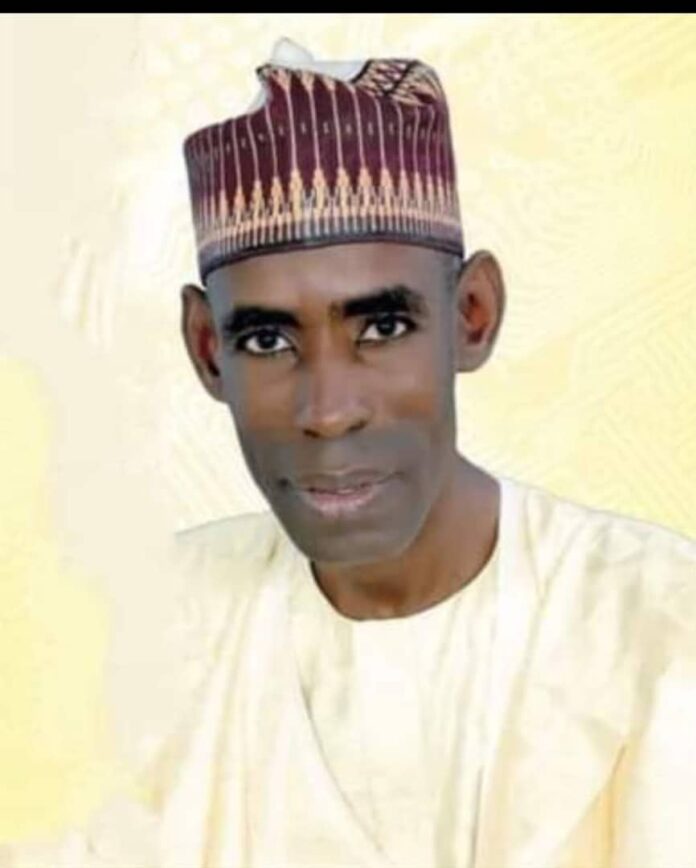
Engr. Bello Gwarzo Abdullahi, FNSE
The recent judgment delivered by Justice C. Donglong of the Plateau State High Court in Fatima Baba Akawu & Anor v. Jos North Local Government Area Council is more than a legal victory for two citizens. It is a significant milestone in Nigeria’s continuing struggle to define the meaning of citizenship, belonging, and equal rights in a diverse society.
By holding that a person born and raised in a community cannot be denied an indigene certificate solely because of ethnic origin, the court confronted one of the most persistent and contentious issues in Nigeria’s social and political landscape. The ruling speaks directly to the experience of countless Nigerians who, despite spending their entire lives in a particular state or locality, remain officially classified as outsiders.
For decades, many citizens have lived, worked, paid taxes, raised families, and contributed to the development of their communities, yet have been denied full recognition as members of those communities. The practice of issuing “residence certificates” instead of indigene certificates created a subtle but consequential hierarchy of citizenship. In many cases, it limited access to public employment, educational opportunities, political participation, and social advancement.
Justice Donglong’s judgment challenges this longstanding arrangement and reaffirms a fundamental constitutional principle: citizenship rights should not be determined exclusively by ancestry.
The ruling draws its strength from the Nigerian Constitution itself. Section 42 prohibits discrimination on the grounds of ethnicity, place of origin, religion, or circumstances of birth, while Section 15 promotes national integration and discourages sectional loyalties that undermine national unity. The court has therefore reminded public institutions that constitutional guarantees must prevail over administrative practices that perpetuate inequality.
Beyond its legal implications, the judgment carries profound developmental significance. Across the world, societies that embrace inclusion tend to achieve greater economic growth, stronger social cohesion, and more enduring political stability than those built on exclusion. When barriers based on identity are reduced, societies are able to harness the talents and energies of all their people.
The United States, for example, derived much of its economic dynamism from the principle of jus soli—the idea that birth within the territory confers citizenship and belonging. That approach helped integrate successive generations of immigrants into national life. South Africa, emerging from the wounds of apartheid, similarly recognised that sustainable peace and development required equal citizenship and freedom of opportunity for all.
Conversely, countries that institutionalised exclusion have often paid a heavy price. Côte d’Ivoire’s experience with Ivoirité during the 1990s demonstrated how politically weaponised notions of belonging can deepen divisions and threaten national stability.
Nigeria itself offers compelling examples of the benefits of openness and inclusion. Lagos evolved into Africa’s foremost commercial hub because it welcomed talent, enterprise, and investment from every corner of the country. Kano flourished for centuries as a centre of commerce because it accommodated traders, settlers, and entrepreneurs from across West Africa. More recently, Gombe State has demonstrated how peaceful coexistence and openness can foster stability and attract investment even within a challenging regional environment.
Plateau State stands to gain immensely from embracing a similarly inclusive vision.
Long before colonial intervention, the Plateau region was renowned as a meeting point of peoples, cultures, and commercial networks. It was a sanctuary of coexistence where diverse communities interacted, traded, and settled without the rigid identity boundaries that would later emerge.
Historical evidence shows that the region was deeply connected to wider political and economic systems. The territories commonly referred to as Kasashen Bauchi, the influence of the Kwararafa Confederacy, and the expansive reach of the Kanem-Borno Empire all contributed to integrating diverse peoples into broader networks of exchange and cooperation.
The Kasashen Bauchi consisted of independent but interconnected polities that maintained relationships through trade, diplomacy, and mutual security arrangements. Likewise, the Kwararafa Confederacy demonstrated that different ethnic groups could coexist within a larger political framework while retaining their distinct identities. The commercial networks of Kanem-Borno further linked Plateau communities to trans-Saharan trade routes, facilitating the movement of goods, ideas, and people across vast distances.
These interactions encouraged the emergence of a shared civic culture. The Hausa language, in particular, became an important medium of communication across the region. Rather than erasing indigenous cultures, it functioned as a practical lingua franca that enabled trade, negotiation, and social interaction among diverse communities. Through such processes, the Plateau evolved into a zone of cultural convergence and mutual accommodation.
The colonial era disrupted this organic pattern of integration.
Driven largely by the economic imperative of exploiting the rich tin deposits of the Jos Plateau, the British colonial administration established Jos Province and introduced new systems of governance designed to facilitate resource extraction and administrative control. As labourers migrated into the region from different parts of Nigeria and beyond, colonial authorities increasingly relied on rigid ethnic classifications and administrative distinctions to manage populations.
In doing so, they transformed fluid identities into fixed bureaucratic categories. Concepts such as “native” and “non-native,” which had previously carried far less significance, became embedded within colonial administrative structures. Over time, these classifications hardened into institutional realities that shaped access to land, political representation, and public opportunities.
Many of the tensions associated with the contemporary indigene-settler divide can therefore be traced, at least in part, to colonial policies that fragmented communities which had historically interacted and coexisted within broader social and economic networks.
Recognising this history is important because it challenges the assumption that exclusion is an ancient or inevitable feature of Plateau society. On the contrary, openness and interaction have long been central to the region’s development.
Lasting peace cannot thrive where significant segments of the population feel permanently excluded from full participation in civic life. People are more likely to invest their resources, talents, and futures in communities where they feel recognised, protected, and valued. Inclusion strengthens social trust, broadens the tax base, encourages entrepreneurship, and creates the conditions necessary for sustainable development.
The indigene-settler divide has unfortunately contributed to tensions and mistrust in Jos and other parts of Plateau State for many years. While no court judgment can resolve every historical grievance overnight, removing discriminatory barriers can help address some of the frustrations that often fuel conflict. Communities that view themselves as partners in a shared future are generally more peaceful and more prosperous than those divided by competing claims of belonging.
At the same time, embracing equal citizenship does not require the abandonment of history, culture, or traditional institutions. Plateau’s indigenous communities possess rich cultural heritages and respected traditional structures that deserve preservation and protection. Respecting those identities, however, should not come at the expense of denying fellow Nigerians the constitutional rights and opportunities guaranteed to every citizen.
Justice Donglong’s ruling presents Plateau State with a rare opportunity to move toward a more confident and inclusive future—one in which diversity is regarded not as a threat, but as a source of collective strength. If implemented wisely and embraced in good faith, the decision could help position Plateau as a national model of peaceful coexistence, civic integration, and inclusive development.
Ultimately, strong nations are built not by narrowing the circle of belonging but by expanding it. Nigeria’s future stability and prosperity will depend largely on its ability to create communities where individuals are valued less for their ancestry and more for their contributions to society. Plateau State now has an opportunity to demonstrate what such a future can look like.
Written by Engr. Bello Gwarzo Abdullahi, FNSE.
Email: [email protected]
Follow the Neptune Prime channel on WhatsApp:
Do you have breaking news, interview request, opinion, suggestion, or want your event covered? Email us at [email protected]