
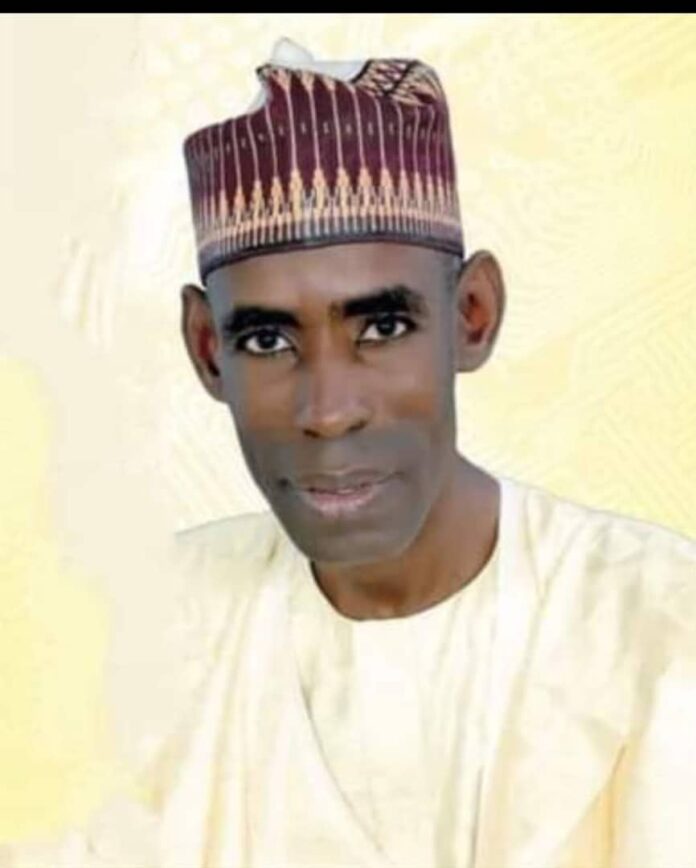
On democracy and the politics of merit, by Engr. Bello Gwarzo Abdullahi, FNSE
For democracy to truly work in Nigeria, we must begin to confront our realities with honesty and sincerity. The country cannot continue to be held hostage by political arrangements packaged as “gentleman’s agreements” while the genuine interests of ordinary Nigerians remain ignored. Any attempt by political elites to impose predetermined outcomes on citizens outside the democratic process is not democracy; it is a direct assault on the popular will, and it must be resisted.
As the 2027 elections draw closer, political activities are already gathering momentum across the country. At the same time, Nigerians are passing through one of the most difficult periods in recent memory. Rising hardship, insecurity, and economic uncertainty are evident everywhere. More troubling, however, is the growing attempt to weaken opposition voices in a manner that increasingly suggests a dangerous drift toward a one-party state.
Despite these challenges, Nigerians remain resilient. Across the country, citizens are becoming more determined to resist attempts to silence dissent or manipulate the democratic process. The deliberate creation of crises within political parties, the quiet effort to present zoning as though it were a constitutional principle, and the constant weaponisation of regional sentiments all point to a broader attempt to undermine the will of the people.
For years, the problems confronting Nigeria have been clearly identified, yet meaningful reforms remain absent. Instead, many members of the political elite continue to rely on the same old politics of entitlement, intimidation, and sectional bargaining that contributed to the country’s current condition. Trying to pressure Nigerians into accepting unconstitutional political arrangements in the name of zoning is not only wrong, but also counterproductive.
The entrenched “turn-by-turn” political culture, often disguised as geopolitical balancing, has gradually reduced leadership selection to elite negotiations instead of competence, vision, and national capacity. For decades, different factions of the elite have occupied positions of power, yet the masses continue to struggle with poverty, insecurity, unemployment, and institutional failure. Development does not come from rotation; it comes from competent and accountable leadership.
READ ALSO: Political power, labour, and the Nigerian state, by Engr. Bello Gwarzo Abdullahi, FNSE
As preparations for the 2027 elections intensify, Nigeria is facing a difficult combination of economic hardship, political tension, social frustration, and religious division. Economic figures announced at the top no longer reflect the daily realities of ordinary citizens. Inflation continues to erode incomes, transportation and energy costs are rising, and millions of Nigerians can barely meet their basic needs. Poverty continues to deepen, while meaningful poverty alleviation receives little serious attention. This worsening hardship creates fertile ground for vote-buying and transactional politics.
At the same time, the democratic space is narrowing. Rather than focusing on practical solutions to the country’s economic and security problems, many political actors now hide behind zoning rhetoric to avoid accountability for poor governance.
Public trust in state institutions is also weakening. Insecurity continues to affect farming communities and food-producing areas, worsening inflation and forcing many people to leave rural communities for already overcrowded cities. Weak local governance, poor policing reforms, and heavy-handed responses to civic concerns have left many citizens feeling abandoned.
Whenever governments struggle to defend their performance, religion and ethnicity often become convenient political tools. Citizens who share the same economic pain are divided along sectarian lines, while the real issues affecting their daily lives remain unresolved.
Nigeria’s situation today is too fragile for politics driven by tribal or regional sentiments. The country is facing severe economic pressure, insecurity, and institutional decay. At a time like this, Nigeria cannot afford to reject capable leadership simply because of geography.
The Constitution of the Federal Republic of Nigeria does not recognise zoning or rotational presidency as constitutional requirements. What the Constitution guarantees is universal adult suffrage — the right of every qualified Nigerian to contest elections and the right of citizens to freely choose the candidate they believe can best lead the country.
So-called “gentleman’s agreements” are merely internal political understandings within parties; they are not constitutional provisions and should never be elevated into instruments of intimidation or political blackmail.
A President must govern in the interest of the entire federation, not as a representative of narrow regional interests demanding prior allegiance. Reducing leadership selection to political bargaining weakens democracy and undermines national unity.
If Nigeria truly wants to move beyond symbolic governance and endless underdevelopment, then the country must embrace a political culture rooted in competence, accountability, and institutional reform. Political parties must allow open and credible competition based on merit, public trust, ideas, and performance rather than backroom arrangements and unconstitutional zoning expectations.
Critical national priorities such as energy stability, domestic refining, agricultural security, transportation infrastructure, and quality education must be treated as national responsibilities, not regional concessions. Any serious government must pursue them through transparency, fiscal discipline, and public accountability.
Civil society groups, the media, legal institutions, and democratic actors also have an important responsibility to protect electoral integrity. Strengthening mechanisms to fight vote-buying, intimidation, ballot manipulation, and electoral abuse is essential if democracy is to survive and regain public confidence.
Likewise, labour unions, student groups, market associations, professional bodies, and civic organisations must build stronger cross-regional alliances around shared economic realities. When citizens unite around common struggles such as unemployment, inflation, insecurity, and poor public services, it becomes more difficult for politicians to divide them through religion and ethnicity.
True national progress, justice, and good governance will never come from unconstitutional zoning arrangements or threats of political exclusion. Nigeria must move beyond the politics of entitlement and embrace a democratic culture where competence, accountability, merit, and the collective will of the people determine leadership.
The time has come for Nigerians to confront reality honestly, reject political hypocrisy, and insist that the future of the country be shaped by the will of the people — not by backroom political arrangements.
Written by Engr. Bello Gwarzo Abdullahi, FNSE.
Email: bgabdullahi@gmail.com
Follow the Neptune Prime channel on WhatsApp:
Do you have breaking news, interview request, opinion, suggestion, or want your event covered? Email us at neptuneprime2233@gmail.com