


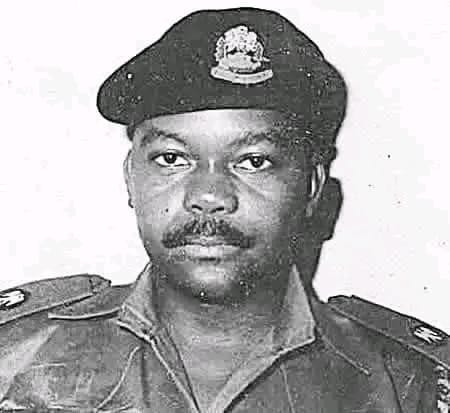
Gideon Gwaza Orka, the 1990 coup attempt and the execution of forty-one other military officers
Gideon Gwaza Orkar was born on 4 October 1952 and became one of the most controversial figures in Nigeria’s military history.
He is remembered for leading the abortive coup of 22 April 1990 against the administration of Ibrahim Babangida. The uprising, which unfolded in Lagos, involved the seizure of the Federal Radio Corporation of Nigeria, key military installations, and an assault on Dodan Barracks, which was the seat of military authority and residence of the Head of State.
Although Babangida was present during the attack on the barracks, he escaped through a rear exit, enabling loyalist forces to regroup and suppress the rebellion within hours.
In the broadcast that followed the initial success of the mutineers, Orkar announced the formation of a new government and controversially called for the excision of five northern states from the federation.
This declaration shocked the nation and further hardened opposition to the coup. By the end of the day, federal forces had regained control. Orkar and dozens of collaborators were arrested, tried before a military tribunal on charges of treason, and sentenced to death.
READ ALSO: Lieutenant General Joshua Nimyel Dogonyaro: Celebrating 30 years of distinguished military service
He and forty-one others were executed by firing squad on 27 July 1990. Orkar was the ninth child of Levi Orkar Chi and was of Tiv origin from Apir village in Makurdi Local Government Area of Benue State.
He received his early education at primary schools in Apir and Wadata, and later attended Boys Secondary School, Gindiri, in Plateau State. While enrolled in Higher School Certificate classes, he applied for military service after seeing a recruitment advertisement.
In 1972, he enlisted in the Nigerian Army as cadet number 682 and began officer training with the 12th Regular Combatant Course at the Nigerian Defence Academy in Kaduna.
He was commissioned as a Second Lieutenant in December 1974 and posted to the Nigerian Army Armoured Corps.
Over the course of his career, Orkar served in several formations across the country. He participated in Nigeria’s peacekeeping mission in Chad in 1978 and held postings in Kaduna, Enugu, Bauchi, and Ibadan.
In 1986, he attended Senior Officers Course 9 at the Command and Staff College in Jaji, a prestigious institution for advanced military studies. He later commanded the 22 Armoured Battalion in Saki, Oyo State, and was eventually appointed to the Directing Staff at the Command and Staff College, Jaji, which was his last posting before the 1990 coup attempt.
The failed uprising marked the dramatic end of his life and career. His execution in July 1990 closed a turbulent chapter in Nigeria’s era of military rule, but the events surrounding the coup continue to generate debate among historians and political analysts about the nature of dissent, regional tensions, and power within the Nigerian armed forces at the close of the twentieth century.
Follow the Neptune Prime channel on WhatsApp:
Do you have breaking news, interview request, opinion, suggestion, or want your event covered? Email us at neptuneprime2233@gmail.com