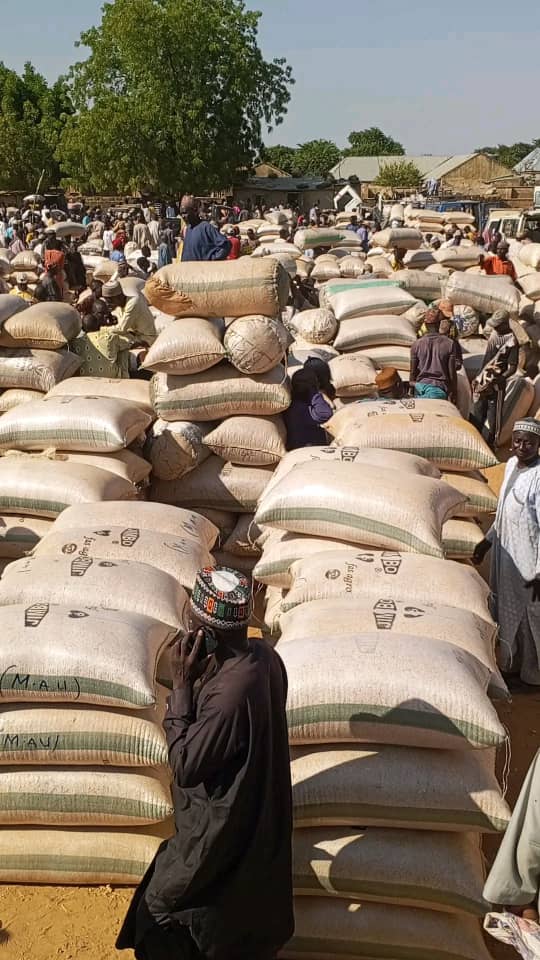
Grain prices drop across markets in Nangere, Yobe State
Story by Kasim Isa MUHAMMAD
Grain traders and consumers in Nangere Local Government Area of Yobe State are welcoming a notable drop in the prices of essential grains this week.
According to market updates from Dawasa Grain Market on Friday, November 21, 2025, the prices of beans, millet, sorghum, and several other staples have declined, offering much-needed relief to buyers while creating a mix of optimism and concern among sellers.
At the market, maize is now selling between ₦28,000 and ₦31,000, a reduction many traders say is linked to the recent harvest and improved supply flows from surrounding farming communities.
New millet shows a similar downward adjustment, currently priced between ₦28,000 and ₦32,000, while old millet sells slightly higher at ₦30,000 to ₦32,000. Sorghum, another major staple, has also become more affordable at ₦23,000 to ₦25,000.
READ ALSO: Yobe at 32: Reflecting on the journey thus far, by Kasim Isa Muhammad
Various types of beans, an important protein source for many households, have also recorded significant declines. New white beans are selling for ₦60,000 to ₦61,000, big white beans for ₦60,000 to ₦64,000, and new red beans for ₦60,000 to ₦65,000.
Traders attribute the drop in bean prices to an increase in supply from newly harvested farmlands, which has eased the pressure that pushed prices upward earlier in the year.
Similarly, melon is now sold between ₦40,000 and ₦50,000, while polished rice remains relatively stable at ₦90,000.
Unprocessed rice, often preferred by local processors and millers, sells for ₦25,000 to ₦26,000.
Other staples have followed the downward trend. New groundnuts range between ₦75,000 and ₦83,000, while Bambara nuts now sell between ₦70,000 and ₦78,000. Sesame seed prices have slightly reduced as well, with bulk sesame selling between ₦41,000 and ₦42,000 and sesame sold per kilo going for ₦950 to ₦1,000.
Buyers at Dawasa Grain Market expressed gratitude and relief over the price adjustments. Many said the new prices would help families stretch their budgets further, especially with rising costs in other sectors such as transportation, fuel, and household goods.
Some buyers believe the price reductions could improve food security in the coming months, making it easier for families to stock up on essential grains before the dry season intensifies.
READ ALSO: N8000 palliative: Tinubu should not repeat Buhari’s mistakes, by Kasim Isa Muhammad
Sellers, however, shared mixed perspectives. While some traders welcomed the increased customer turnout and quicker sales turnover, others expressed concern that the reduced prices might significantly cut into their profits.
A few sellers noted that although prices have dropped, operational costs such as transportation and storage remain high. They worry that if the downward trend continues without corresponding reductions in logistics costs, many small-scale traders may struggle to keep their businesses afloat.
Follow the Neptune Prime channel on WhatsApp:
Do you have breaking news, interview request, opinion, suggestion, or want your event covered? Email us at neptuneprime2233@gmail.com