Hannah Bond: From hardship to becoming the first enslaved woman to write a book, by Gift Luckson
Hannah Bond, also known by her pen name Hannah Crafts (born c. 1830s), was an American writer who escaped from slavery in North Carolina about 1857 and went to the North. Bond settled in New Jersey, likely married Thomas Vincent, and became a teacher.
Literacy

She wrote The Bondwoman’s Narrative by Hannah Crafts after gaining freedom. It is the only known novel by an enslaved woman. Written between 1853 and 1861, the novel was published in 2002 for the first time after Henry Louis Gates, Jr., a Harvard University professor of African-American literature and history, purchased the manuscript and had it authenticated. It rapidly became a bestseller.
READ ALSO: Barbaric Customs Against Widows in Africa: A cry for change, by Gift Luckson
Bond’s identity was documented in 2013 by Gregg Hecimovich of Furman University, who found that she had been owned by John Hill Wheeler of Murfreesboro, North Carolina. He had identified many details of her life. Gates and other major scholars have supported his conclusions.
Autobiography

Most literary scholars believed that the name Hannah Crafts was a pseudonym, and they have considered the work to be a fictionalised autobiography.
From her writing, Crafts appears to be self-taught. References in the work suggest that she may have been born in the 1830s.
The paper of the manuscript is a distinct one, identified by historians as from the library of North Carolina planter and slaveholder John H. Wheeler.
This was part of the evidence found by Hecimovich that confirmed “Hannah Crafts” had lived at the Wheeler plantation. Bond apparently was able to read and use the library, as her novel shows influences from other literature; she reflects elements of Jane Eyre by Charlotte Brontë and Rob Roy by Sir Walter Scott.
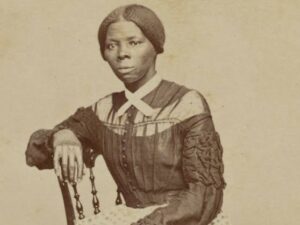
Hecimovich used “wills, diaries, handwritten almanacks and public records” and interviews to discover and document the life of Hannah Bond, and confirm her identity.
Scholars familiar with the novel and the period, such as Gates, Hollis Robbins, and William L. Andrews, believe that he has demonstrated an accounting of her identity.
READ ALSO: Jericho: The great ancient city gripped by turmoil and struggle for control, by Gift Luckson
Hecimovich learned that girls from a nearby school often boarded at the plantation; part of their curriculum required memorising Charles Dickens’ Bleak House, which influences Bond also expressed in her novel.
She may have heard the girls reading aloud, or read the book herself. It was serialised in Frederick Douglass’s newspaper, which had wide circulation among fugitive slaves.
Other scholars, including investigator Joe Nickell, who authenticated the manuscript, had previously tied Crafts to John H. Wheeler. She had accurately described him as the US Minister to Nicaragua and his duties, as shown by his own diary. Believing that the novel was autobiographical, scholars speculated from its plot that Crafts had married a Methodist minister and lived in New Jersey. Her married name may have been Hannah Vincent, the wife of Thomas Vincent, as they were both listed in the census records of New Jersey in 1870 and 1880.
Follow the Neptune Prime channel on WhatsApp:
Do you have breaking news, interview request, opinion, suggestion, or want your event covered? Email us at neptuneprime2233@gmail.com