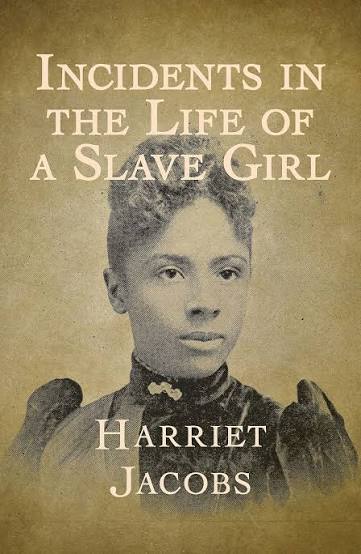
Harriet Jacobs: A voice of courage against slavery, by Gift Luckson
Harriet Jacobs (1813 or 1815[b] – March 7, 1897) was an African-American abolitionist and writer whose autobiography, Incidents in the Life of a Slave Girl, published in 1861 under the pseudonym Linda Brent, is now considered an “American classic”.
Born into Slavery
Born into slavery in Edenton, North Carolina, she was sexually harassed by her enslaver. When he threatened to sell her children if she did not submit to his desire, she hid in a tiny crawl space under the roof of her grandmother’s house, so low she could not stand up in it.
After staying there for seven years, she finally managed to escape to the free North, where she was reunited with her children, Joseph and Louisa Matilda and her brother, John S. Jacobs.
Human Advocate
She found work as a nanny and got in contact with abolitionist and feminist reformers. Even in New York City, her freedom was in danger until her employer was able to pay off her legal owner.
READ ALSO: Istanbul (Constantinople): The city of the world’s desire, rooted in antiquity, by Gift Luckson
During and immediately after the American Civil War, she travelled to Union-occupied parts of the Confederate South together with her daughter, organising help and founding two schools for fugitive and freed slaves.
Escape
In 1842, Jacobs finally got a chance to escape by boat to Philadelphia, where she was aided by anti-slavery activists of the Philadelphia Vigilant Committee.
After a short stay, she continued to New York City. Although she had no references, Mary Stace Willis, the wife of the then extremely popular author Nathaniel Parker Willis, hired Jacobs as a nanny for her baby daughter Imogen.
The two women agreed on a trial period of one week, not suspecting that the relationship between the two families would last into the next generation, until the death of Louisa Matilda Jacobs at the home of Edith Willis Grinnell, the daughter of Nathaniel Willis and his second wife, in 1917.
In 1850, Jacobs paid a visit to Nathaniel Parker Willis in New York, wanting to see the now eight-year-old Imogen again. Willis’s second wife, Cornelia Grinnell Willis, who had not recovered well after the birth of her second child, prevailed upon Jacobs once again to become the nanny of the Willis children. Knowing that this involved a considerable risk for Jacobs, especially since the Fugitive Slave Law of 1850 had made it much easier for slaveholders to reclaim their fugitive “chattels”, she gave her word to John S. Jacobs that she would not let his sister fall into the hands of her persecutors.
Later Years and Death
After her return from England, Jacobs retired to private life. In Cambridge, Massachusetts, she kept a boarding house together with her daughter. Among her boarders were faculty members of nearby Harvard University.
In 1873, her brother John S. returned to the U.S. together with his English wife, their son Joseph and two stepchildren to live close to his sister in Cambridge.
He died in December of the same year, 1873. In 1877 Harriet and Louisa Jacobs moved to Washington, D.C., where Louisa hoped to get work as a teacher. However, she found work only for short periods. Mother and daughter again took to keeping a boarding house, until in 1887/88 Harriet Jacobs became too sick to continue with the boarding house.
Mother and daughter took on odd jobs and were supported by friends, among them Cornelia Willis. Harriet Jacobs died on March 7, 1897, in Washington, D.C., and was buried at Mount Auburn Cemetery in Cambridge next to her brother.
Her tombstone reads, “Patient in tribulation, fervent in spirit serving the Lord”. (Cf. Epistle to the Romans, 12:11–12).
Follow the Neptune Prime channel on WhatsApp:
Do you have breaking news, interview request, opinion, suggestion, or want your event covered? Email us at neptuneprime2233@gmail.com